
Beautiful Plants For Your Interior
Beautiful Plants For Your Interior
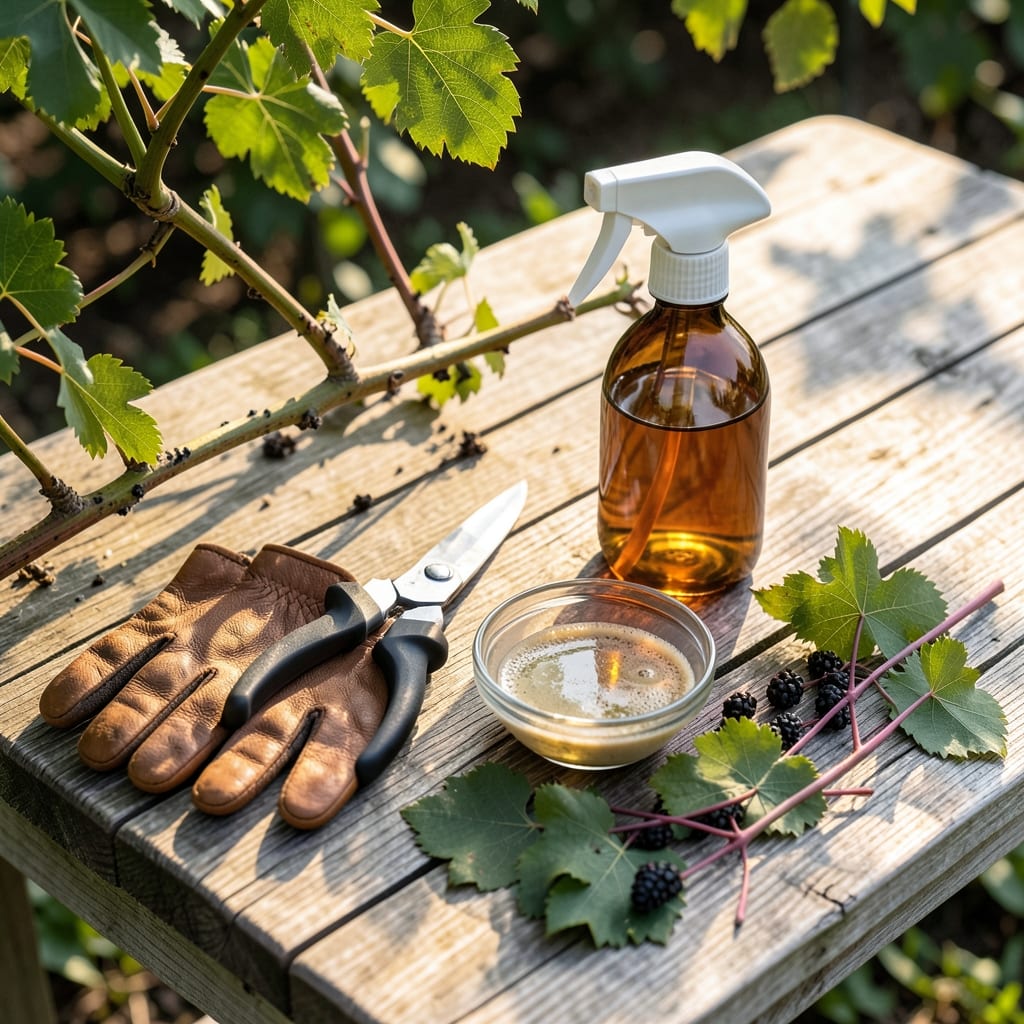
Those black spots on your grape vines aren’t just ugly—they’re a warning sign. I’ve seen entire crops lost to ignoring early symptoms like these.
Catching it now means saving your harvest. The fix starts with identifying the cause—fungus, pests, or stress—and acting fast with targeted treatment.
Nothing exotic—just garden basics to save your vines from those black spots.
| Ingredient | Amount | Notes |
|---|---|---|
| Copper Fungicide Spray 💧 | 1 gallon | Prevents fungal spread |
| Pruning Shears ✂️ | 1 piece | Sterilize between cuts |
| Neem Oil 🌿 | 1 quart | Organic pest control |
| Garden Gloves 🧤 | 1 piece | Protect hands from chemicals |
| Spray Bottle 💦 | 1 piece | For precise application |
| Baking Soda 🧪 | ½ lb | DIY fungicide base |
| Organic Compost 🌾 | 2 gallons | Boosts plant health |
| Mulch 🪵 | 3 gallons | Retains soil moisture |
| Horticultural Oil 💧 | 1 quart | Dormant season treatment |
[recipeingredientscaler]
Copper fungicide is your first line of defense. Bonide or Southern Ag brands work well—look for copper octanoate or copper sulfate as the active ingredient. Most garden centers carry it, but call ahead to confirm stock. I grab the ready-to-use spray bottles for quick treatment (worth the extra dollar).
Neem oil doubles as both fungicide and insecticide. If you’re out, horticultural oil works similarly but avoid using it in extreme heat. For a DIY approach, baking soda mixed with water and a drop of soap can slow fungal spread. Pruning shears must be sharp and sterilized with rubbing alcohol between cuts.
Store fungicides in a cool, dry place away from direct sunlight. Leftover compost and mulch keep for years if stored in sealed bags. I mark my treatment schedule on a calendar so I don’t miss the next application window.
Here’s the method I use to treat and prevent black spots on grape vines effectively.
Put on the garden gloves and inspect the vine thoroughly. Using the pruning shears, cut out all stems showing black spots, making clean cuts 2-3 inches below visible damage. Sterilize the shears with rubbing alcohol between cuts to prevent spreading infection.
Dispose of infected material in sealed bags—never compost it. This removes the immediate source of the fungal pathogen. I check for black spots weekly during wet seasons when fungi spread fastest.
Mix the 1 gallon copper fungicide spray according to package instructions and apply it to the entire vine, focusing on stems and leaf undersides. Copper ions disrupt fungal cell membranes. I spray until the solution just begins to drip from the leaves, ensuring full coverage.
Reapply every 7-10 days during active growth or after rain events. The copper fungicide creates a protective barrier that prevents new infections from taking hold. Wear the garden gloves throughout this process.
For a gentler approach, combine 1 tablespoon baking soda from the 0.5 lb supply with 1 quart neem oil and water in the spray bottle. This solution both prevents fungal growth and deters pests that might spread disease. Shake well before each use.
Apply this mixture in the early morning to allow leaves to dry before the heat of the day. I alternate this with the copper fungicide for comprehensive protection. The neem oil also conditions the plant, making it more resistant to future infections.
Spread the 2 gallons organic compost around the base of the vine to improve soil fertility and drainage. Healthy vines resist disease better. I work it into the top 3-4 inches of soil without disturbing the roots.
Apply the 3 gallons mulch in a 2-inch layer to retain moisture and prevent soil-borne fungi from splashing onto leaves during rain. Keep mulch 6 inches away from the trunk to prevent rot. In dormant season, use the 1 quart horticultural oil to smother overwintering fungal spores.
Black spots on grape vine stems often result from fungal diseases like anthracnose or black rot. These thrive in wet, humid conditions, spreading rapidly if untreated.
Quick Fix: Remove infected stems and apply a copper-based fungicide. Improve airflow by pruning dense foliage.
Bacterial canker causes dark, sunken lesions on stems, often oozing in wet weather. It enters through wounds and weakens the vine over time.
Quick Fix: Prune infected areas in dry weather and sterilize tools with rubbing alcohol. Apply bactericide sprays preventively.
Sap-sucking pests like aphids or grape berry moths can cause black spots by introducing pathogens or stressing the vine.
Quick Fix: Use insecticidal soap or neem oil to control pests. Monitor vines regularly for early signs of infestation.
Extreme heat, drought, or poor soil conditions can stress vines, leading to discoloration and spots on stems.
Quick Fix: Ensure consistent watering and mulch to retain moisture. Test soil for nutrients and amend as needed.
