
Beautiful Plants For Your Interior
Beautiful Plants For Your Interior
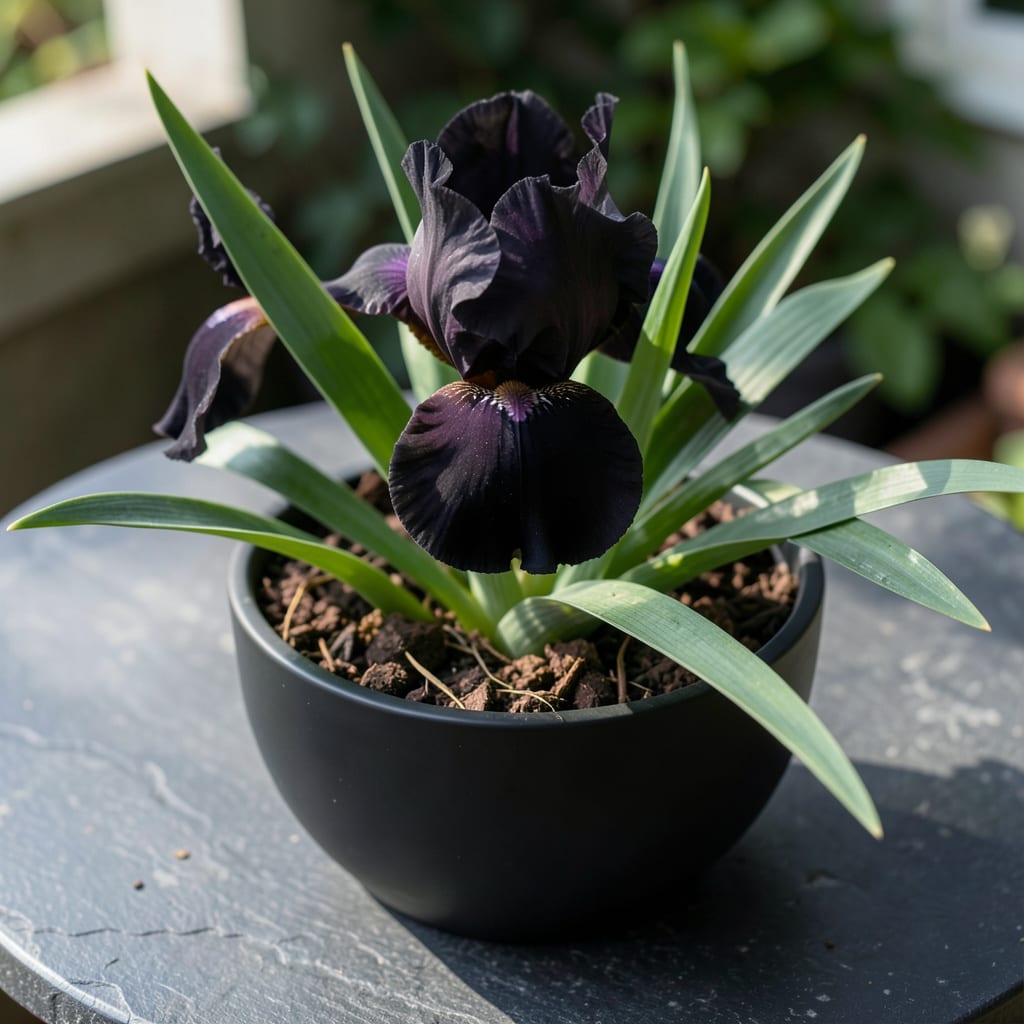
Dark, dramatic blooms that stop garden visitors in their tracks. The Black is Black Iris delivers velvety petals so deep they appear black, creating a striking contrast against any backdrop.
This iris thrives in full sun with well-drained soil, rewarding you with 3-4 foot stems and multiple flowers per stalk. Plant in fall for spring blooms, and watch as these unique flowers become the centerpiece of your garden.
📚 In This Guide
Here’s the approach I use to cultivate these striking flowers with deep, velvety petals in any garden.
Select a spot that receives full sun to partial shade. Black Is Black iris thrives with at least 6 hours of sunlight daily, but afternoon shade protects the dark blooms from fading in intense heat. I always check the area at different times of day to confirm the light pattern.
The soil should be well-draining and rich in organic matter. If your garden has heavy clay, amend it with compost or well-rotted manure before planting. These irises dislike soggy roots, so avoid low-lying areas where water pools.
Test drainage by digging a 12-inch-deep hole, filling it with water, and watching how quickly it disappears. If water remains after 4 hours, improve drainage with organic amendments or consider raised beds.
Plant rhizomes in late summer or early fall, spacing them 12-24 inches apart to allow for mature growth. Dig a shallow hole just deep enough to cover the rhizome with 1 inch of soil—any deeper and it may rot.
Place the rhizome horizontally in the hole with the fan of leaves facing outward. Gently firm the soil around it, but avoid compacting. I like to create a small ridge of soil around each planting to help direct water toward the roots.
Water immediately after planting to settle the soil and eliminate air pockets. Keep the soil consistently moist for the first 2-3 weeks until the plant establishes, then reduce watering to once weekly unless rainfall provides an inch of water.
In spring, apply a balanced 10-10-10 fertilizer around the base of each plant as new growth emerges. Avoid high-nitrogen fertilizers, as they promote leafy growth at the expense of flowers. I scatter the fertilizer 6 inches away from the rhizome to prevent burning.
Remove spent blooms regularly to encourage more flowers and prevent seed formation, which diverts energy from rhizome growth. Use clean, sharp shears to cut the flower stalk back to the base after blooming.
In late fall, trim back the foliage to 6 inches above the ground after it yellows. This reduces pest habitat while still allowing the plant to store energy in the rhizome for next year.
Every 3-4 years, or when clumps become crowded and blooms decrease, divide the rhizomes. Use a sharp knife to separate healthy, firm rhizomes from the center of the clump, discarding any soft or diseased portions.
Replant the divisions immediately, following the same planting depth and spacing as before. The best time to divide is in late summer, after flowering, giving the plants time to establish before winter.
I always soak the divided rhizomes in a weak bleach solution (1 part bleach to 10 parts water) for 10 minutes to prevent disease before replanting. This step has saved me from losing entire clumps to rot.
Here are the practical insights I wish I’d known before planting these dramatic blooms.
Sunlight Strategy: The 6 hours of sunlight daily is non-negotiable for vibrant blooms, but that afternoon shade really does make a difference. I noticed my darkest petals always come from plants that get their sun in the morning and early afternoon, then enjoy shade when the sun is harshest.
Drainage Test: That 12-inch-deep hole test is your best friend. If water remains after 4 hours, don’t just plant and hope for the best. I’ve lost too many rhizomes to rot in poorly drained spots. Raised beds or amending with compost are worth the extra effort.
Planting Depth: Covering rhizomes with just 1 inch of soil feels too shallow at first, but it’s critical. I buried my first batch too deep and lost half to rot. The rhizome needs to breathe and bask in a little sunlight to thrive.
Division Timing: Every 3-4 years might seem frequent, but crowded clumps produce fewer blooms. That 10-minute bleach soak for divisions is a game-changer—I went from losing entire clumps to rot to having healthy, disease-free plants every time.
Black Is Black irises thrive in well-drained soil with full sun to partial shade. Water moderately, keeping the soil moist but not soggy. Deadhead faded blooms to encourage more flowers and divide clumps every 3-4 years for optimal health.
Plant these irises in late summer or early fall, about 6-8 weeks before the first frost. This allows roots to establish before winter. In warmer climates, early spring planting also works well.
For a similar dramatic look, try ‘Onyx Odyssey’ tulips, ‘Black Baccara’ roses, or ‘Queen of Night’ dahlias. These varieties offer deep, velvety blooms that pair beautifully in gothic or moody garden themes.
Lack of flowers can result from too much shade, over-fertilizing (especially with nitrogen), or planting too deeply. Ensure they receive at least 6 hours of sunlight and check that rhizomes are partially exposed to encourage blooming.
