
Beautiful Plants For Your Interior
Beautiful Plants For Your Interior
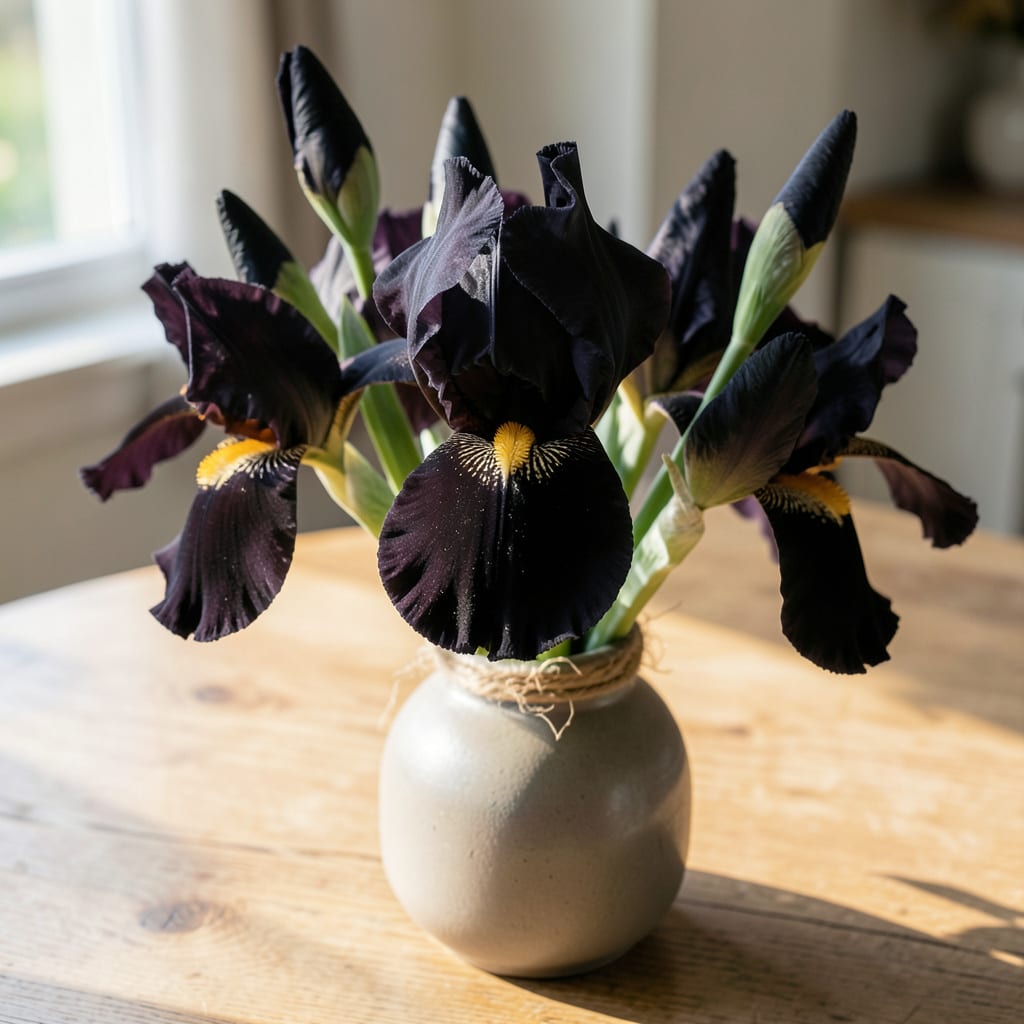
This iris stops people in their tracks. Deep purple-black petals with golden beards create a look that’s anything but ordinary in a garden bed.
I planted mine in full sun with well-draining soil, and by the second year, the blooms were bigger and bolder than I’d imagined. They ask for little but give maximum drama every spring.
📚 In This Guide
Here’s how I create a stunning display with these dramatic flowers in my own garden.
Select a spot with full sun exposure—at least 6-8 hours of direct sunlight daily. These irises thrive in bright conditions and will reward you with their deepest, most vibrant blooms. Avoid low-lying areas where water might pool, as soggy soil is their worst enemy.
Test your soil drainage by digging a 12-inch deep hole and filling it with water. If it drains completely within 4-6 hours, you’re in good shape. If not, consider amending the soil or choosing a raised bed instead.
Black bearded irises prefer well-draining soil with a neutral to slightly acidic pH. I work in plenty of organic matter like compost or well-rotted manure to improve soil structure. This helps prevent the rhizomes from sitting in water, which causes rot.
Digest the soil to a depth of about 12-15 inches, removing any rocks or debris. The looser the soil, the easier it is for the rhizomes to establish and spread. I’ve found that adding a handful of bone meal at planting time gives them an extra boost.
Place each rhizome horizontally in the soil with the top portion exposed to sunlight. This might look odd at first, but it’s crucial—burying them too deep leads to rot and poor blooming. Space them 12-24 inches apart to allow for their eventual spread.
Firm the soil gently around each rhizome to eliminate air pockets, but don’t press too hard. Water lightly after planting just to settle the soil—you’ll want to keep the area relatively dry until new growth appears in about 2-3 weeks.
Once established, these plants are surprisingly drought-tolerant. I water deeply about once a week during dry spells, always at the base to keep the rhizomes dry. The key is consistency—let the soil dry out slightly between waterings to prevent rot.
During the first growing season, you might need to water more frequently (about every 5-7 days) until the plants are well established. Always check that the soil is dry to the touch 1-2 inches down before watering again.
Remove spent bloom stalks after flowering to encourage more blooms and prevent seed formation. In late fall, trim back the foliage to about 6 inches from the ground. This helps prevent winter damage and keeps your garden looking tidy.
Divide clumps every 3-4 years to prevent overcrowding, which reduces blooming. The best time to do this is in late summer, about 6-8 weeks after flowering. You’ll know it’s time when you see fewer blooms or the center of the clump starts to die out.
Here are the key details that make planting these dramatic blooms foolproof.
Sunlight Essentials: That 6-8 hours of full sun daily is non-negotiable for the deepest, most vibrant blooms. I learned this the hard way when my first batch in partial shade produced pale, lackluster flowers. If your garden has shady spots, prioritize the sunniest area for these irises.
Drainage Test: The 12-inch deep hole test with 4-6 hours drainage time is your best insurance against rot. If water lingers beyond this, amending with compost or using raised beds will save you heartache. Trust me—soggy rhizomes are a death sentence for these plants.
Planting Depth: Exposing the top portion of rhizomes to sunlight might feel counterintuitive, but it prevents rot and encourages healthy blooming. I buried my first batch too deep and lost half of them. Space them 12-24 inches apart to give their eventual spread room to shine.
Watering Wisdom: The 2-3 weeks of keeping the area relatively dry after planting is crucial. I water lightly just to settle the soil, then resist the urge to dote on them. Overwatering at this stage is the most common mistake I see with new iris growers.
Plant rhizomes in well-drained soil, 12-24 inches apart, with the top slightly exposed to sunlight. Choose a sunny spot with at least 6-8 hours of light. Water lightly after planting, but avoid overwatering to prevent rot.
This striking iris typically blooms in late spring to early summer, usually May or June, depending on your climate. Deadhead spent blooms to encourage reblooming in some varieties.
Pair with light-colored flowers like white shasta daisies or pale pink peonies for dramatic contrast. Silver foliage plants, such as lamb’s ear, also complement its deep purple-black blooms beautifully.
Lack of sunlight, overcrowding, or excessive nitrogen fertilizer can inhibit blooming. Ensure full sun exposure, divide clumps every 3-4 years, and use a balanced fertilizer low in nitrogen.
Yes! Deer and rabbits usually avoid bearded irises due to their bitter taste. However, in extreme hunger, they might nibble, so pairing with other deer-resistant plants adds extra protection.
