
Beautiful Plants For Your Interior
Beautiful Plants For Your Interior
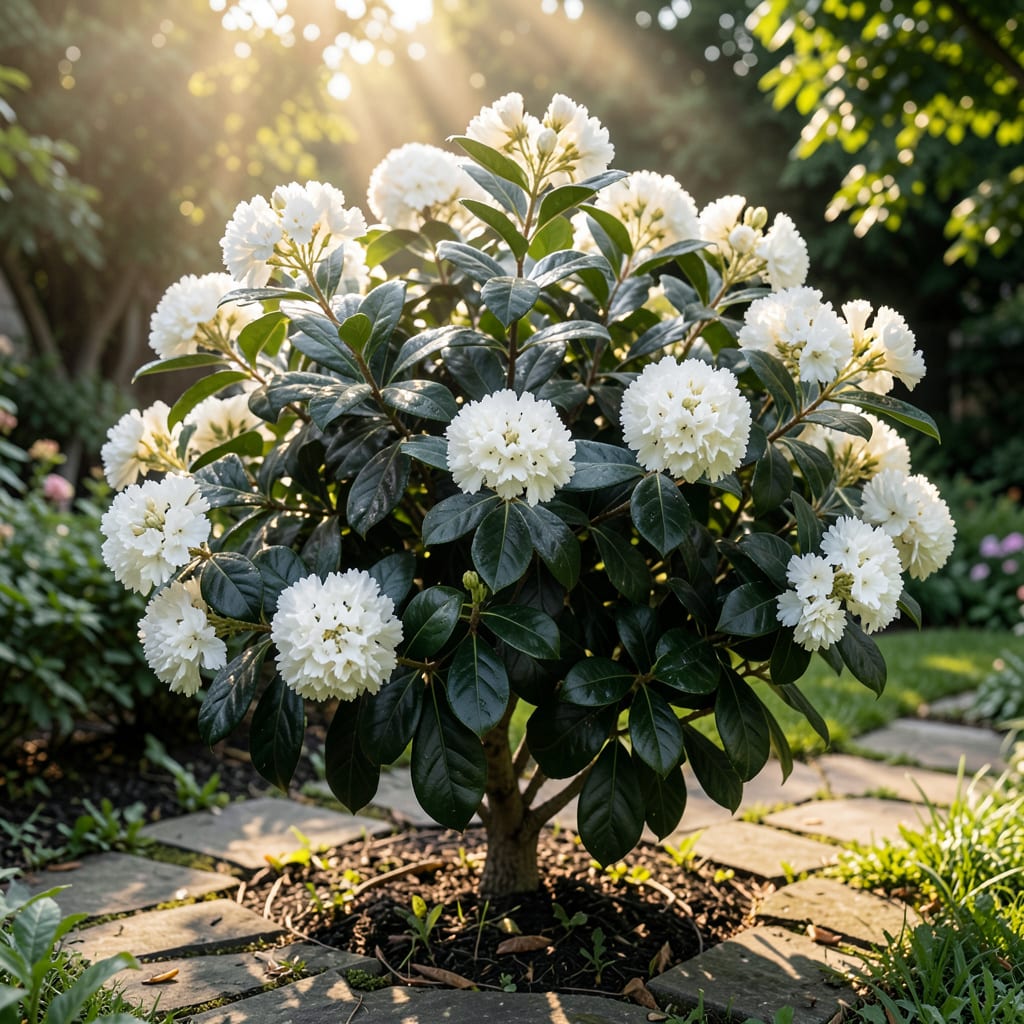
I planted my first Black Diamond White crape myrtle three seasons ago, and it’s been a showstopper ever since. The pure white blooms explode in summer, then the deep black bark takes over for winter drama.
This variety resists powdery mildew better than most, and the compact size fits perfectly in foundation plantings. You get 4 months of color with almost zero maintenance beyond the occasional pruning.
📚 In This Guide
Here’s the method I use to ensure strong, vibrant blooms and striking winter bark.
Select a spot with full sun exposure—at least 6-8 hours of direct sunlight daily. This variety thrives in bright light and needs it to produce those iconic white blooms. Avoid low-lying areas where cold air or excess moisture can settle, as crape myrtles prefer well-drained conditions.
Check the soil by digging a small test hole. If water pools and doesn’t drain within 1-2 hours, amend the area with compost or plant in a raised bed. You’ll know the spot is right when the soil feels crumbly and drains freely.
Dig a hole that’s twice as wide as the root ball but no deeper. A wider hole encourages roots to spread outward, establishing the tree faster. Remove any rocks, debris, or weeds from the hole to give roots unobstructed room to grow.
Loosen the soil at the edges of the hole with a garden fork. This helps roots penetrate the surrounding soil more easily. If the soil is heavy clay, mix in some compost to improve drainage (I add about 25% by volume).
Gently remove the tree from its container and inspect the roots. If they’re circling the root ball, tease them apart slightly to prevent girdling. Place the root ball in the hole so the top sits 1-2 inches above the surrounding soil level—this accounts for settling.
Backfill with native soil, tampering lightly as you go to eliminate air pockets. Water thoroughly with 5-10 gallons to settle the soil and hydrate the roots. You’ll see the soil level drop slightly after watering—just add more soil to maintain the proper height.
Apply a 2-3 inch layer of organic mulch (wood chips or bark) around the base, keeping it 6 inches away from the trunk to prevent rot. This conserves moisture and suppresses weeds while insulating roots.
Water deeply 2-3 times per week for the first 4-6 weeks until established. After that, reduce to once a week unless you experience extreme heat. You’ll know it’s established when new growth appears at the tips of branches.
In late winter, remove any dead, crossing, or inward-growing branches. This variety blooms on new wood, so pruning now won’t affect summer flowers. Make cuts at a 45-degree angle just above an outward-facing bud.
Thin out about 20-30% of the oldest stems to improve air circulation and encourage vigorous new growth. You’ll see the difference in 4-6 weeks when fresh shoots emerge with more vigor than the previous year.
These practical insights will help you avoid common pitfalls when planting this stunning variety.
Sunlight Essentials: The 6-8 hours of daily full sun isn’t just a suggestion—it’s critical for those white blooms. I learned this the hard way when my first plant struggled in partial shade. If your yard doesn’t get that much sun, consider containers you can move to sunnier spots.
Soil Drainage Test: That 1-2 hour drainage test in Step 1 is non-negotiable. I’ve seen crape myrtles drown in soil that seemed fine at first glance. If water lingers past 2 hours, definitely amend with compost or use a raised bed—it’s worth the extra effort.
Planting Height Tip: In Step 3, placing the root ball 1-2 inches above soil level might look odd at first, but trust me. After watering with those 5-10 gallons, the soil will settle right where it needs to be. I’ve had to redo plantings that sank too low.
Mulching Strategy: The 2-3 inch mulch layer in Step 4 is perfect, but that 6 inch gap from the trunk is just as important. I’ve seen rot set in when mulch was piled against the base. Use a ruler if you need to—this precise spacing prevents moisture from pooling where it shouldn’t.
This compact shrub typically reaches 8–12 feet tall and 6–8 feet wide, making it perfect for small gardens or containers. Its manageable size also simplifies pruning.
Expect stunning white blooms from late spring to early fall, with peak flowering in summer. It thrives in full sun and well-drained soil for the best display.
Yes! Once established, it’s highly drought-resistant. Water deeply 1–2 times weekly during the first growing season, then reduce frequency.
Try ‘Black Diamond Red’ or ‘Purple’ for bold hues, or ‘Delta Jazz’ for a smaller, pink-blooming option. All share similar care needs.
Lack of sunlight, over-fertilizing (especially high nitrogen), or improper pruning (removing new growth) can delay blooms. Ensure 6+ hours of sun daily.
