
Beautiful Plants For Your Interior
Beautiful Plants For Your Interior
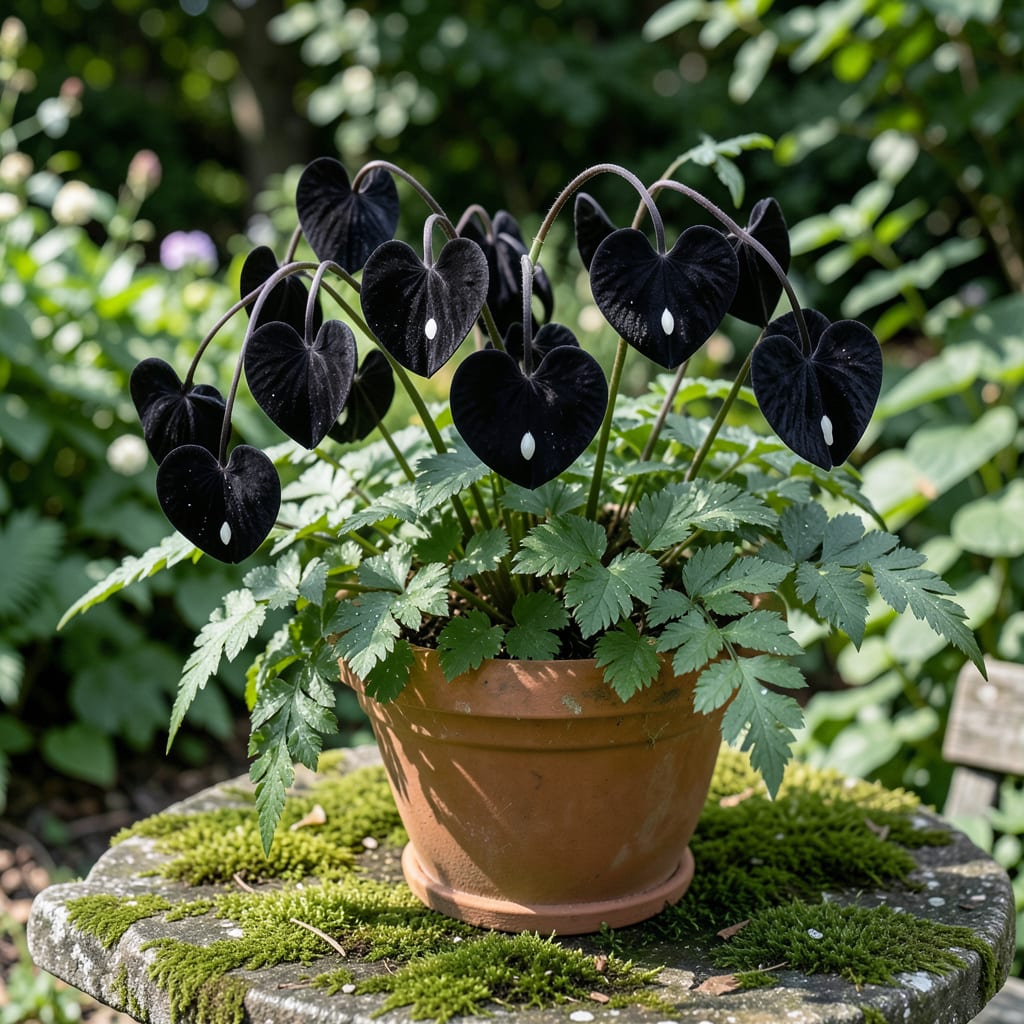
Dark, velvety leaves that stop neighbors in their tracks. I planted my first black bleeding heart in partial shade, and within a season, it became the most asked-about plant in my garden.
It thrives where others struggle—under trees, along north-facing walls—with surprisingly little maintenance. Just give it consistent moisture and rich soil, and those dramatic purple-black leaves will unfurl like magic every spring.
📚 In This Guide
Here’s the method I use to establish these striking plants in shaded garden spaces.
Choose a site with partial to full shade, as direct afternoon sun can scorch the delicate foliage. Black bleeding heart thrives in locations with dappled morning light or the north side of buildings. The soil should be rich, well-draining, and consistently moist but never waterlogged.
Test your soil by digging a 12-inch deep hole and filling it with water. If it drains completely within 3-4 hours, the drainage is adequate. Amend heavy clay or sandy soils with compost to improve structure before planting.
Dig a hole that’s twice as wide as the root ball but no deeper than the container. Loosen the roots gently if they’re circling the pot—this encourages outward growth into the surrounding soil. Set the plant in the hole so the top of the root ball sits 1 inch above the soil line to prevent settling.
Backfill with native soil mixed with 30% compost to provide nutrients without overwhelming the plant. Water thoroughly after planting to eliminate air pockets, then add a 2-inch layer of organic mulch to retain moisture and suppress weeds.
Water deeply 2-3 times per week for the first month, ensuring the soil stays evenly moist but not soggy. After establishment, reduce to 1 inch of water weekly, including rainfall. The goal is to keep the top 1-2 inches of soil consistently damp to the touch.
Drought stress causes foliage to wilt and turn crispy at the edges. If this happens, soak the soil immediately. Morning watering is ideal to allow foliage to dry before evening, reducing disease risk.
Apply a balanced, slow-release fertilizer in early spring as new growth emerges. Follow label instructions for dosage, typically 1 tablespoon per square foot. Avoid high-nitrogen fertilizers, which promote leafy growth at the expense of flowers.
Remove spent flower stems to encourage a second bloom cycle. Cut back the entire plant to the ground after foliage yellows in late summer—this rejuvenates the bush for next year. Divide clumps every 3-4 years in early spring to maintain vigor.
Watch for aphids on new growth, which can be blasted off with a strong stream of water. Slugs and snails may chew foliage in damp conditions—handpick them at dusk or use organic baits. Fungal issues like powdery mildew appear as white coatings on leaves in humid weather.
Improve air circulation by spacing plants 2-3 feet apart and avoid overhead watering. If problems persist, treat with neem oil or a copper-based fungicide, following product instructions precisely.
These insights will help you avoid common pitfalls when establishing these elegant plants.
Light Requirements: Stick to the partial to full shade guideline in Step 1—direct afternoon sun will scorch the delicate foliage. I’ve learned that even dappled morning light is preferable to harsh midday exposure, which can cause leaf burn and stress the plant.
Soil Drainage Test: The 12-inch deep hole test from Step 1 is crucial. If water doesn’t drain within 3-4 hours, amend the soil with compost to improve drainage. Poor drainage leads to root rot, which is the most common reason these plants fail to thrive.
Planting Depth: As mentioned in Step 2, setting the plant so the top of the root ball sits 1 inch above the soil line prevents settling. I made the mistake of planting too deep once, and the crown rotted. Always follow this rule for healthy growth.
Watering Consistency: The 2-3 times per week watering schedule in Step 3 is non-negotiable during the first month. After establishment, the 1 inch of water weekly rule keeps the top 1-2 inches of soil damp. Drought stress shows up quickly as crispy leaf edges, so stay vigilant.
Keep the soil moist but well-drained, and plant in partial to full shade. Mulch to retain moisture, and prune back after flowering to encourage new growth. Fertilize lightly in spring.
This shrub typically blooms in late spring to early summer, producing its signature heart-shaped flowers. Blooming may vary slightly based on climate and care conditions.
Consider Corydalis or Hellebore for similar shade tolerance and unique flowers. For dramatic foliage, try Ninebark or Smoke Bush. Each offers a different but stunning look.
Lack of blooms can result from too much sun, poor soil, or improper pruning. Ensure it’s planted in shade, has rich soil, and isn’t pruned at the wrong time (avoid cutting back in fall).
