
Beautiful Plants For Your Interior
Beautiful Plants For Your Interior
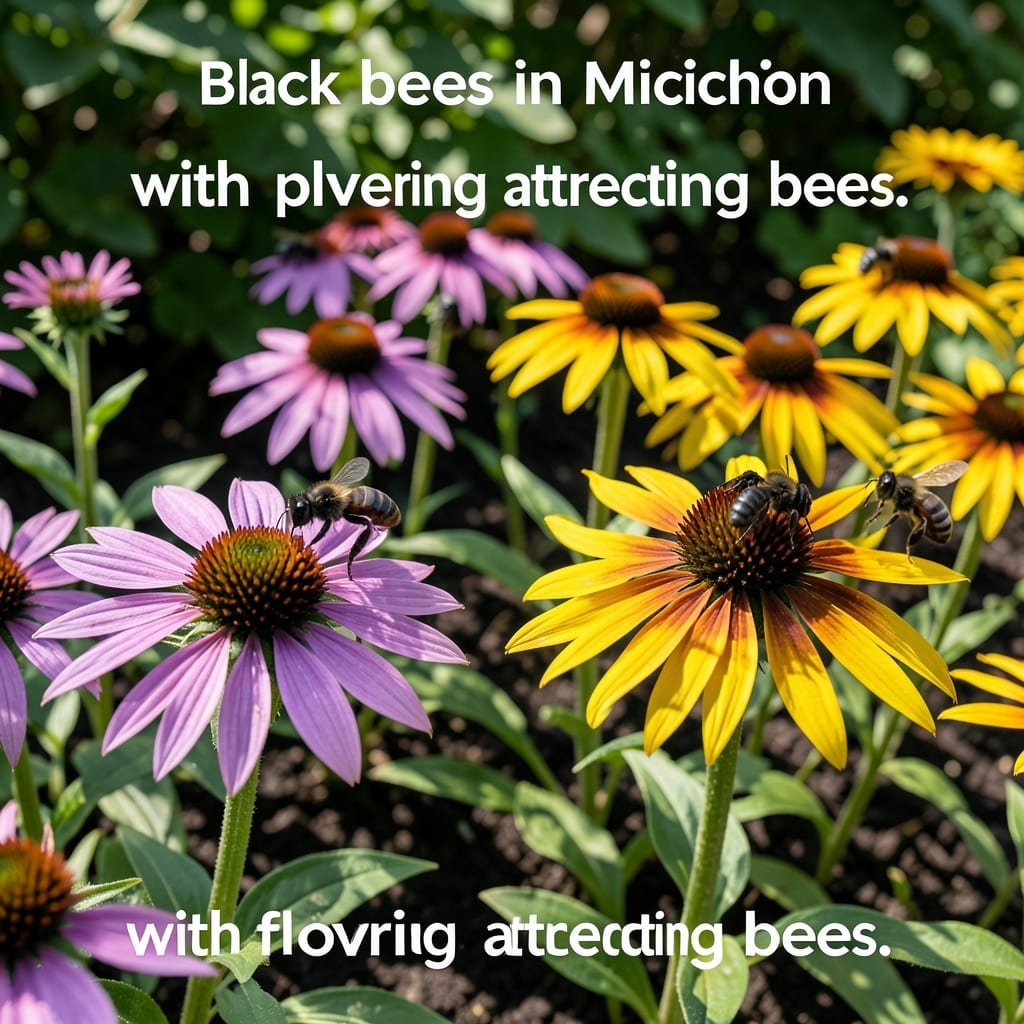
Michigan’s black bees are often carpenter bees or dark bumblebees, recognized by their shiny black bodies and nesting habits in wood or underground.
I’ve noticed these bees thrive in Michigan’s climate because of the abundant untreated wood and loose soil they favor for nesting. Carpenter bees, for example, bore into decks or fences, while dark bumblebees prefer underground burrows. Their glossy exoskeletons help distinguish them from honeybees, which tend to have more distinct color patterns. ✨
What’s fascinating is how their behavior varies—carpenter bees are solitary, while bumblebees live in small colonies. This difference affects how you might manage them in your garden or home. 💫
💡 In This Article
The easiest way to tell carpenter bees from bumblebees is by their abdomen. Carpenter bees have a smooth, shiny black abdomen with no hair, while bumblebees display a fuzzy, often yellow-marked abdomen. Carpenter bees are also larger, measuring 0.75-1 inch long, with a robust, drone-like flight pattern. 🔥
Carpenter bees nest by chewing into soft woods like cedar, pine, or untreated lumber, creating perfectly round entry holes about 0.5 inches in diameter. Bumblebees, on the other hand, prefer underground burrows in loose, well-drained soil, often repurposing abandoned rodent holes. Their nests contain 50-400 individuals, while carpenter bees are solitary.
Another key difference is behavior. Male carpenter bees are territorial and may hover aggressively near nest sites, though they can’t sting. Female carpenter bees can sting but rarely do unless provoked. Bumblebees are generally docile, only stinging when threatened, and their colonies die off in winter except for new queens.
Look for these visual clues: carpenter bees have a distinctive metallic blue-black sheen in sunlight, while dark bumblebees appear more matte. Carpenter bee nests often have sawdust-like frass below entry holes, while bumblebee nests may have a small mound of soil at the entrance. ⚡
Timing matters too. Carpenter bees emerge in early spring (March-April) and remain active through summer, while bumblebee queens emerge later (April-May) to establish new colonies. Both species are crucial pollinators for Michigan’s native plants like bergamot, coneflowers, and wild lupine.
Look for a smooth, shiny black abdomen with no hair. Carpenter bees are larger (0.75-1 inch) and nest in wood, while bumblebees have fuzzy abdomens and prefer underground burrows.
Carpenter bees emerge in early spring (March-April), while bumblebee queens start colonies later (April-May). Both remain active through summer, pollinating native plants.
Male carpenter bees hover aggressively but can’t sting. Females rarely sting unless provoked. Bumblebees are docile and only sting when threatened. Maintain distance to avoid issues.
Use pressure-treated wood or fill existing holes with steel wool in early spring. Install bee houses as alternative nesting sites to redirect them.