
Beautiful Plants For Your Interior
Beautiful Plants For Your Interior
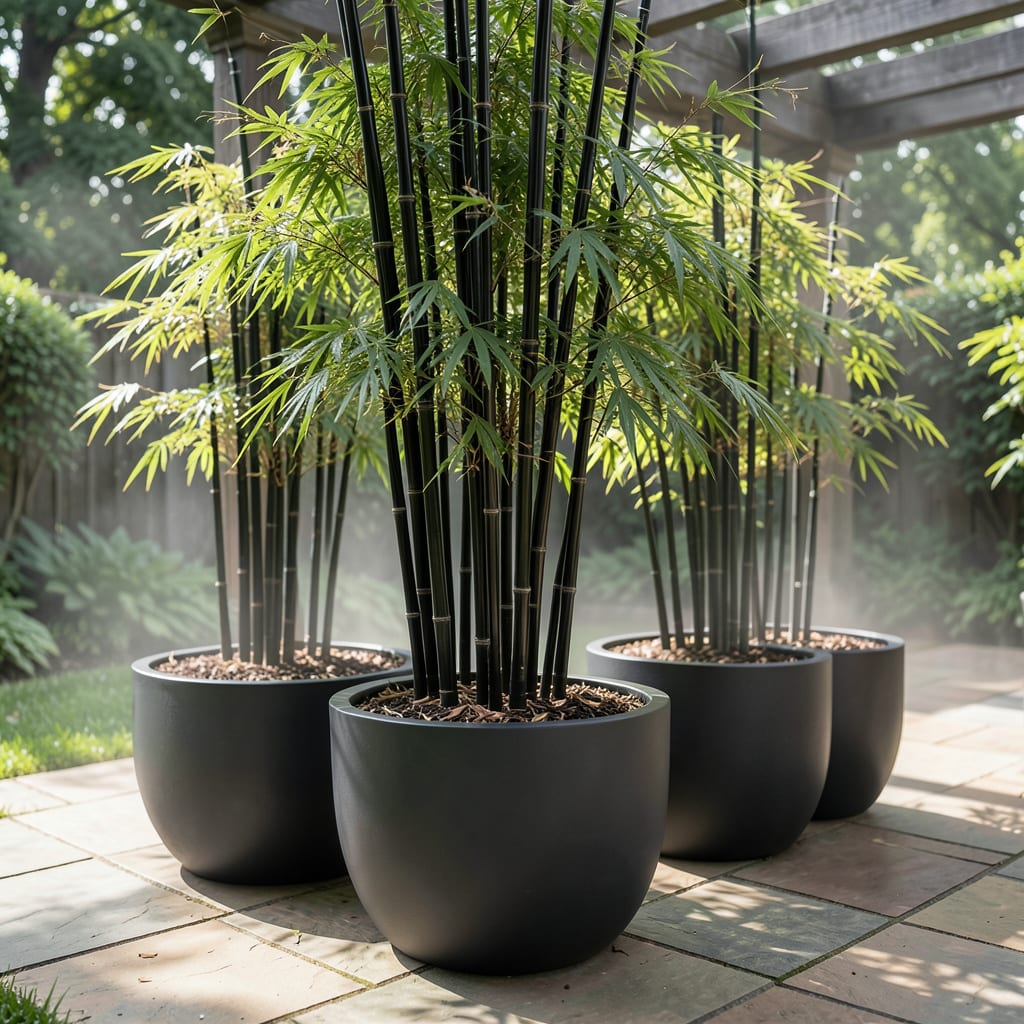
Black bamboo in containers changes everything for small-space gardeners. I’ve used these tall, dramatic plants to create living privacy screens on my apartment balcony, and the transformation is stunning.
You get fast-growing height without invasive roots, plus the deep purple-black canes add year-round interest. Just pick the right container, soil, and sunlight, and you’ll have a low-maintenance focal point that thrives in tight quarters.
📚 In This Guide
This is the method I use to create lush, dramatic screens that thrive in contained spaces.
Choose a clumping bamboo variety like ‘Tiny Fern’ or ‘Dwarf White Stripe’ rather than running types, which will escape containers. For a 6-8 foot mature height, select a planter at least 24 inches deep and wide—shallower pots restrict root growth and cause stress.
I prefer heavy-duty plastic, resin, or concrete containers because they resist cracking under bamboo’s vigorous root pressure. Ensure your planter has multiple drainage holes—soggy roots are the fastest way to kill bamboo. Elevate the pot on bricks to prevent water from pooling at the base.
Bamboo thrives in well-draining, slightly acidic soil with a pH between 5.5 and 6.5. Use a mix of 50% high-quality potting soil and 50% perlite or pumice to ensure aeration. Avoid garden soil—it compacts in containers and suffocates roots.
Add a 2-inch layer of coarse gravel or broken pottery at the bottom of the planter to improve drainage further. I also mix in a handful of slow-release fertilizer at planting to give the bamboo a strong start. Moisten the soil mix before planting so it settles evenly around the roots.
Remove the bamboo from its nursery pot and gently loosen the root ball. Place it in the center of the planter at the same depth it was growing in the container. Backfill with your soil mix, pressing lightly to eliminate air pockets. Water thoroughly until you see it draining from the bottom.
Position the planter where it will receive full sun to partial shade—black bamboo prefers 6+ hours of sunlight daily but tolerates afternoon shade in hotter climates. If you notice leaves curling or yellowing, it’s likely getting too much direct sun. Rotate the pot quarter-turn weekly to ensure even growth.
Keep the soil consistently moist but not waterlogged. Water when the top inch of soil feels dry to the touch. Bamboo is thirsty, especially in the first growing season, so check daily in hot weather. Mulch the surface with 1-2 inches of organic mulch to retain moisture and suppress weeds.
Feed your bamboo with a balanced liquid fertilizer every 4-6 weeks during the growing season (spring to early fall). I switch to a low-nitrogen formula in late summer to harden off new growth before winter. Yellow leaves often signal nitrogen deficiency, so adjust your feeding schedule accordingly.
Prune dead, damaged, or weak canes at ground level in early spring before new growth emerges. Thin out older canes to improve air circulation and light penetration. Use clean, sharp pruners to avoid jagged cuts that invite disease.
To control height, trim the top one-third of new shoots in late summer. This encourages bushier growth and maintains your desired screen height. Wear gloves when handling bamboo—some varieties have sharp edges that can cut skin. Remove any canes that escape the planter immediately to prevent spreading.
These insights will help you avoid pitfalls and get the most from your container bamboo.
Variety Selection: Always choose clumping varieties like ‘Tiny Fern’ or ‘Dwarf White Stripe’ as mentioned in Step 1. Running bamboo will escape containers and become invasive. I learned this the hard way after a running variety took over my neighbor’s yard.
Container Considerations: The 24-inch minimum depth and width from Step 1 isn’t arbitrary—shallower pots restrict root development. I’ve seen bamboo stress quickly in undersized containers. Heavy-duty materials like plastic, resin, or concrete resist the root pressure that cracks weaker pots.
Drainage is Non-Negotiable: The multiple drainage holes mentioned in Step 1 are critical. Elevating the pot on bricks, as suggested, prevents water from pooling at the base. Soggy roots are indeed the fastest way to kill bamboo—trust me on this.
Sunlight and Rotation: The 6+ hours of daily sunlight in Step 3 is ideal, but that quarter-turn weekly rotation is what ensures even growth. Without it, you’ll get lopsided plants. If leaves curl or yellow, it’s your cue to provide some afternoon shade in hotter climates.
Yes! Black bamboo thrives in large, deep containers (20+ gallons) with good drainage. Use well-draining soil and water regularly, as potted bamboo dries out faster than in-ground plants. Ensure the planter has drainage holes to prevent root rot.
Black bamboo grows 1–3 feet per year in ideal conditions. In planters, growth may be slightly slower due to root restriction. Provide ample sunlight, water, and occasional fertilizer to encourage faster, healthier growth.
Consider clumping bamboos like Bambusa multiplex or tall ornamental grasses like pampas grass. Evergreen shrubs (e.g., arborvitae or boxwood) also work well in containers for privacy without invasive spreading.
Yellowing leaves often signal overwatering, nutrient deficiency, or poor drainage. Check soil moisture—it should be damp but not soggy. Fertilize lightly in spring/summer, and ensure the planter has adequate drainage holes.
