
Beautiful Plants For Your Interior
Beautiful Plants For Your Interior
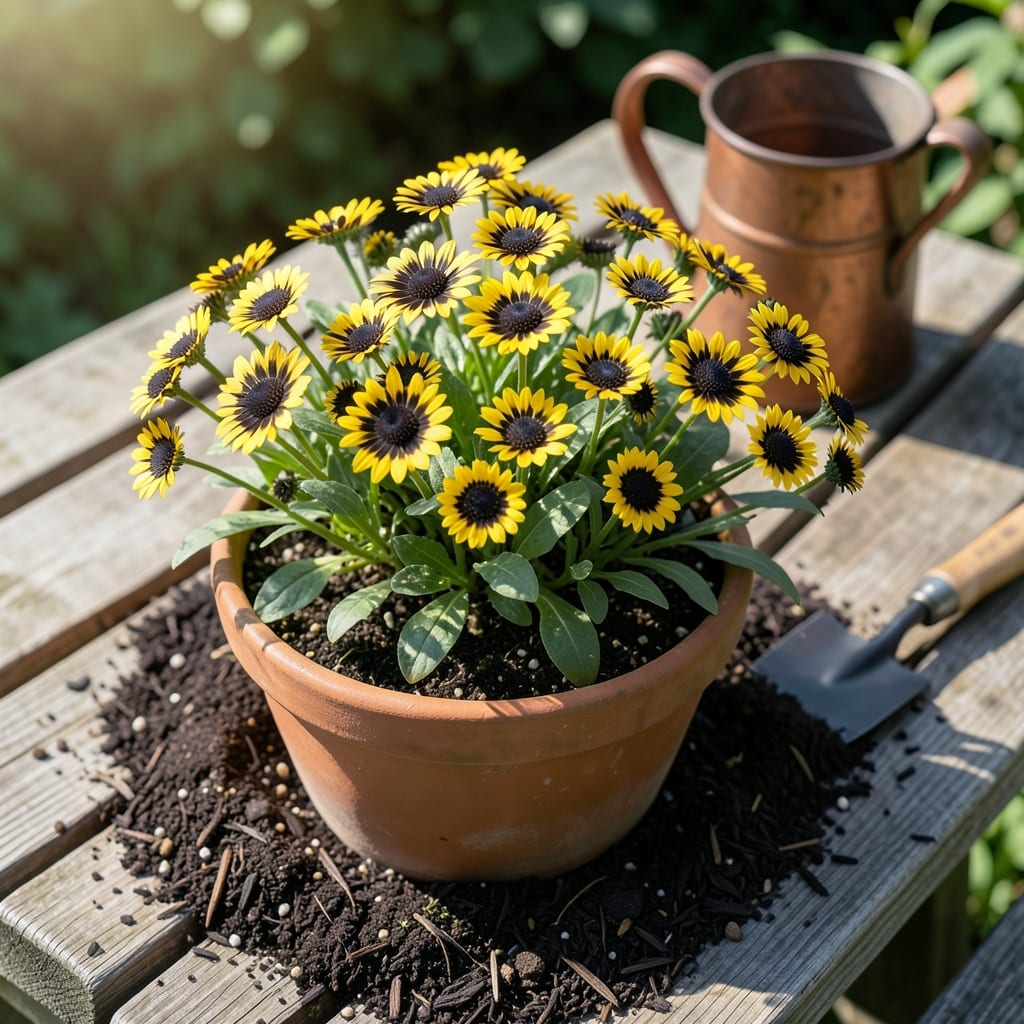
These bold daisies bring drama to any garden space. I first planted them three seasons ago, and their vibrant contrast still stops visitors in their tracks.
They thrive in full sun with well-draining soil, asking only for weekly water once established. The payoff is months of striking blooms that brighten borders and containers alike.
Nothing exotic here—just bold blooms and basic garden supplies for stunning contrast.
| Ingredient | Amount | Notes |
|---|---|---|
| Black and Yellow Daisy Seedlings 🌼 | 6 plants | Healthy 4-inch pots preferred |
| Well-Draining Potting Mix 🌾 | 3 gallons | Peat-based for containers |
| Compost 🪨 | 2 gallons | Aged organic matter |
| Garden Trowel ✂️ | 1 piece | Sturdy metal blade |
| Watering Can 💧 | 1 piece | With long spout |
| Mulch 🪵 | 1 bag | Straw or bark chips |
| Slow-Release Fertilizer 🧪 | 1 lb | 10-10-10 NPK balance |
| Garden Gloves 🧤 | 1 piece | Breathable fabric |
[recipeingredientscaler]
The potting mix must drain well—dense soil suffocates roots. Most garden centers carry quality peat-based blends. I grab mine from Home Depot (the good stuff, not the bagged-up dirt from a sale). Black and yellow daisies aren’t picky, but they won’t tolerate soggy conditions.
No compost? Bagged cow manure works in a pinch (just ensure it’s aged). Plastic pots are fine, but terra cotta breathes better for these sun-lovers. Mulch can be straw, wood chips, or even gravel (or whatever drainage gravel you’ve got).
Leftover supplies store for years—keep potting mix sealed and dry. Fertilizer lasts indefinitely unopened. I label everything with purchase dates (worth the extra dollar) so I’m never guessing what’s what next season.
Here’s the method I use for bold, long-lasting color in any garden space.
Begin by selecting a location with full sun exposure, as these daisies thrive in bright conditions. Using the garden trowel, loosen the soil to a depth of 12 inches, ensuring it’s free of weeds and debris. This promotes healthy root penetration and drainage.
Incorporate the 3 gallons Well-Draining Potting Mix and 2 gallons Compost into the loosened soil. The potting mix improves drainage while the compost enriches the soil with organic matter. Mix thoroughly to create a balanced growing medium.
Wearing the garden gloves, gently remove each of the 6 plants Black and Yellow Daisy Seedlings from their containers. Handle the seedlings by the root ball to avoid damaging the stems or leaves. This ensures they establish quickly without stress.
Dig holes with the garden trowel that are just deep enough to accommodate the root ball, spacing them 18-24 inches apart. Place each seedling in its hole and backfill with the amended soil, pressing lightly to eliminate air pockets. This spacing allows for proper air circulation as they mature.
Using the watering can, give each plant a deep watering immediately after planting. Ensure the soil is evenly moist but not waterlogged. You’ll know it’s sufficient when the top 2-3 inches of soil feels damp to the touch.
Spread the 1 bag Mulch evenly around the base of each plant, maintaining a 2-inch layer while keeping it 1 inch away from the stems to prevent rot. Mulch helps retain moisture and suppresses weeds, giving your daisies a clean, thriving environment.
Sprinkle the 1 lb Slow-Release Fertilizer evenly around the base of each plant, following the package instructions for coverage. This type of fertilizer provides a steady supply of nutrients, encouraging robust growth and vibrant blooms over time.
Lightly work the fertilizer into the top 1 inch of soil using the garden trowel, taking care not to disturb the roots. Water again to help activate the fertilizer. You’ll see a noticeable difference in leaf color and plant vigor within 2-3 weeks.
For a floral twist, pair your black and yellow daisy with a crisp Belgian Witbier. The citrusy notes and subtle spice of beers like Hoegaarden or Blue Moon complement the earthy, slightly bitter tones of the daisy. 🍻 A light Pilsner, such as Stella Artois, also works well, offering a clean finish that doesn’t overpower the delicate flavors.
A dry Sauvignon Blanc with its zesty acidity and herbal undertones—think Kim Crawford or Oyster Bay—enhances the daisy’s fresh, green notes. 🍷 For a richer option, a lightly oaked Chardonnay like Kendall-Jackson Vintner’s Reserve adds a creamy texture that balances the flower’s slight bitterness.
Sparkling water with a squeeze of lemon or lime offers a refreshing, palate-cleansing contrast to the daisy’s earthy flavor. For something sweeter, a hibiscus iced tea brings floral harmony without alcohol. 💡 Try adding a sprig of mint for an extra layer of complexity.
