
Beautiful Plants For Your Interior
Beautiful Plants For Your Interior
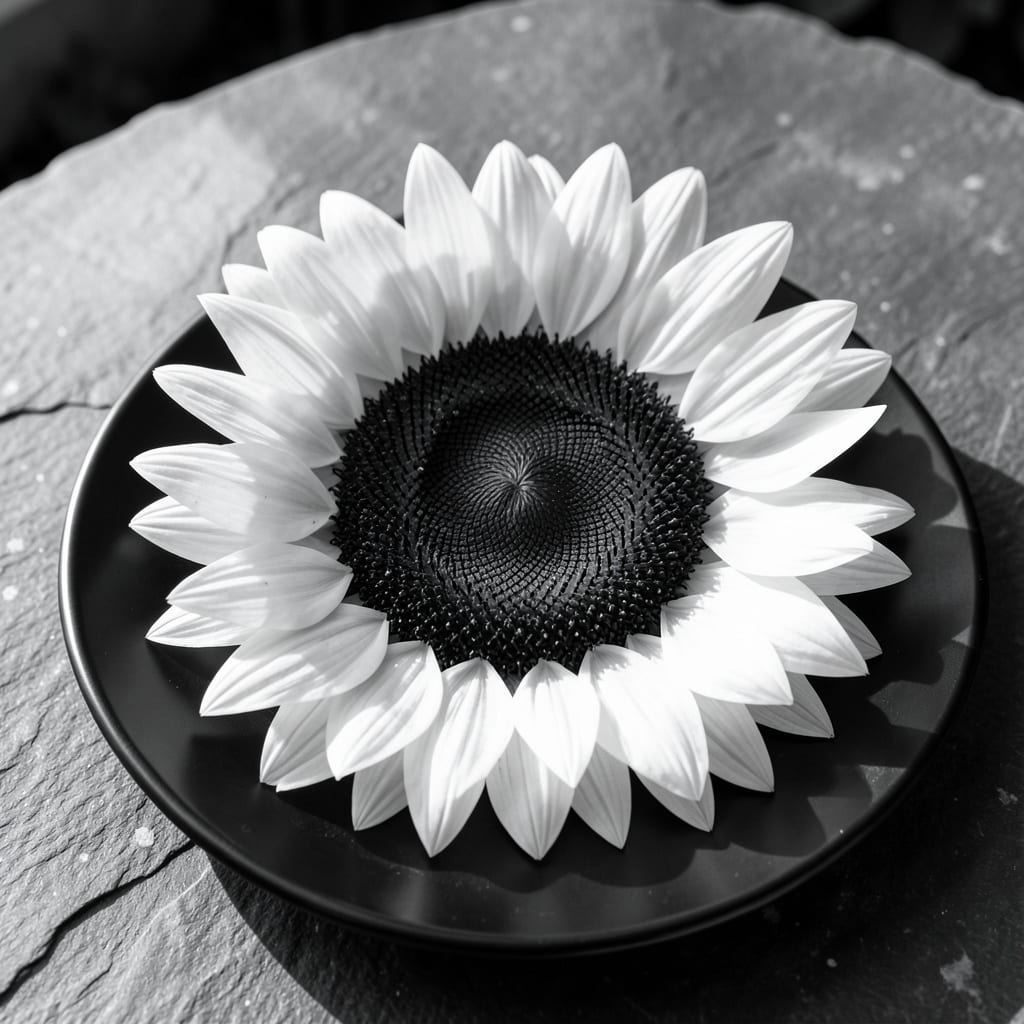
Black and white sunflowers stop garden visitors in their tracks. I planted my first patch last summer and the stark contrast between those dark centers and pale petals created a visual punch no other flower could match.
They thrive in full sun with well-drained soil, growing 6-8 feet tall with minimal fuss. By mid-summer, you’ll have dramatic blooms that last for weeks, perfect for cutting or leaving as a bold garden statement.
📚 In This Guide
Here’s the method I use to get bold, high-contrast blooms that stop garden visitors in their tracks.
Start with a true black-and-white variety like ‘Black Oil’ or ‘Moulin Rouge’—these produce deep maroon centers with pale outer petals that appear nearly white. I plant seeds directly outdoors after the last frost when soil reaches 60°F. This timing prevents rot in cold, wet earth.
You’ll see germination in 7-14 days if conditions are right. If your springs stay cool, start seeds indoors 2-3 weeks before transplanting to give them a head start. The key is patience—rushing this step leads to weak, non-viable plants.
Select a spot with full sun (at least 6-8 hours daily) and well-draining soil. Sunflowers hate soggy roots, so avoid low-lying areas. I work the soil to a depth of 12 inches and mix in compost for nutrients without compacting the earth.
Space seeds 12-18 inches apart for dwarf varieties or 24-36 inches for taller types. This gives roots room to anchor and prevents competition for water. Mark your rows with sticks—it’s easy to forget where you’ve planted when nothing’s visible yet.
Push seeds 1 inch deep and cover lightly with soil. Water gently but thoroughly after planting, ensuring the top 2-3 inches of soil are moist. I use a watering can with a rose attachment to avoid dislodging seeds or creating puddles.
Keep the soil consistently moist until seedlings emerge, then taper back to watering every 2-3 days depending on rain. The trick is to water deeply at the base—sunflowers develop deep taproots, and shallow watering encourages weak growth.
Once plants reach 12 inches tall, I stake taller varieties with bamboo poles or use a tomato cage for support. Black-and-white sunflowers can grow heavy heads, and a sudden windstorm can snap unsupported stems. Tie stems loosely with soft twine to allow for expansion.
Feed with a balanced fertilizer when buds form, but go easy—too much nitrogen produces lush foliage at the expense of flowers. Watch for the first true leaves (not the initial cotyledons) as your signal that plants are established and ready for light feeding.
Deadhead spent blooms regularly to encourage continuous flowering. With black-and-white varieties, this also prevents self-seeding if you want to control where they grow next year. I cut stems back to the next set of leaves, which often triggers new bud formation.
For the most dramatic contrast, plant in clusters of 3-5 rather than single stems. The dark centers pop against the pale petals when viewed en masse. Harvest for bouquets in the morning when buds are just beginning to open for the longest vase life.
Small adjustments make the difference between struggling seedlings and show-stopping blooms.
Timing Secret: Plant when soil hits exactly 60°F—not a degree cooler. I use a soil thermometer because guessing gets you rotting seeds or stalled germination. That 7-14 day window for sprouts only works if the earth is warm enough from the start.
Sunlight Strategy: The 6-8 hours of daily sun isn’t negotiable for these varieties. I’ve tried partial shade, and the contrast between those dark centers and pale petals fades dramatically. If your garden has a sunny spot that gets afternoon shade, save it for something else.
Planting Depth: That 1 inch planting depth in Step 3 is critical. Go shallower and seeds dry out; go deeper and they struggle to break through. Use your finger to measure—no tools needed, just consistency.
Support System: Don’t wait until stems are flopping to add supports. As soon as plants hit 12 inches tall, get those bamboo stakes in. I learned this after losing three mature plants to a single summer storm. The heads get heavy, and wind doesn’t care about your timing.
Plant seeds in well-draining soil with full sun exposure. Water regularly but avoid over-saturating. These sunflowers thrive in warm climates and typically bloom in 70-90 days.
Yes! Choose a large container (at least 12-18 inches deep) with drainage holes. Use quality potting mix and ensure the pot receives 6-8 hours of sunlight daily. Dwarf varieties work best for containers.
Variations in color can occur due to soil pH, sunlight, or seed type. Ensure you’re planting a true black and white variety (like ‘Moulin Rouge’) and provide consistent care for the best contrast.
Sow seeds outdoors after the last frost when soil temperatures reach 50-60°F. For earlier blooms, start seeds indoors 2-3 weeks before transplanting.
Yes! Try ‘Velvet Queen’ (deep red) or ‘Italian White’ (pale yellow) for contrast. Pairing dark and light varieties in the same garden can also create a striking effect.
