
Beautiful Plants For Your Interior
Beautiful Plants For Your Interior
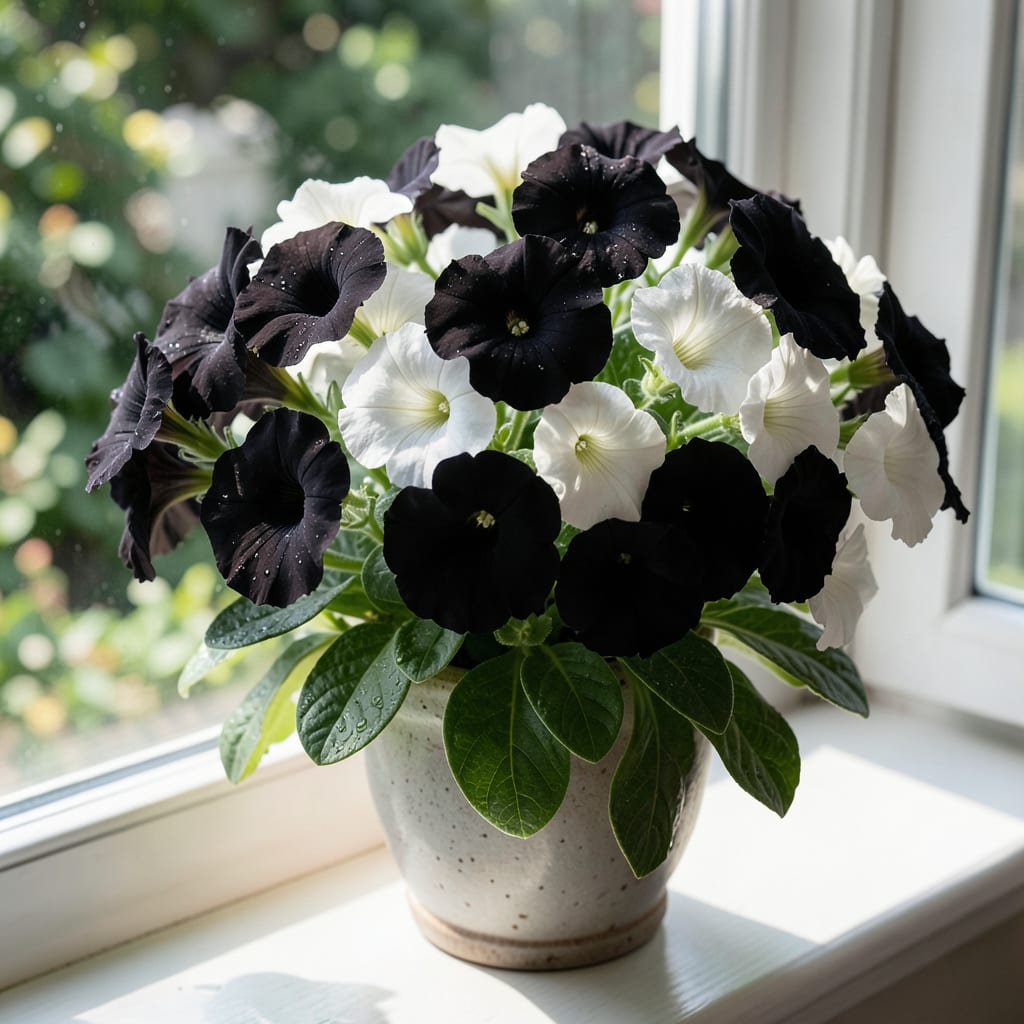
Black and white petunias create a dramatic contrast that stops visitors in their tracks. I planted my first border last spring, and the striking two-tone blooms transformed the entire garden bed.
These plants thrive in full sun with well-draining soil. They need consistent watering but can handle brief dry spells. With proper care, you’ll get abundant flowers from late spring until first frost.
📚 In This Guide
This foolproof method ensures vibrant, high-contrast blooms that will make your borders pop.
Select a site with full sun—petunias need at least 6-8 hours of direct sunlight daily to produce their boldest colors. I always test the spot first by observing how the light moves across it throughout the day. Morning sun with afternoon shade works, but all-day sun delivers the most striking black-and-white contrast.
Amend the soil with 2-3 inches of compost worked into the top 6 inches of bed. Petunias thrive in well-draining, slightly acidic to neutral soil (pH 6.0-7.0). If your soil is heavy clay, mix in 1 part sand or perlite to improve drainage. Compacted soil suffocates roots and leads to stunted growth.
Dig holes 12-18 inches apart—closer for a dense, carpet-like effect, farther for larger varieties. The hole should be just deep enough to accommodate the root ball so the top of the root system sits ½ inch above the soil line. Planting too deep causes stem rot and poor establishment.
Gently remove the petunia from its container and loosen the roots if they’re circling. Place it in the hole, backfill with soil, and press lightly to eliminate air pockets. Water immediately with 1 gallon per plant to settle the soil and hydrate the roots. This first drink is critical for preventing transplant shock.
Keep the soil consistently moist but not soggy during the first 2-3 weeks after planting. I water deeply 2-3 times per week in the absence of rain, allowing the top 1 inch of soil to dry between waterings. Overwatering leads to yellow leaves and root rot, so check moisture by sticking your finger in the soil.
Begin fertilizing 1 week after planting with a balanced, water-soluble fertilizer (10-10-10 or 20-20-20) every 7-10 days. Petunias are heavy feeders, and regular fertilization encourages continuous blooming. Switch to a high-phosphorus formula when buds form to boost flower production. Always follow package instructions for dilution rates.
Pinch back the tips of new plants when they reach 6 inches tall to encourage bushier growth. Use your fingers or clean pruners to remove the top 1-2 inches of each stem. This promotes branching and results in a fuller, more compact plant with more flowers.
Deadhead spent blooms weekly by snipping just above the next set of leaves or side bud. This prevents the plant from putting energy into seed production and redirects it toward new blooms. If your petunias start looking leggy mid-summer, give them a light trim—cut back by one-third and they’ll bounce back with fresh growth and flowers within 2-3 weeks.
Small adjustments can make a big difference in achieving those bold, high-contrast blooms.
Sunlight Strategy: The 6-8 hours of direct sunlight isn’t just a suggestion—it’s essential for that striking black-and-white contrast. I learned this the hard way when my first batch in partial shade produced pale, washed-out flowers. Morning sun with afternoon shade works, but full sun delivers the dramatic effect we’re after.
Soil Preparation Insight: When amending with 2-3 inches of compost into the top 6 inches of soil, don’t cut corners. I’ve seen gardeners skip this step, only to watch their petunias struggle in compacted soil. If you’re dealing with heavy clay, that 1 part sand or perlite makes all the difference for drainage.
Planting Depth Caution: That ½ inch above the soil line isn’t arbitrary—planting too deep is the fastest way to stem rot. I’ve ruined more than one batch by being overzealous with the hole depth. Trust the process: shallow is better than deep for petunias.
Watering Wisdom: During those first 2-3 weeks, the 1 gallon per plant immediately after planting is non-negotiable. This first deep watering prevents transplant shock. After that, stick to the 2-3 times per week schedule, letting that top 1 inch dry between waterings.
Yes, they’re real! Varieties like ‘Phantom’ or ‘Black Velvet’ naturally produce deep purple-black petals with white accents. No dye is needed—these striking blooms are bred for their dramatic contrast.
Plant after the last frost in spring when soil temps reach 60°F. They thrive in warm weather and need full sun (6+ hours daily) for vibrant blooms.
Absolutely! Use well-draining pots (12+ inches deep) and quality potting mix. Water regularly, as containers dry out faster than garden beds.
Sun exposure or heat stress can cause color shifts. Ensure they get afternoon shade in extreme heat, and avoid over-fertilizing with nitrogen.
