
Beautiful Plants For Your Interior
Beautiful Plants For Your Interior
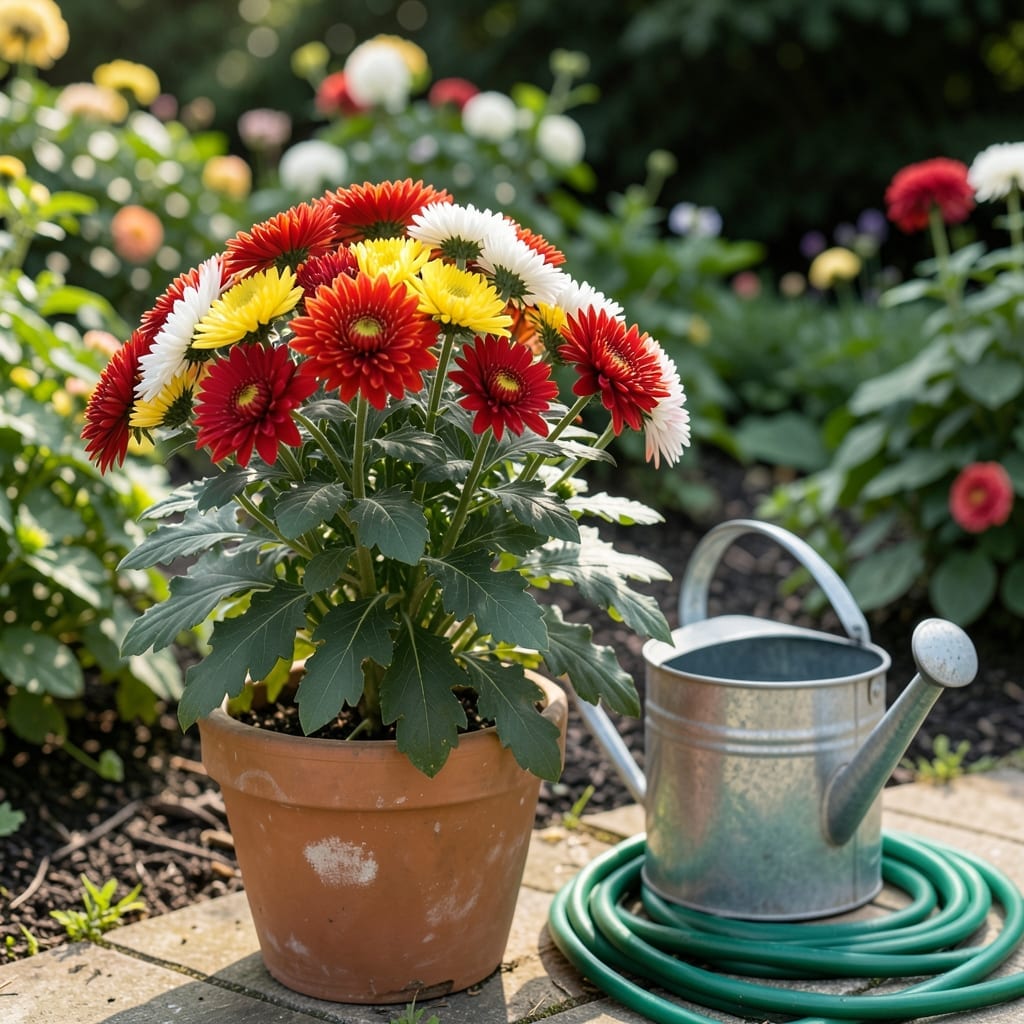
Watering your Chrysanthemum 🌼 the right way can transform your garden from ordinary to extraordinary. Those vibrant fall blooms we all love depend on more than just luck—they need consistent care.
I’ve seen too many gardeners struggle with wilted or lackluster mums, not realizing their watering habits might be the culprit. The good news? With a few simple adjustments, you can achieve those stunning displays.
Discover how to give your mums the perfect amount of moisture for healthy growth and breathtaking color. Let’s get started.
I’ve found that deep watering is the secret to vibrant mums that thrive. This method encourages strong root systems by delivering moisture to the lower soil levels, where it’s needed most. 🌼
Instead of a daily light sprinkle, I recommend a thorough soak every 5-7 days. This approach prevents shallow root growth and helps your plants withstand dry spells better.
| Requirement | Specification |
|---|---|
| Frequency | Every 5-7 days |
| Amount | 1 gallon per plant |
| Best Time | Morning (before 10 AM) |
| Method | Base watering |
For potted mums, you’ll need to water more frequently—about every 3-5 days. Containers dry out faster, so keep an eye on the soil moisture about an inch down.
With in-ground mums, I check the soil by sticking my finger 2-3 inches deep. If it feels dry at that depth, it’s time to water. This simple test prevents both overwatering and underwatering. 🌿
The deep soak method works best with a slow water flow. I use a soaker hose or drip irrigation to deliver water directly to the root zone without wetting the foliage.
Avoid overhead watering with mums, as wet leaves can lead to fungal diseases. If you must use a sprinkler, do it early enough that the foliage dries before evening.
In hot climates, you might need to water more often. I’ve seen mums in Zone 9 require water every 3-4 days during summer. Always adjust based on your local conditions.
Remember that well-draining soil is crucial. Mums hate soggy roots, so if your soil is heavy clay, consider amending it with compost or planting in raised beds.
Finally, watch for signs of stress. Drooping leaves often indicate underwatering, while yellowing leaves might signal overwatering. With practice, you’ll develop an eye for your mums’ ideal moisture balance. 🪴
I see many gardeners accidentally sabotage their mums with common watering errors. One of the biggest is shallow watering, which encourages weak root growth and leaves plants vulnerable to drought. 🌼
Another frequent mistake is inconsistent schedules. Mums thrive on regular moisture, so alternating between drought and flood stresses the plants and reduces blooming potential.
Never use overhead watering in evening as it promotes fungal diseases. Always water at the base of plants to keep foliage dry and healthy.
Overhead watering is particularly problematic, especially when done in the late afternoon. Wet foliage overnight creates perfect conditions for powdery mildew and other fungal issues.
Many gardeners also overwater potted mums. Remember that containers drain faster but can also drown roots if left in saucers of water. Always empty excess water after 30 minutes. 🌿
I’ve noticed that ignoring soil type leads to problems too. Clay soils hold moisture longer, while sandy soils drain quickly. Adjust your watering frequency based on your soil composition.
Finally, don’t wait for wilting to water. By the time mums show drooping leaves, they’re already stressed. Check soil moisture 2-3 inches deep regularly to stay ahead of thirst. 🪴