
Beautiful Plants For Your Interior
Beautiful Plants For Your Interior
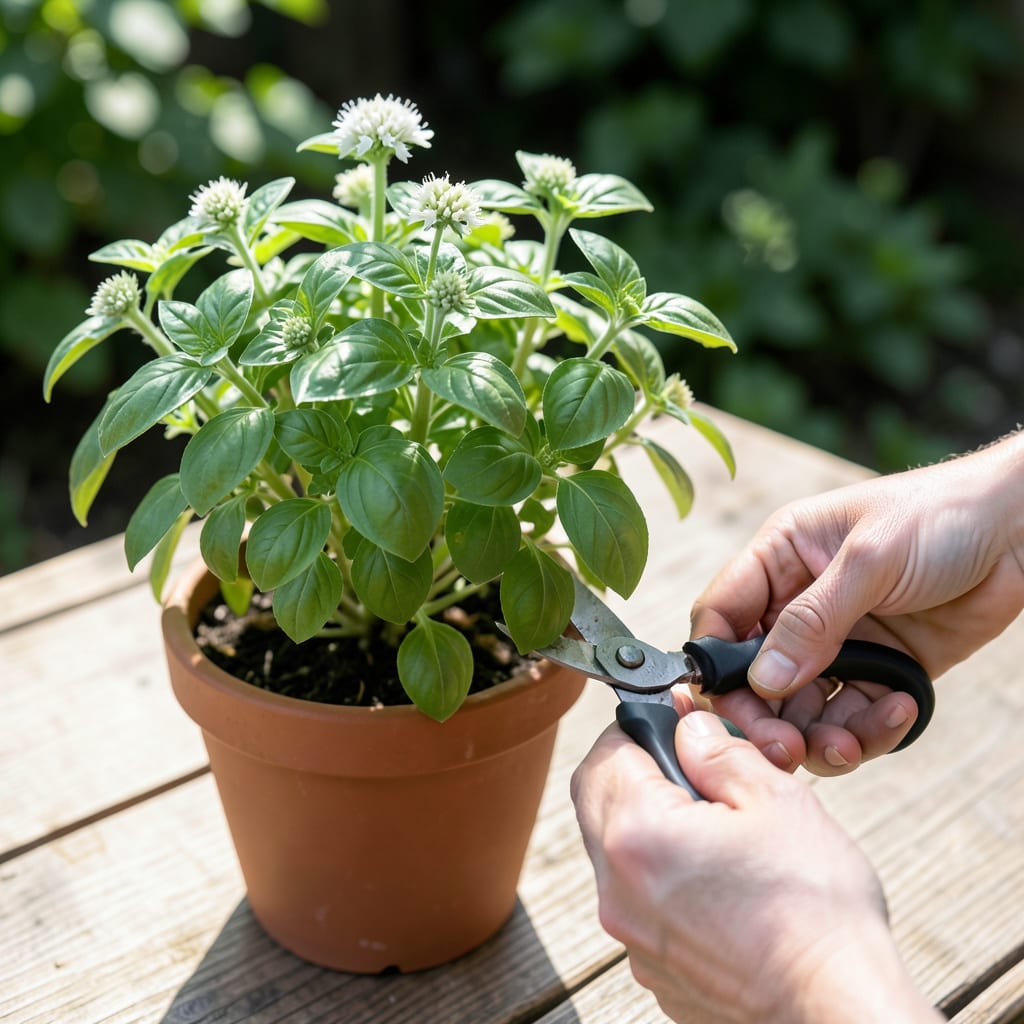
Picking fresh basil the right way can mean the difference between a thriving 🌿 plant that keeps producing and one that withers after a single harvest. Master this simple technique to enjoy flavorful leaves all season long.
I’ll show you how to harvest properly to preserve flavor and encourage healthy regrowth. With just a few easy steps, you can keep your basil plant productive and delicious.


I’ve found that timing is everything when harvesting basil. The best time to pick is in the early morning, just after the dew dries. This is when the essential oils are most concentrated, giving you the strongest flavor possible.
Look for mature leaves that are deep green and fully developed. The plant should be at least 6-8 inches tall with several sets of leaves before you start harvesting. This ensures the plant is strong enough to recover.
Always use clean, sharp tools to pick your basil. Dull scissors can crush the stems, making them more susceptible to disease. I prefer pruning shears for precision, but kitchen scissors work too if they’re sharp.
When cutting, never remove the top leaves first. Instead, start from the bottom of the plant and work your way up. This method allows the upper leaves to continue growing and photosynthesizing.
If you see flower buds forming, it’s time to harvest immediately. Once basil flowers, the leaves can turn bitter. Pinching off the buds early also redirects the plant’s energy into leaf production rather than flowers.
After picking, handle the leaves gently to avoid bruising. Bruised leaves can lose flavor and spoil faster. I like to place my harvest in a shallow basket rather than piling them up.
For the healthiest regrowth, I water my basil lightly after harvesting. This helps the plant recover from the stress of pruning. Avoid overwatering, though, as soggy soil can lead to root rot.
Remember that regular harvesting actually stimulates growth. The more you pick, the bushier your basil will become. Just be sure to leave enough foliage for the plant to sustain itself.
Finally, if you’re growing basil in containers, rotate the pot occasionally. This ensures even sunlight exposure and prevents the plant from growing lopsided as you harvest from all sides. 🌿
I see many gardeners make critical errors when picking basil that stunt growth. Harvesting too much at once is the most common mistake—never remove more than 1/3 of the plant in a single session.
Picking at the wrong time also affects flavor and regrowth. Avoid harvesting during the heat of the day when oils are less concentrated. Evening harvesting can leave dew on leaves, increasing disease risk.
Over-harvesting: Taking more than 1/3 of leaves stresses the plant.
Dull tools: Crushed stems invite disease and pests.
Wrong timing: Midday heat reduces essential oils in leaves.
Using dull scissors or fingers to tear leaves can damage the stems. This creates entry points for bacteria and fungi. Always use sharp, clean tools for a precise cut.
Another mistake is ignoring flower buds. If you see them forming, pinch them off immediately. Once basil flowers, the leaves often turn bitter and tough, and the plant stops focusing on foliage growth.
Some gardeners harvest from the top first, but this is backwards. Always start from the bottom leaves and work up. This ensures the upper growth continues to thrive and photosynthesize effectively.
Finally, rough handling after picking can bruise the leaves. Bruised basil loses flavor faster and may develop dark spots. I always use a gentle touch and a shallow container for transport. 🌿
The right tools make all the difference when harvesting basil. Using the wrong ones can damage stems and reduce your plant’s productivity. I always recommend dedicated gardening tools for the cleanest results.
Clean, sharp tools prevent stem crushing and disease spread. Dull blades tear rather than cut, which can stress your basil and invite infections. Investing in quality tools pays off with healthier plants and better yields.
| Tool | Purpose |
|---|---|
| Pruning Shears | Precision cuts for thick stems |
| Sharp Scissors | Clean cuts on tender growth |
| Harvesting Knife | Quick collection of multiple stems |
| Rubbing Alcohol | Tool sterilization between uses |
For most home gardeners, pruning shears are the best investment. They’re designed for clean, precise cuts that heal quickly. I keep mine in my pocket whenever I’m in the garden so I’m always ready to harvest.
A good pair of kitchen scissors can work in a pinch, but they’re not ideal. If you do use them, reserve them for gardening only to avoid contaminating your basil with food residues. Always clean and dry them after use.
Early morning is best, just after dew dries. This is when essential oils are most concentrated in the leaves.
Never harvest more than 1/3 of the plant in a single session. This prevents stress and encourages healthy regrowth.
Always start from the bottom leaves and work up. This allows the upper growth to continue photosynthesizing effectively.
Pinch them off immediately. Once basil flowers, leaves can turn bitter and the plant stops focusing on foliage growth.
