
Beautiful Plants For Your Interior
Beautiful Plants For Your Interior
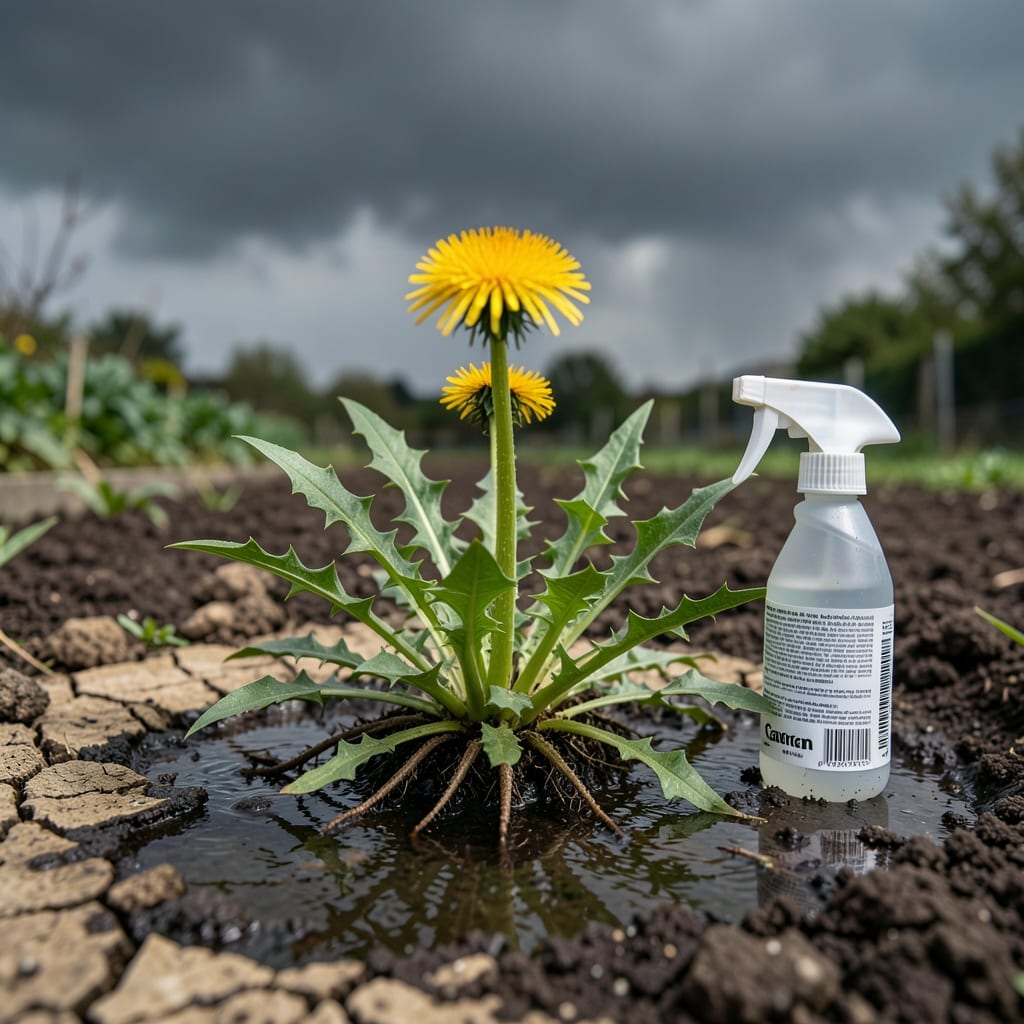
Spray weeds when rain is not expected for 6-24 hours. Post-rain works best as foliage is clean, but avoid spraying right before rain to prevent wash-off of herbicides.
I’ve found that timing your application for dry forecasts gives the herbicide a chance to fully absorb into the leaves. 🌿 The moisture from recent rain makes the weeds more receptive, but you need that window of dryness afterward for the chemical to work effectively. Windy or extremely hot days can also reduce effectiveness, so calm, mild conditions are your best bet.
💡 In This Article
Herbicides need 6-24 hours of dry contact with weed leaves to absorb properly. The active ingredients, like glyphosate or 2,4-D, penetrate the leaf cuticle and move through the plant’s vascular system. Rain within this window washes away up to 50-80% of the chemical before absorption occurs, drastically reducing effectiveness. This is why timing is everything.
Post-rain conditions offer a unique advantage. The moisture cleans dust and debris from foliage, allowing better herbicide contact. However, the leaves must dry completely first—typically 2-4 hours after rainfall stops. Wet leaves cause the spray to bead up and roll off rather than adhere, similar to how water beads on a freshly waxed car.
Soil moisture also plays a role in systemic herbicides. These chemicals need to be absorbed by roots as well as leaves. Too much rain can dilute the concentration in the soil, while too little prevents proper uptake. The sweet spot is moist but not waterlogged soil, which occurs about 12-24 hours after a moderate rainfall.
⚡
Temperature affects absorption rates too. Herbicides work best when applied at 60-85°F. Rain often brings cooler temperatures, which can slow down the chemical’s action. However, the combination of clean foliage and moderate soil moisture after rain often outweighs the temperature factor, making it one of the most effective times to spray.
What many don’t realize is that light rain (0.1 inches) can actually help activate some soil-applied herbicides by moving them into the root zone. But for foliar applications, even a light shower within 6 hours of spraying can reduce effectiveness by 30-50%.
Always check the specific product label, as some newer formulations have rainfastness as short as 1-2 hours. ✨
Wait 2-4 hours after light rain stops, or 12-24 hours after heavy rain. This allows foliage to dry completely while soil stays moist for optimal absorption. Wet leaves cause spray to bead and roll off.
Rain within 6 hours can wash away 50-80% of the herbicide before it absorbs. Even a light shower may reduce effectiveness by 30-50%. Check your product’s label for specific rainfastness times.
Early morning (6-10 AM) is ideal for most areas. Evenings (4-7 PM) work in hot climates, but avoid spraying too late as overnight dew can interfere.
Avoid spraying above 85°F as heat can cause herbicides to evaporate too quickly. Below 60°F, absorption slows significantly. Stick to 60-85°F for best results.