
Beautiful Plants For Your Interior
Beautiful Plants For Your Interior
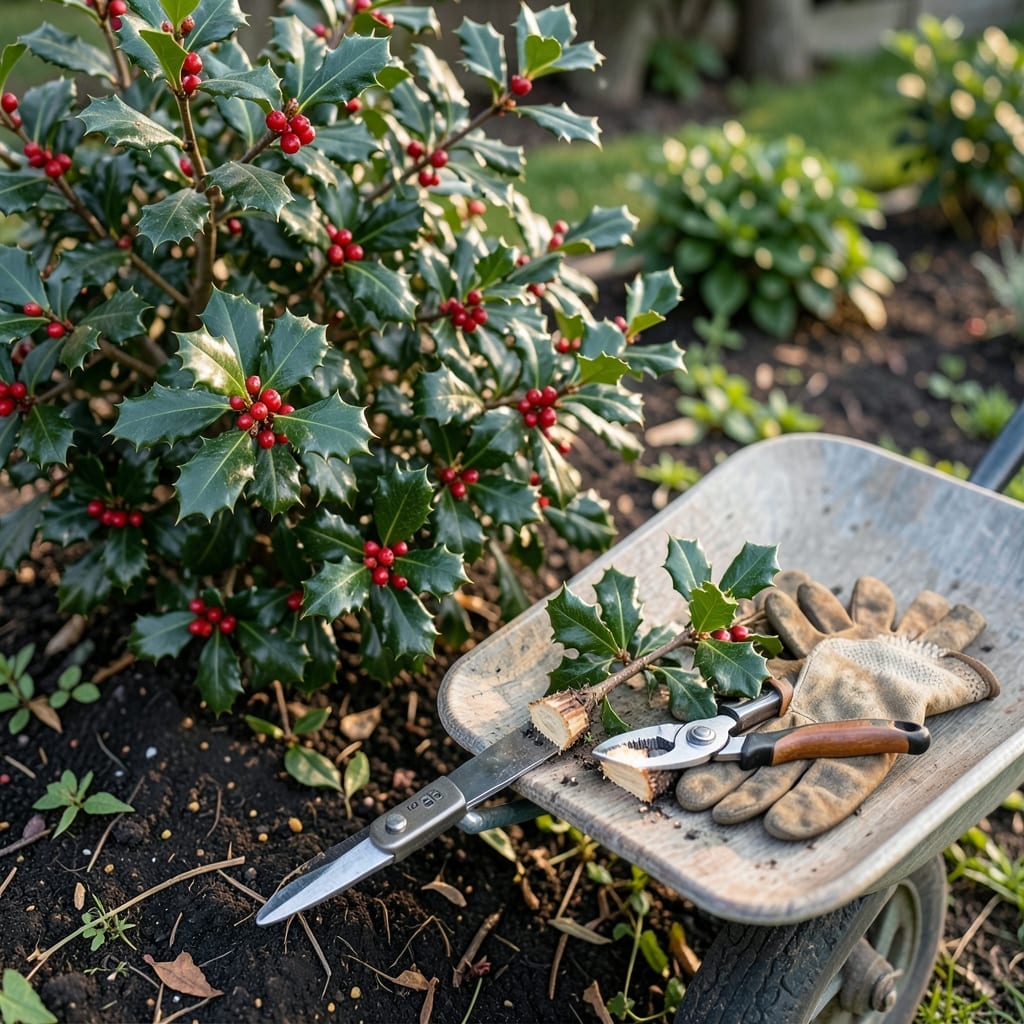
Pruning holly shrubs at the right time ensures vibrant growth, abundant berries, and a healthy shape—but do it wrong, and you risk stunting their beauty for the season.
Timing is everything with these resilient yet particular plants. The 🌿 Holly Shrub thrives when pruned thoughtfully, and knowing the best window can make all the difference.
Let me walk you through the seasonal guide that keeps your holly looking its best year after year.
Timing your pruning correctly is the secret to lush holly shrubs with vibrant berries. I’ve found that late winter to early spring works best for most varieties, just before new growth starts.
This window ensures you don’t cut off flower buds that form in summer, which would sacrifice next season’s berries. For evergreen hollies, this timing also minimizes stress on the plant.
| Holly Type | Best Pruning Time | Key Reason |
|---|---|---|
| Evergreen Holly | Late Winter | Avoids cutting flower buds |
| Deciduous Holly | Early Spring | Encourages new growth |
| Dwarf Varieties | Fall or Spring | Maintains compact shape |
| Warm Climates | Early Fall | Prevents heat stress |
In cold climates, I recommend pruning in March or April, right after the last frost. This gives the plant time to recover before summer heat kicks in.
For warm climates, a second pruning in early fall can help shape the shrub without risking winter damage. Just avoid pruning too late, as new growth needs time to harden off.
If you’re growing deciduous hollies, like winterberry, prune in early spring before leaves emerge. This ensures you don’t remove potential flower buds that form on old wood.
I always check the USDA zone for my area—holly shrubs in zones 5-9 thrive with this timing. In milder zones, you might get away with a light prune in September.
Remember, over-pruning can weaken the plant. I stick to removing no more than one-third of the shrub’s volume in a single session. This keeps the plant healthy and productive.
For berry production, timing is critical. Prune too late, and you’ll cut off the buds that would have become next year’s berries. I’ve learned this the hard way—stick to the schedule!
Finally, always use sharp, clean tools to make precise cuts. This reduces stress on the plant and helps it heal faster. A little care goes a long way with holly shrubs ✂️
Once you’ve nailed the timing, the next step is proper technique. I always start with the right tools: bypass pruners for clean cuts and loppers for thicker branches. Dull blades can tear the wood, so keep them sharp!
For shaping, I use heading cuts to encourage bushier growth. This means trimming back to a bud or branch rather than leaving stubs. It keeps the shrub dense and healthy.
With spiny varieties like English holly, I wear thick gloves and long sleeves. The spines are sharp, and it’s easy to get scratched if you’re not careful. Safety first!
For thinning cuts, I remove entire branches at their base. This opens up the center of the shrub, allowing light and air to reach inner foliage. It’s great for rejuvenating overgrown hollies.
If your holly is overgrown, don’t tackle it all at once. Spread the pruning over 2-3 years to avoid shocking the plant. I’ve seen shrubs bounce back beautifully with this approach.
Finally, always disinfect your tools between cuts, especially if you’re removing diseased wood. A simple rubbing alcohol wipe does the trick. Healthy pruning practices keep your holly thriving for years ✂️