
Beautiful Plants For Your Interior
Beautiful Plants For Your Interior
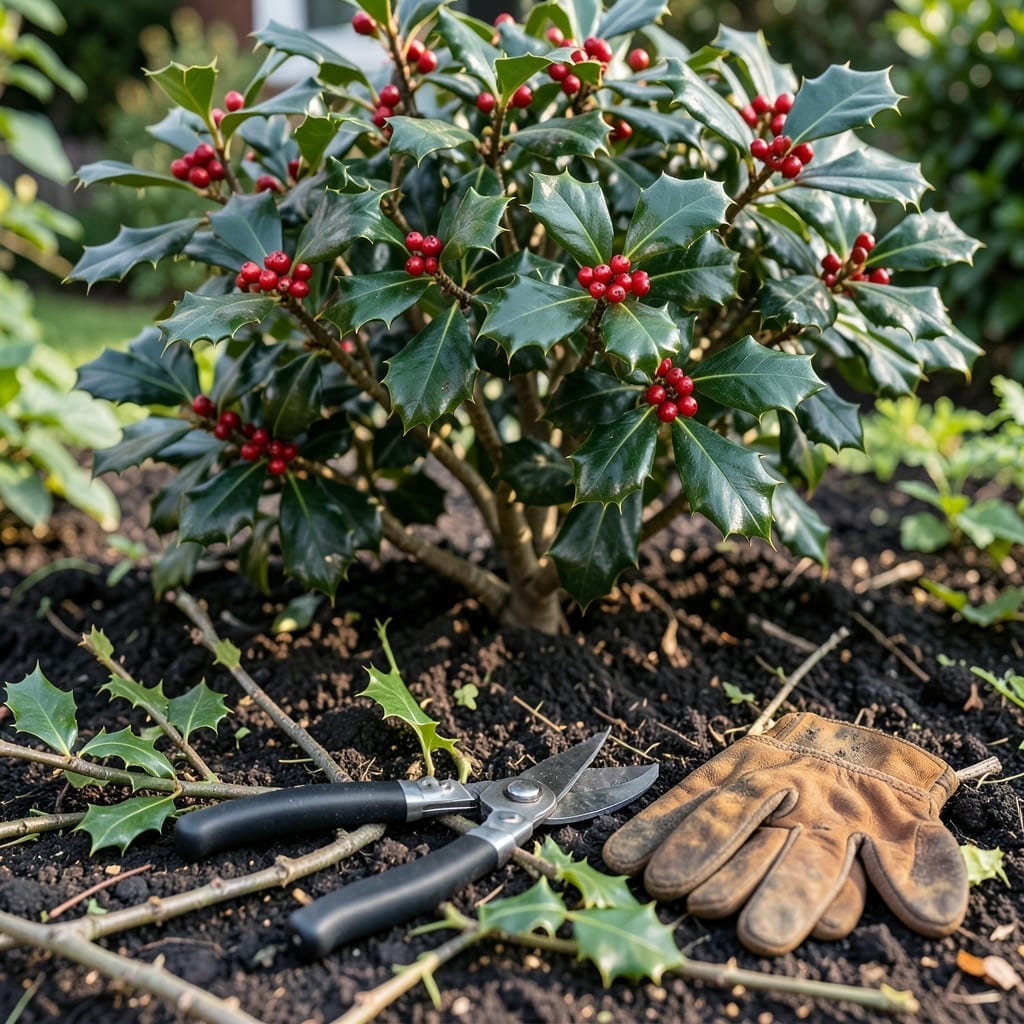
Pruning your 🌿 Holly Bush at the right time can mean the difference between a thriving shrub and one that struggles to recover. I’ve seen too many gardeners make the mistake of trimming at the wrong moment, only to end up with sparse foliage and fewer berries.
The best approach is all about timing—late winter or early spring, just before new growth starts. This gives your Holly Bush the healthy boost it needs to flourish.
Let me walk you through the exact steps to ensure your shrub stays vibrant and full of life. The results will speak for themselves.
Timing your holly bush pruning can make or break your shrub’s health and berry yield. I’ve learned that late winter or early spring is ideal for most varieties, just before new growth emerges. This window allows the plant to recover and still produce abundant berries. ✂️
For evergreen hollies like American or English holly, pruning in March or April works best. If you’re growing deciduous types, such as winterberry, aim for late winter while the plant is still dormant. This timing ensures you won’t accidentally trim off the season’s flower buds. 🌿
| Holly Variety | Best Pruning Time | Key Notes |
|---|---|---|
| American Holly | Late Winter | Before new growth starts |
| English Holly | Early Spring | Avoid late summer pruning |
| Inkberry Holly | Late Winter | Dwarf variety, light pruning |
| Winterberry | Dormant Season | Deciduous, prune before buds swell |
If you miss the ideal window, a light trimmed in summer can help shape your holly, but avoid heavy pruning then. Summer cuts can remove potential berry-producing wood and stress the plant during hot months. Always prioritize late winter for major shaping. 🌱
For regions with harsh winters, wait until the worst frosts have passed. In milder climates, you can start pruning as early as February. The key is to finish before the plant breaks dormancy, usually when daytime temperatures consistently stay above 40°F. ☀️
Remember that holly bushes set their flower buds on the previous year’s growth. Pruning too late in spring or summer means you’ll be cutting off this season’s berries. I always mark my calendar for late February to assess my hollies and plan the pruning schedule. ✂️
If your holly is overgrown, don’t try to fix it all at once. Spread major pruning over 2-3 years to avoid shocking the plant. Start by removing the oldest, woodiest stems first, then shape the rest gradually. This approach maintains health while improving appearance. 🌿
For berry production, male and female holly plants need to be pruned thoughtfully. If you have both, prune the male plant first, then the female, to ensure pollination isn’t disrupted. This small step can significantly boost your berry harvest. 🌱
After pruning, give your holly a balanced fertilizer to support new growth. I use a 10-10-10 formula in early spring, which provides the nutrients needed for recovery and vigorous growth. Always water deeply after fertilizing to help the roots absorb the nutrients. 💧
Finally, clean your tools between cuts, especially if you’re working with multiple plants. This prevents the spread of diseases. I keep a 10% bleach solution handy to disinfect my pruners. It’s a simple step that protects all your garden investments. 🪴
Pruning holly bushes correctly starts with the right tools. I always use sharp bypass pruners for clean cuts and loppers for thicker branches. Dull tools can tear the wood, leading to disease and slow healing. ✂️
For safety, wear thick gloves and long sleeves. Holly leaves are sharp, and some varieties have spiny edges that can scratch or puncture skin. I’ve learned this the hard way—protection is non-negotiable. 🌿
When cutting back, follow the 1/3 rule: never remove more than one-third of the plant in a single pruning session. This prevents stress and ensures the holly can recover quickly. 🌱
For thinning cuts, remove entire branches at their base to open up the center. For heading cuts, trim just above a leaf node to encourage bushier growth. I prefer thinning for mature hollies to maintain their natural shape. ☀️
After pruning, water deeply to help the plant recover. Apply a 2-3 inch layer of mulch around the base to retain moisture and suppress weeds. Avoid piling mulch against the trunk, as this can cause rot. 💧
If your holly is overgrown, resist the urge to shear it into a box shape. Instead, use selective pruning to maintain its natural form. This approach looks better and promotes healthier growth long-term. 🪴