
Beautiful Plants For Your Interior
Beautiful Plants For Your Interior
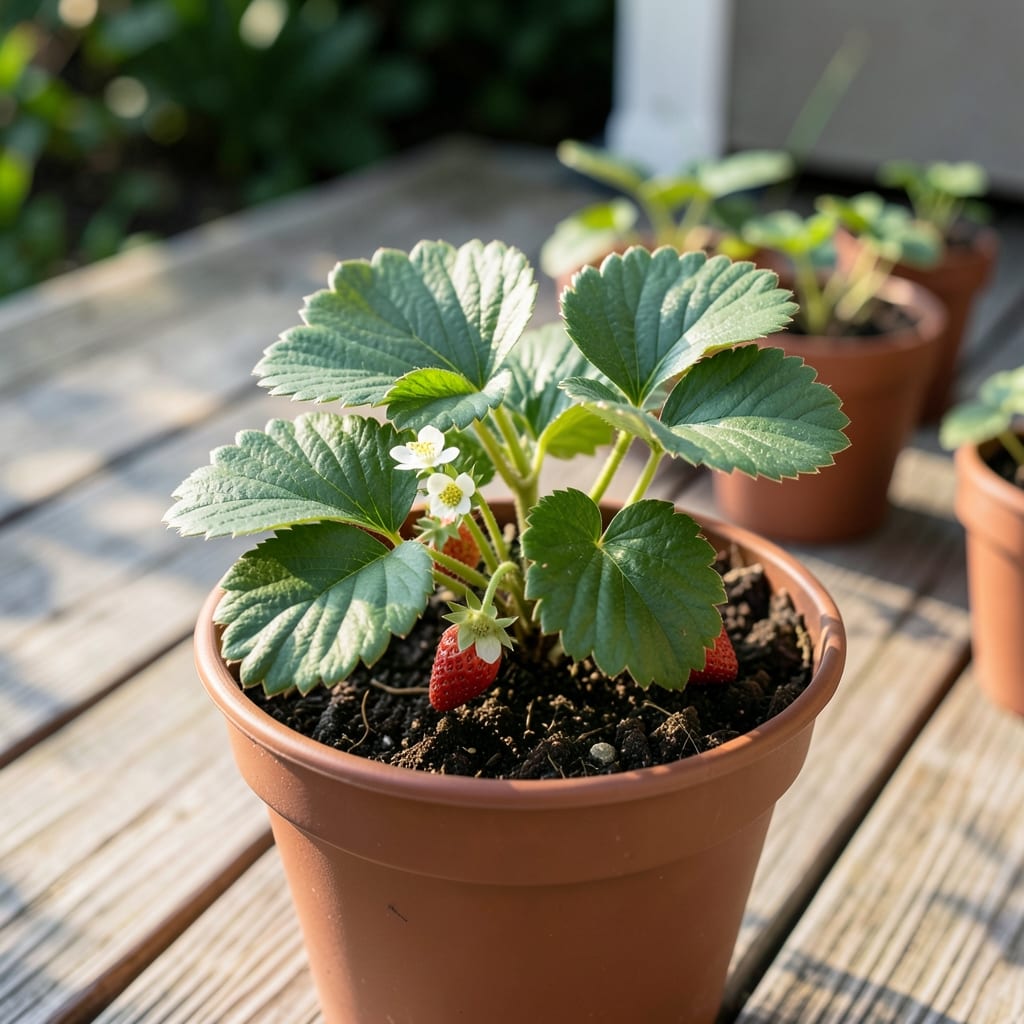
Use a well-draining, loose potting mix with 50% peat moss or coconut coir, 30% perlite or vermiculite, and 20% compost. Aim for a slightly acidic pH between 5.5 and 6.5 for optimal growth.
I’ve tested countless mixes, and the right balance prevents soggy roots while keeping moisture just right for berries. 🌟 Strawberries thrive when their roots can breathe, so I always add extra perlite if my mix feels too dense. The pH matters too—slightly acidic conditions help the plants absorb nutrients like iron more efficiently, leading to sweeter, juicier fruit.
💡 In This Article
Strawberry roots are uniquely shallow yet extensive, forming a dense mat that demands consistent moisture without waterlogging. In containers, poor drainage causes root rot within 48 hours, while compacted soil restricts oxygen flow, reducing fruit size by up to 50%. The solution lies in a porous structure that mimics their natural forest floor habitat. 🔥
These plants evolved in slightly acidic woodland soils, where decomposing leaves create a loose, nutrient-rich environment. At pH 5.5-6.5, strawberries absorb iron and phosphorus most efficiently—critical for berry development. Outside this range, nutrient lockout occurs, leading to yellow leaves and stunted growth. ✨
Container walls amplify temperature swings, stressing roots if soil can’t buffer moisture. A mix with 30% perlite acts like tiny reservoirs, releasing water as needed while preventing compaction. I’ve seen plants in dense soil produce berries that are 30% less sweet due to inconsistent water uptake. 💫
Nutrient-wise, strawberries are heavy feeders during fruiting. The 20% compost in your mix provides steady organic matter decomposition, feeding roots for 6-8 weeks between fertilizations. Without this, container-grown plants exhaust soil nutrients 4x faster than in-ground ones. ⚡
Poor soil also affects flavor development. Compacted mixes limit root expansion, which reduces the plant’s ability to produce sugars through photosynthesis. The result? Bland berries with watery texture instead of that classic burst of sweetness we all crave. 🌟
Regular garden soil compacts in containers, suffocating roots and causing drainage issues. Strawberries need loose, airy mixes to prevent root rot and waterlogging, which garden soil can’t provide.
Replace the mix every 1-2 years as nutrients deplete and organic matter breaks down. Refresh with 20% new compost between full replacements to maintain fertility.
Only if it’s still loose and free of disease. Revitalize it with 30% perlite and 20% fresh compost to restore structure and nutrients before using for strawberries.
Strawberries absorb iron and phosphorus best at pH 5.5-6.5. Outside this range, nutrient lockout occurs, causing yellow leaves and poor fruit development.