
Beautiful Plants For Your Interior
Beautiful Plants For Your Interior
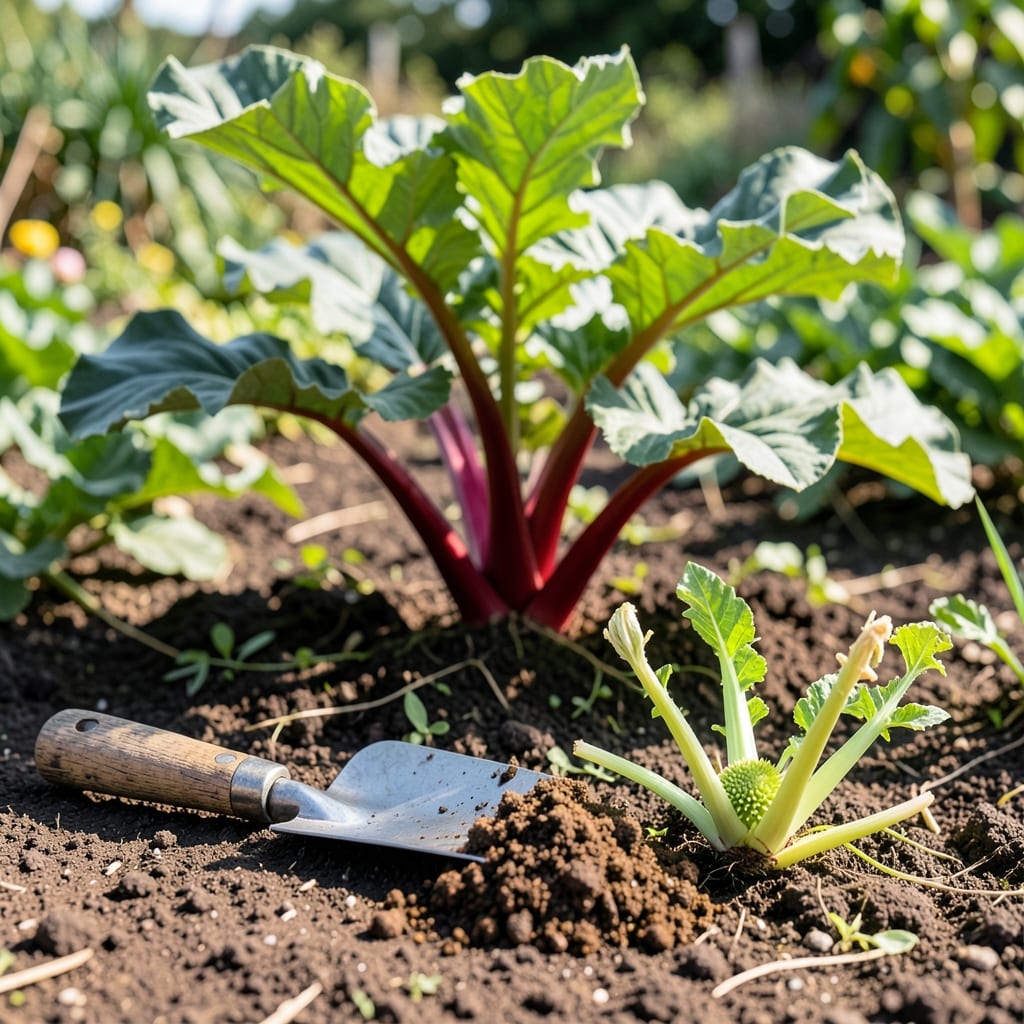
Rhubarb thrives in cool climates with temperatures between 40-75°F, in well-draining soil rich in organic matter. It prefers full sun but tolerates partial shade in warmer regions.
I’ve found the ideal spots often mirror its native habitats—think northern gardens or high-altitude areas where spring arrives slowly. The 40-75°F range lets it establish deep roots without heat stress, while organic-rich soil fuels its rapid leaf growth.
What’s fascinating is its adaptability; even in warmer zones, afternoon shade can create a microclimate that mimics its preferred conditions. 🌟
💡 In This Article
Rhubarb’s preference for cool climates stems from its natural growth cycle. The plant requires a winter chill period with temperatures below 40°F to break dormancy and stimulate spring growth. This cold requirement triggers the production of growth hormones that fuel its rapid leaf expansion once temperatures rise.
Without this vernalization process, rhubarb may produce weak, spindly stalks or fail to thrive entirely. 🔥
The upper limit of 75°F prevents heat stress, which can cause wilting and reduced stalk quality. In regions where summer temperatures consistently exceed this, afternoon shade becomes essential.
I’ve noticed that in zones 7-9, planting on the east side of buildings or under tall trees creates the perfect microclimate, reducing heat exposure by 10-15°F during peak hours.
Frost actually benefits rhubarb by sweetening the stalks. Light frosts in early spring or fall convert starches to sugars, enhancing flavor. However, hard freezes below 25°F can damage crowns.
In colder zones, a 2-3 inch mulch layer of straw or leaves provides insulation, while in warmer areas, this same mulch helps retain moisture and cool the soil.
Humidity plays a subtle but important role. Rhubarb prefers moderate humidity levels between 40-60%, which helps prevent powdery mildew—a common issue in damp conditions. In high-humidity areas, spacing plants 3-4 feet apart improves air circulation, reducing disease risk while maintaining optimal growing conditions. ✨
Seasonal timing matters too. Planting in early spring or late fall allows roots to establish before extreme temperatures arrive. In my experience, spring-planted rhubarb often produces a modest harvest the following year, while fall-planted crowns may yield a light harvest the first spring.
This timing difference comes from the plant’s energy focus—spring planting directs energy toward root establishment, while fall planting allows for some top growth before winter dormancy.
Rhubarb thrives with at least 6-8 hours of sunlight daily. In hotter climates, afternoon shade helps prevent heat stress and keeps stalks tender.
Loamy, well-draining soil with a pH between 6.0-6.8 works best. Amend heavy clay with compost or sand, and avoid waterlogged areas to prevent root rot.
Yes, use pots at least 12 inches deep with drainage holes. Fill with quality potting mix and ensure the container gets adequate sunlight. Container-grown rhubarb may need more frequent watering.
Apply a 2-3 inch mulch layer of straw or leaves around the crown in late fall. This insulates the roots from hard freezes below 25°F.