
Beautiful Plants For Your Interior
Beautiful Plants For Your Interior
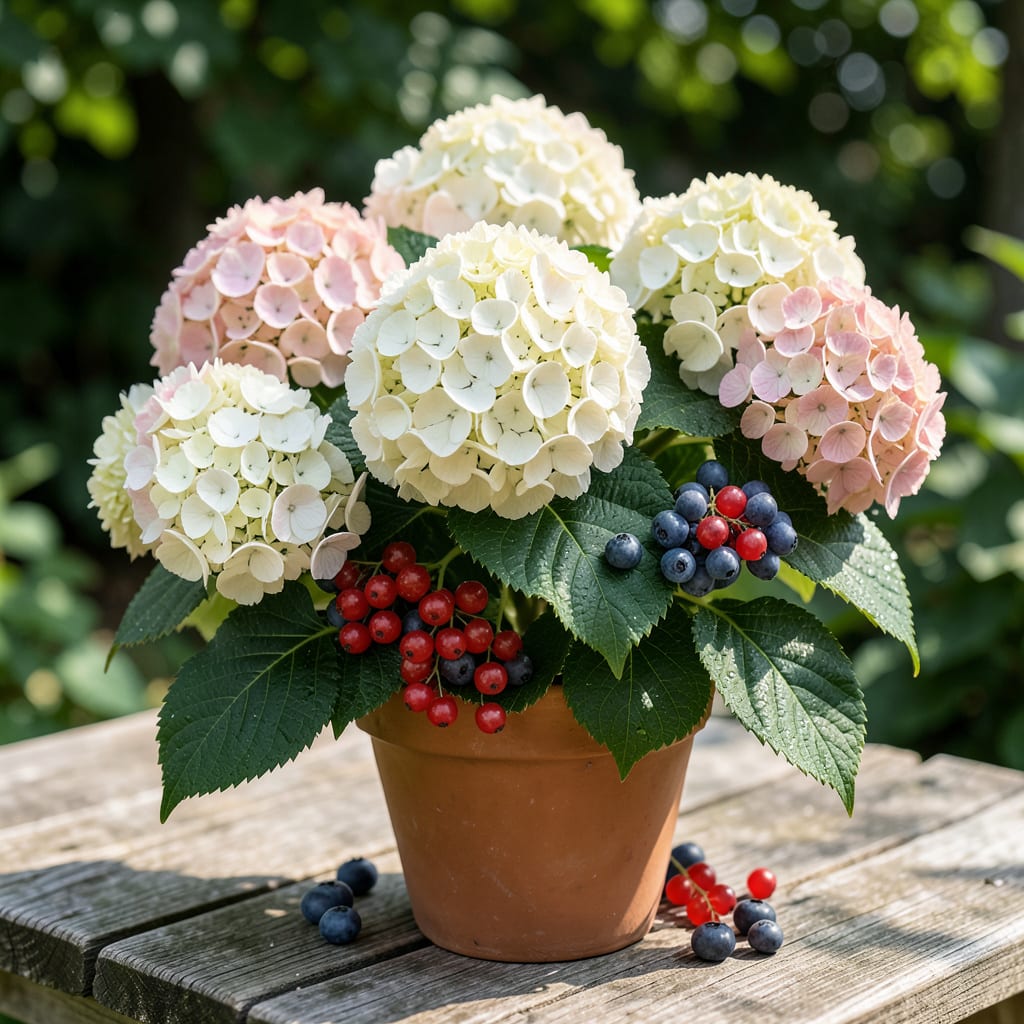
I fell for this shrub the first time I saw its blooms shift from pure white to blush pink. Berry White hydrangea thrives in partial shade, producing cone-shaped flowers that keep changing color through summer.
Plant it in well-draining soil with morning sun, and you’ll get 8-12 inch blooms by July. The transformation happens naturally—no special care needed. It handles heat better than most hydrangeas too.
📚 In This Guide
Here’s the method I rely on for vibrant blooms in partial shade conditions.
Select a site that receives morning sun and afternoon shade—this mimics the hydrangea’s native understory conditions. The ideal spot gets 4-6 hours of direct sunlight daily, with protection from harsh afternoon rays that can scorch the delicate panicles.
Test your soil’s pH, as these plants thrive in slightly acidic to neutral conditions (pH 6.0-7.0). If your soil is alkaline, amend it with sulfur or peat moss before planting. The location should also have good air circulation to prevent foliar diseases common to hydrangeas.
Dig a hole that’s twice as wide but only as deep as the root ball. Loosen the roots gently if they’re circling the container, then place the plant so the top of the root ball sits 1-2 inches above the surrounding soil level to allow for settling.
Backfill with native soil mixed with compost at a 50:50 ratio. Water thoroughly after planting, using 1-2 gallons to saturate the root zone. This initial deep watering helps eliminate air pockets and establishes good soil-to-root contact.
Space multiple plants 4-6 feet apart to accommodate their mature spread.
Keep the soil consistently moist but not waterlogged during the first growing season. Water deeply 2-3 times per week, providing 1-1.5 inches of water each time. The goal is to encourage deep root growth rather than shallow surface roots.
After establishment, reduce frequency but maintain the same depth. You’ll know it’s time to water when the top inch of soil feels dry. Morning watering is ideal as it allows foliage to dry before evening, reducing disease risk.
This variety blooms on new wood, so prune in late winter or early spring before new growth appears. Remove dead or weak stems first, then cut back the remaining stems by one-third to encourage vigorous new growth and larger flower panicles.
Apply a balanced slow-release fertilizer in early spring as new growth emerges, following package instructions. Avoid high-nitrogen fertilizers after midsummer as they can promote leafy growth at the expense of flowers. Remove spent blooms to encourage additional flowering.
Apply a 2-3 inch layer of organic mulch around the base in late fall to insulate roots and conserve moisture. Use shredded bark or wood chips, keeping the mulch 3 inches away from the stem to prevent rot.
In colder climates (USDA zones 3-4), consider adding a layer of burlap or frost cloth around the plant after the first hard frost. Remove protection in early spring as new growth appears. This variety is hardy to -30°F once established.
These insights will help you avoid pitfalls and achieve the healthiest, most vibrant blooms.
Sunlight Strategy: The 4-6 hours of daily sunlight specified in Step 1 is non-negotiable for optimal flowering. Morning sun is gentler and prevents the panicles from scorching, while afternoon shade protects the plant during peak heat. If your garden gets intense afternoon sun, consider using shade cloth to filter the light.
Planting Precision: In Step 2, placing the top of the root ball 1-2 inches above the soil level is critical to prevent settling, which can suffocate the roots. I learned this the hard way after losing a plant to root rot from improper depth. Also, the 50:50 ratio of native soil to compost ensures good drainage while providing nutrients without overwhelming the plant.
Watering Wisdom: The 2-3 times per week watering schedule in Step 3 works best when you water deeply rather than frequently. Use a moisture meter or the finger test (checking the top inch of soil) to avoid overwatering, which is just as harmful as underwatering. Morning watering is essential—it gives foliage time to dry, reducing the risk of fungal diseases.
Winter Protection: For Step 5, the 2-3 inch layer of mulch is your plant’s best defense against temperature swings. In colder climates like USDA zones 3-4, don’t skip the burlap or frost cloth after the first hard frost—this variety’s hardiness to -30°F assumes proper protection. Remove coverings in early spring to prevent overheating as temperatures rise.
This shrub typically reaches 6–8 feet in height with a similar spread, making it a striking focal point in gardens. Proper pruning can help control its size if needed.
Expect blooms from mid to late summer, with flowers starting white and transitioning to blush or deep pink as they mature. The blooms last well into fall.
While it tolerates partial shade, Berry White thrives best with at least 4–6 hours of sunlight daily. Full shade may reduce blooming and vibrancy.
It’s hardy to USDA zones 3–8. Mulch the base for insulation, and prune dead wood in late winter or early spring before new growth starts.
Common causes include improper pruning (remove only dead wood), insufficient sunlight, or nutrient-deficient soil. Test soil pH and fertilize as needed.
