
Beautiful Plants For Your Interior
Beautiful Plants For Your Interior
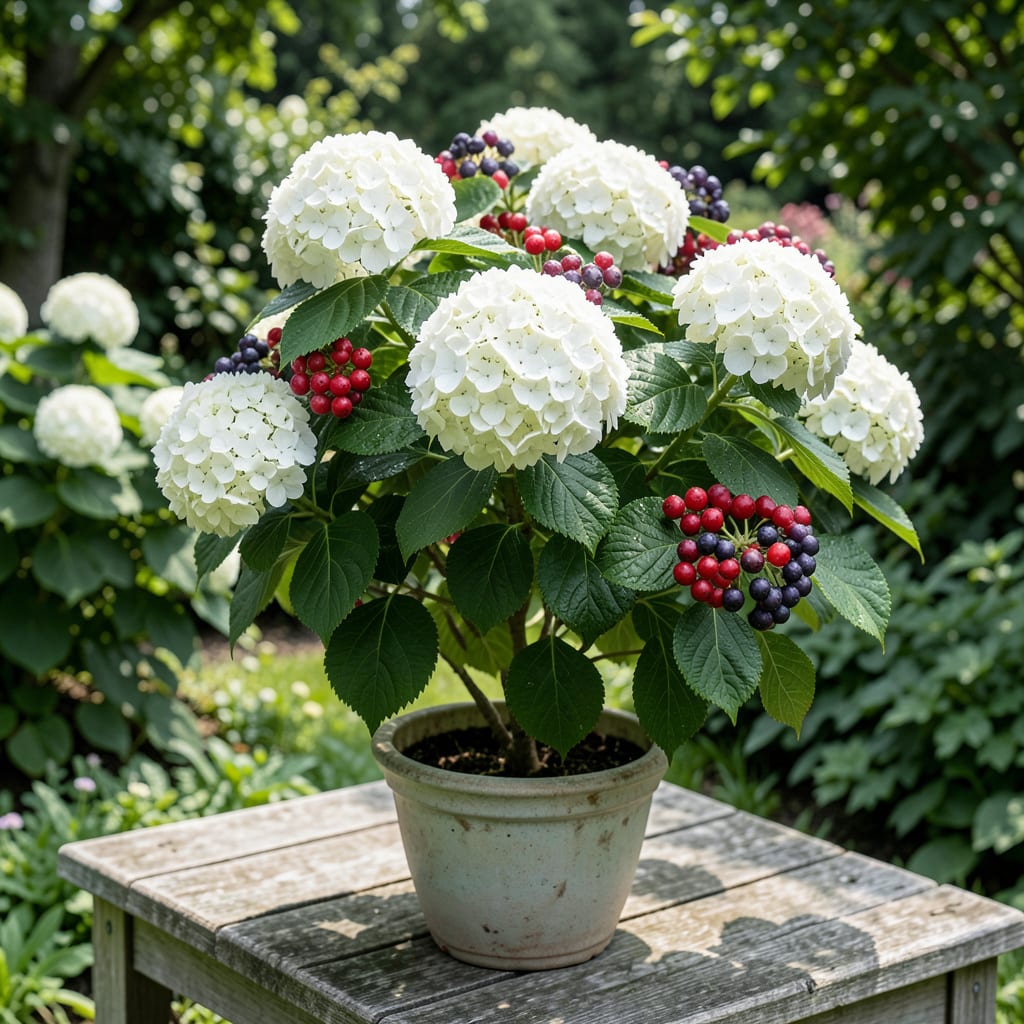
This shrub stopped me in my tracks at the nursery. The Berry White hydrangea tree produces massive bicolor blooms that shift from pure white to deep pink as they mature.
It thrives in partial shade with consistent moisture, and the blooms last from early summer through fall. You get dramatic garden impact with surprisingly low maintenance.
📚 In This Guide
Here’s how I plant these showstoppers for reliable bicolor blooms every summer.
Select a spot with partial sun to partial shade—morning sun and afternoon shade work best in most climates. Avoid deep shade, as this reduces flowering. The soil should be well-draining but rich in organic matter. I always test drainage by digging a 12-inch deep hole, filling it with water, and checking that it drains within 1-2 hours.
Berry White hydrangeas prefer slightly acidic to neutral soil (pH 6.0-7.0). If your soil is alkaline, amending with peat moss or sulfur before planting helps maintain that perfect pink-and-white color. A soil test kit gives you the exact reading—don’t guess on this one.
Dig a hole that’s twice as wide as the root ball but only as deep. This gives the roots room to spread outward, which is critical for establishment. I loosen the soil at the sides of the hole with a shovel to encourage root penetration into the surrounding earth.
If your soil is heavy clay, mix in 50% compost with the native dirt you removed. This improves drainage while still providing the organic material hydrangeas crave. Never add pure sand to clay—it creates a cement-like texture that roots can’t penetrate.
Gently remove the hydrangea from its container and loosen any circling roots with your fingers. Position the plant so the top of the root ball sits 1-2 inches above the surrounding soil level—it’ll settle after watering. This prevents the crown from staying too wet, which can rot the stem.
Backfill with your soil mixture, pressing lightly as you go to eliminate air pockets. Once filled, create a 3-inch high watering ring around the perimeter of the hole to help direct water to the roots. This simple step makes a noticeable difference in the first season.
Water thoroughly immediately after planting, giving it 1-2 gallons to settle the soil. For the first 2-3 weeks, keep the soil consistently moist but not soggy. I check daily by sticking my finger 1 inch into the soil—if it feels dry, it’s time to water.
Apply a 2-3 inch layer of organic mulch like shredded bark or pine needles, keeping it 3 inches away from the trunk. Mulch conserves moisture, regulates soil temperature, and slowly adds organic matter as it breaks down. Avoid piling it against the stem, which invites disease and pests.
Berry White hydrangeas bloom on both old and new wood, so pruning timing is flexible. I do a light trim in late winter, removing any dead or crossing branches. This opens the center for better air circulation and light penetration, which means more abundant blooms.
After the first bloom cycle in summer, you can deadhead spent flowers to encourage a second flush. Cut just above a set of healthy leaves or buds, using clean, sharp pruners. Never remove more than one-third of the plant in a single pruning session—over-pruning stresses the shrub and reduces next year’s flowers.
Small details make the difference between a hydrangea that struggles and one that thrives with those stunning bicolor blooms.
Soil Test First: In Step 1, that pH range of 6.0-7.0 isn’t just a suggestion—it’s what keeps your blooms pink and white. I learned this the hard way after planting in alkaline soil and getting lackluster flowers. A $10 test kit saves you seasons of disappointment.
Hole Width Matters: When digging in Step 2, resist the urge to make the hole deeper—twice as wide as the root ball is the magic ratio. Roots spread horizontally, not down, and a wide hole gives them the room they need to establish quickly.
Watering Ring Hack: That 3-inch high watering ring in Step 3 isn’t just decorative. It funnels water directly to the roots where it’s needed most, especially during those critical first 2-3 weeks when the plant is getting established.
Pruning Restraint: In Step 5, remember that one-third rule—it’s there to protect your plant. I once over-pruned thinking I was helping, and the next year’s blooms were sparse. Less really is more with these hydrangeas.
This compact shrub typically reaches 6–8 feet tall and 5–7 feet wide, making it perfect for small gardens or containers. Its manageable size allows for easy maintenance and versatile placement in landscapes.
Expect stunning bicolor blooms from early summer to fall, with white flowers that mature to deep pink or red. Plant in partial shade for the best color transition and longest flowering period.
It thrives in well-draining, moist, and slightly acidic soil (pH 5.5–6.5). Amend heavy clay or sandy soil with organic matter like compost to improve texture and fertility for healthier growth.
Yellowing leaves often signal overwatering, poor drainage, or iron deficiency. Check soil moisture, improve drainage, or apply a chelated iron supplement if the pH is too high.
