
Beautiful Plants For Your Interior
Beautiful Plants For Your Interior
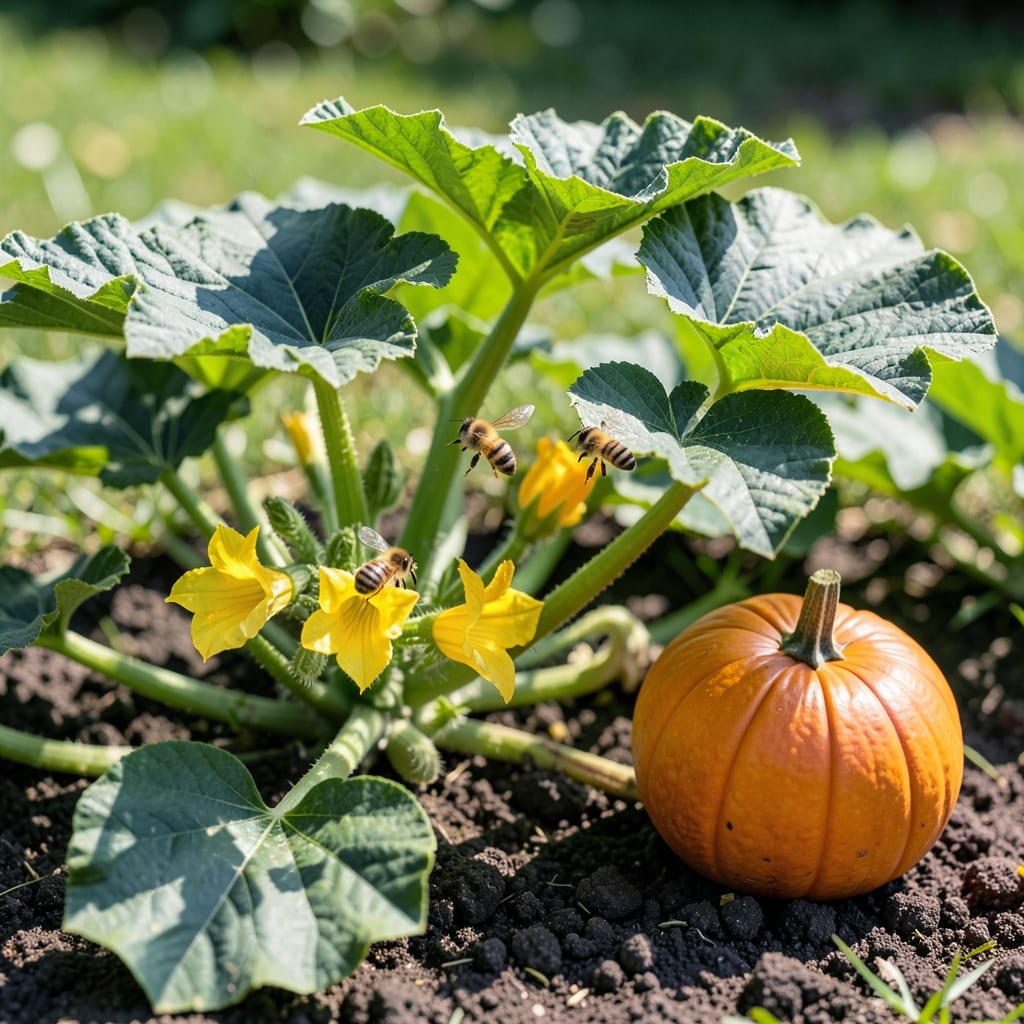
Bees transfer pollen between pumpkin flowers, enabling fertilization that produces fruit. Without their activity, pumpkins won’t form, making them essential for a successful harvest.
Pumpkin plants rely on this natural process because their male and female flowers bloom separately. I’ve noticed that even a single hive can significantly boost yields by visiting thousands of blossoms daily. The vibration of bee wings helps release pollen more effectively than wind or hand-pollination methods. 🔥
Creating a welcoming environment for these pollinators pays off in bigger, healthier fruits.
💡 In This Article
Pumpkin plants produce separate male and female flowers, unlike many other crops. The male flowers appear first, releasing pollen that bees collect as they forage for nectar. Each bee can carry pollen from dozens of flowers in a single trip, with their fuzzy bodies providing the perfect surface for grains to stick and transfer. 🔥
The female flowers develop later and have a small, immature fruit at their base. When a bee lands on a female flower after visiting males, pollen grains travel down the style to fertilize the ovules. This process triggers fruit development, with successful fertilization often visible within 24-48 hours as the tiny pumpkin begins to swell.
✨
Bees use a technique called “buzz pollination” where they vibrate their wings at specific frequencies. This vibration helps dislodge pollen from pumpkin anthers more effectively than wind or human methods. Studies show this increases pollen transfer efficiency by up to 300% compared to other pollination techniques. 💫
What makes bees particularly effective is their flower constancy behavior. They tend to visit the same plant species repeatedly during a foraging trip, which maximizes cross-pollination between different pumpkin plants. This genetic diversity leads to stronger, more resilient fruits that are better adapted to local conditions. ⚡
A single honeybee colony can visit millions of flowers during pumpkin blooming season. The optimal foraging temperature for bees is between 60-100°F, with peak activity occurring on sunny, windless days when flowers are most receptive to pollen. 🌟
Pumpkin plants have separate male and female flowers that can’t self-pollinate. Bees transfer pollen from male to female blooms, which fertilizes the ovules and triggers fruit development. Without this, the female flowers simply wither and die.
Look for small green fruits forming at the base of female flowers within 24-48 hours of bee visits. Unpollinated flowers will close and fall off without any fruit developing. You may also spot bees actively collecting pollen in the morning.
Bees are most active between 9 AM and noon, when pumpkin flowers are fully open and pollen is most viable. These flowers typically close by afternoon, so morning visits are critical for successful pollination.
Yes! Use a small paintbrush to transfer pollen from male to female flowers during morning hours. Gently brush the inside of a male flower, then do the same to a female flower. Repeat with multiple flowers for best results.