
Beautiful Plants For Your Interior
Beautiful Plants For Your Interior
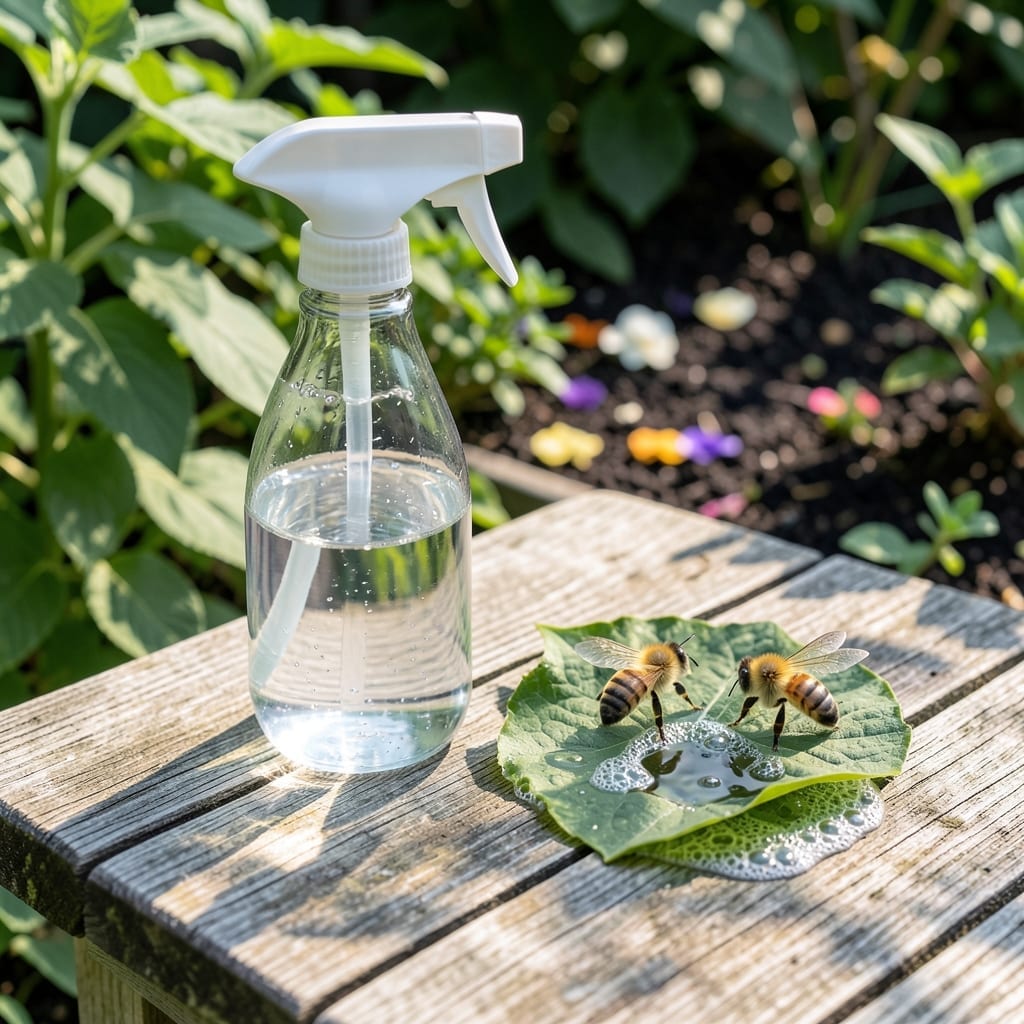
Soapy water disrupts the protective wax layer on bees, causing dehydration and death. Gardeners use this as a natural pest control method against unwanted bee species while avoiding harsh chemicals.
This method works because the soap breaks down the waxy coating that keeps bees from losing moisture. Without it, they quickly dry out in the environment. I’ve seen gardeners use a 1-2% soap concentration for best results, targeting specific areas rather than spraying broadly to protect beneficial insects. 🔥
It’s especially effective against invasive or aggressive bee species that might harm plants or disrupt ecosystems. Still, I always recommend testing on a small area first to avoid unintended consequences. ✨
💡 In This Article
Bees rely on a microscopic waxy cuticle covering their exoskeleton to retain moisture. This layer, just 1-3 microns thick, prevents water loss in dry environments. Soap molecules, being amphipathic, insert themselves into this wax, breaking its hydrophobic structure. The result is rapid moisture evaporation through the now-compromised barrier.
Unlike suffocation methods, this process causes osmotic dehydration rather than blocking airways. Tests show bees lose 30-40% of their body weight in water within 2-3 hours after soap exposure. The soap doesn’t discriminate between harmful and beneficial species, affecting all insects with similar waxy coatings. 🔥
The mechanism targets insects specifically because plant cells lack this external wax layer. Plants have cellular membranes that remain unaffected by the soap solution. This selectivity makes it particularly useful for gardeners targeting pests while preserving plant health.
Interestingly, the soap’s effectiveness depends on its chemical structure. Potassium-based soaps (like insecticidal soaps) work better than sodium-based ones because they’re softer and less likely to leave harmful residues. The pH also matters—solutions between 9-10 pH maximize wax disruption without damaging foliage.
Environmental conditions amplify the effect. In low humidity (below 30%), bees dehydrate 50% faster after soap exposure. Temperature plays a role too—warmer conditions (75-85°F) accelerate the process by increasing water vapor pressure through the damaged cuticle. ✨
It breaks down the waxy cuticle on their exoskeleton, causing rapid moisture loss. Without this protective layer, bees dehydrate and die within 2-3 hours. The soap disrupts their natural waterproofing system.
Use 1-2 tablespoons of mild liquid soap per 1 quart of water. This concentration is strong enough to be effective but gentle on plants. Always test on a small area first.
Early morning or late evening is ideal, when bees are less active. Avoid spraying in direct sunlight or high heat, as this reduces effectiveness and can harm beneficial pollinators.
Yes, soapy water doesn’t discriminate between harmful and beneficial species. To protect honeybees, spray only targeted areas and avoid flowers or blooming plants.