
Beautiful Plants For Your Interior
Beautiful Plants For Your Interior
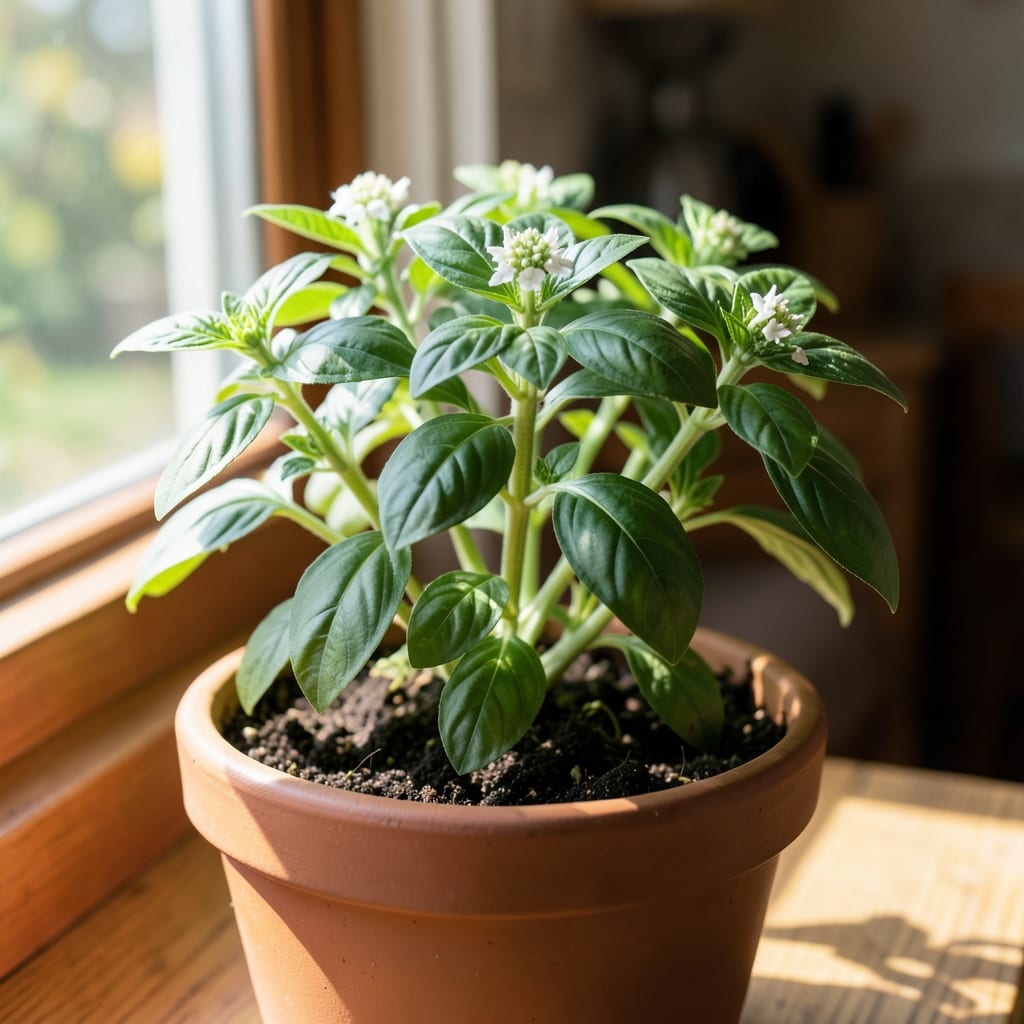
Basil is a fragrant herb celebrated for elevating Italian dishes like pesto and pasta, while also offering anti-inflammatory and antioxidant benefits through its essential oils.
I love how this herb transforms simple meals into gourmet experiences with its vibrant aroma. The compounds in basil, like eugenol, actively combat oxidation in your body. It pairs beautifully with tomatoes in Caprese salads or as a finishing touch on homemade pizzas. 🔥
Beyond cooking, its essential oils are used in aromatherapy for their calming properties. I always keep fresh basil on hand for both flavor and wellness.
💡 In This Article
The power of basil lies in its eugenol, a phenolic compound that gives the herb its distinctive clove-like aroma while doubling as a natural anti-inflammatory agent. This compound works at the molecular level by inhibiting enzymes like cyclooxygenase (COX), which trigger inflammation in the body.
The leaves also contain linalool, another active ingredient with proven antibacterial properties against common foodborne pathogens like E. coli and Listeria. 🌟
From a nutritional standpoint, just 2 tablespoons of fresh basil provides about 22% of your daily vitamin K needs, essential for blood clotting and bone health. It also delivers a measurable dose of vitamin A (6% DV) through beta-carotene, which supports vision and immune function.
The herb’s ORAC value—a measure of antioxidant capacity—registers at approximately 3,142 units per 100g, higher than many common fruits. ✨
What most people don’t realize is how basil’s antioxidants become more bioavailable when the leaves are crushed or torn. This mechanical disruption releases enzymes that convert certain compounds into more potent forms. For example, crushing basil leaves increases their rosmarinic acid content by up to 300% within minutes, enhancing its ability to neutralize free radicals.
🔥
Research also highlights basil’s potential to support cardiovascular health. A 2017 study in the Journal of Ayurveda and Integrative Medicine found that holy basil (a close relative) reduced total cholesterol by 17% and triglycerides by 23% in participants over 8 weeks. While sweet basil requires more study, its similar compound profile suggests comparable benefits. 💫
The volatile oils in basil—particularly estragole and methyl chavicol—have shown promise in laboratory settings for their ability to inhibit the growth of certain cancer cell lines. While human trials are limited, these preliminary findings underscore how this humble herb packs a complex biochemical punch far beyond its culinary reputation.
Yes, but reduce the amount by 1/3 since dried is more concentrated. Fresh basil has a brighter flavor, perfect for finishing dishes, while dried works better in slow-cooked sauces.
Store unwashed basil in a sealed container with a damp paper towel for 5-7 days. For longer storage, trim stems and place in a glass of water like cut flowers.
Yes! Basil contains eugenol, which may aid digestion and reduce bloating. It also has mild carminative properties that help relieve gas.
Blanch leaves for 10-15 seconds, then freeze in ice cube trays with water or oil. This preserves flavor better than freezing raw leaves.