
Beautiful Plants For Your Interior
Beautiful Plants For Your Interior
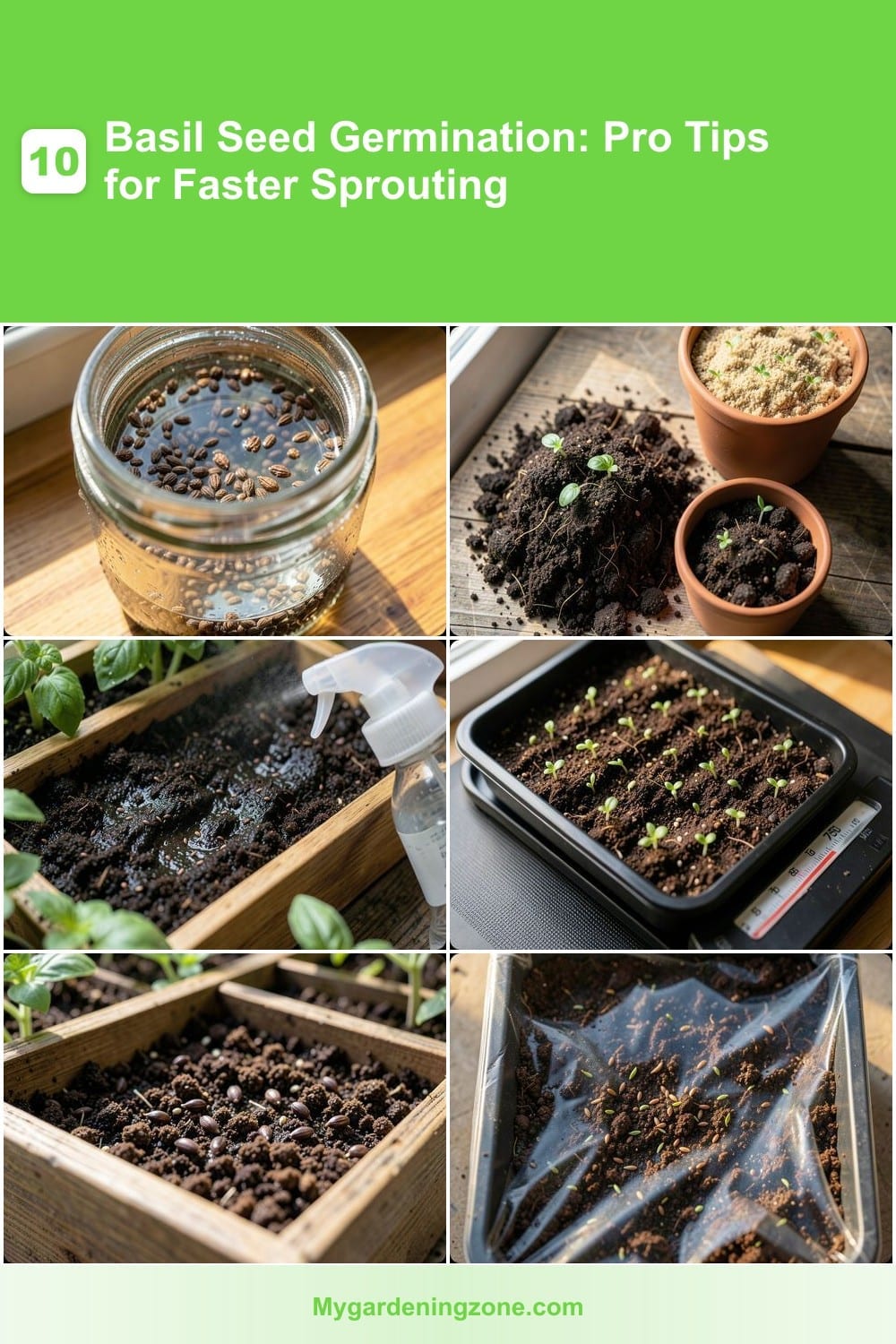
Struggling to get your basil seeds to sprout quickly? These ten pro tips for basil seed germination will help you achieve faster, stronger growth and establish a thriving herb garden with minimal effort.
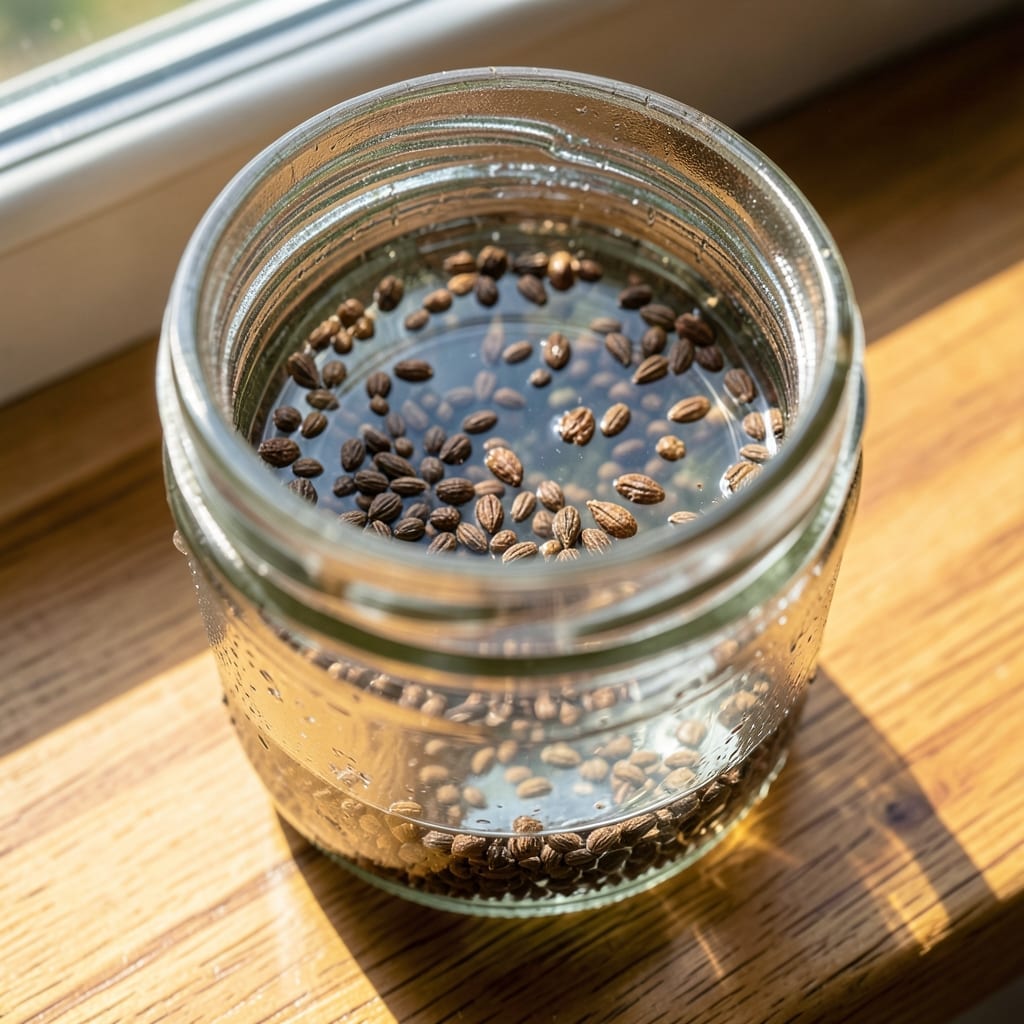
Tired of waiting weeks for your basil seeds to sprout? A simple overnight soak can cut your germination time in half by breaking down the tough outer shell.
Soak seeds in room-temperature water for 8-12 hours before planting. This softens the seed coat, allowing moisture to penetrate faster and triggering germination sooner. You’ll see sprouts in as little as 5-7 days instead of the usual 10-14.
Perfect for impatient gardeners or those with short growing seasons. Start your herb garden faster with this easy prep step. 🌱
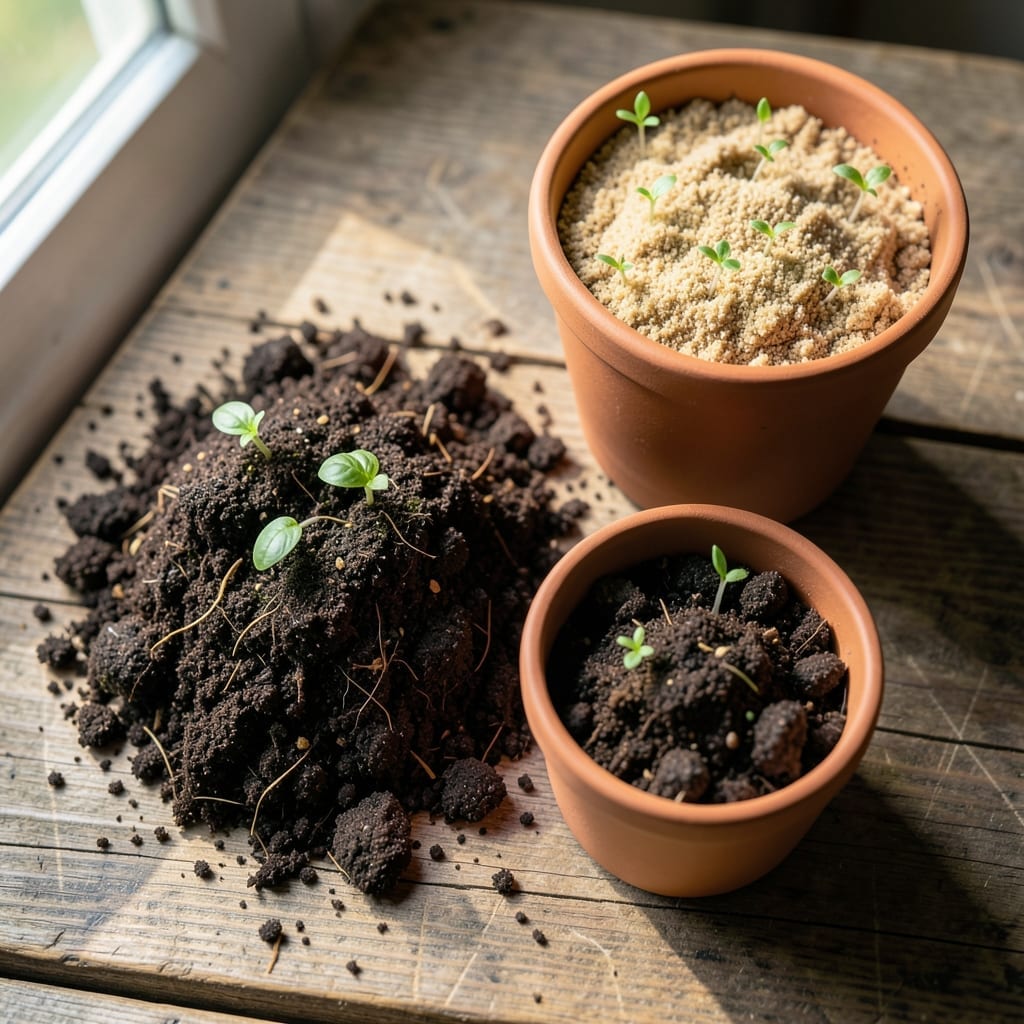
Skip the garden soil for your basil seeds—it’s often too dense and full of pathogens that can hinder germination. A seed-starting mix is specifically designed to be light and sterile, giving your seeds the clean, airy environment they need to thrive without competition or disease.
This medium prevents compaction, allowing tiny basil roots to push through easily while retaining just the right amount of moisture. You’ll see faster, more uniform sprouting compared to heavier soils, and your seedlings will establish stronger root systems early on.
Perfect for beginners or anyone tired of spotty germination results. 🌱
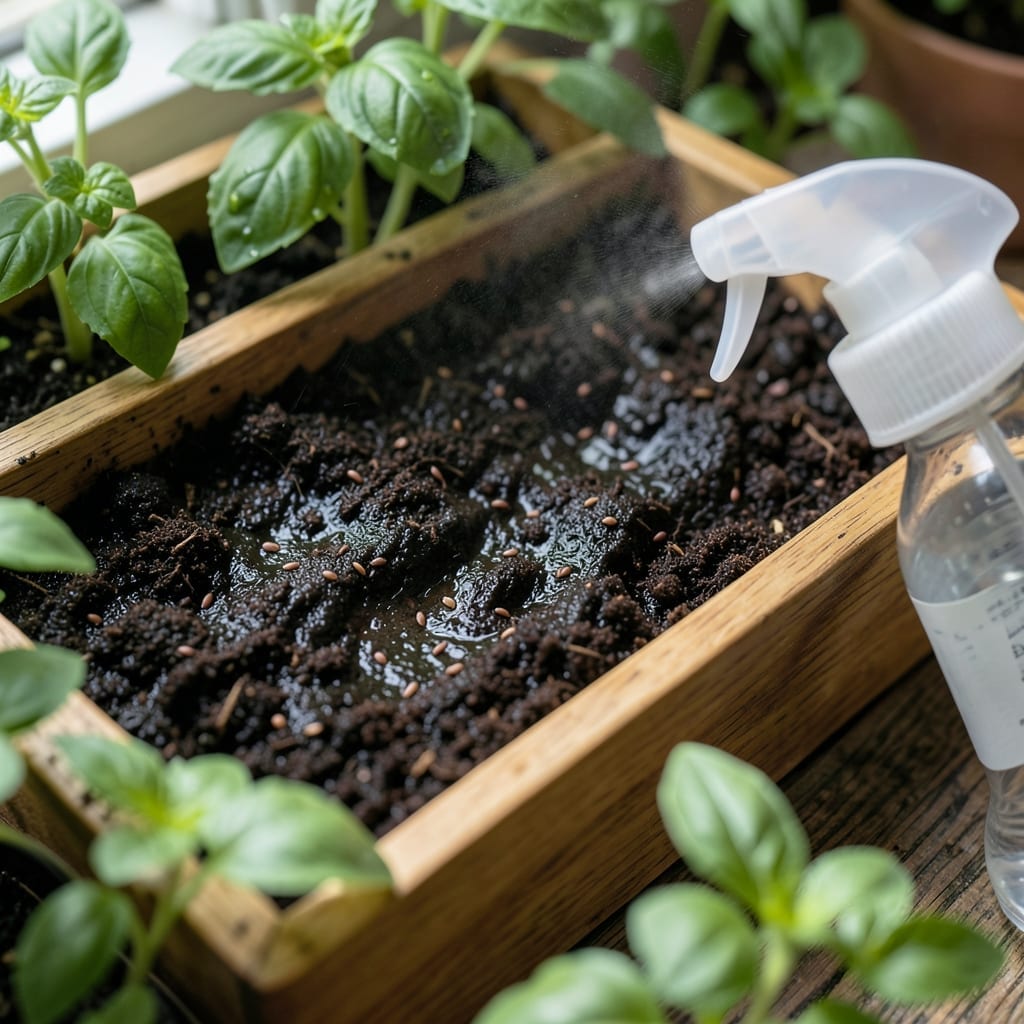
Basil seeds thrive when moisture levels stay just right—not too dry, not too soggy. The key is maintaining consistent dampness without waterlogging, which can drown delicate seedlings before they even sprout.
A spray bottle is your best tool here. It lets you mist the soil surface gently, keeping it perfectly moist while avoiding the disturbance that heavier watering methods can cause. This approach ensures seeds stay in place as they begin their 5-10 day germination journey.
This method is especially helpful for beginners or those germinating seeds indoors where conditions can dry out quickly. You’ll see more even sprouting with less risk of mold or rot. 🌱
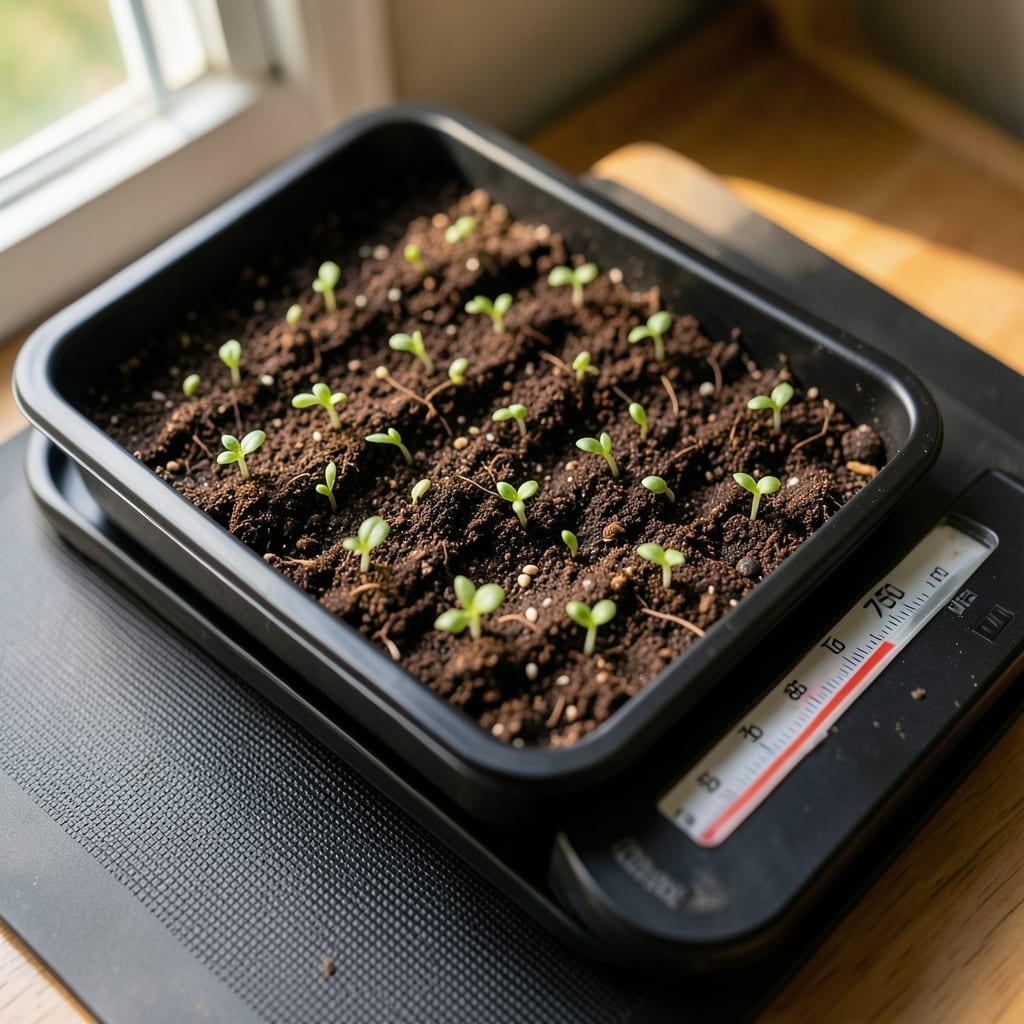
If your basil seeds are slow to sprout, temperature might be the missing piece. These seeds thrive in warmth, and a consistent 70-85°F range can cut germination time in half compared to cooler conditions.
A heat mat is the easiest way to maintain this ideal range, especially in early spring or cooler climates. It provides steady warmth that mimics the natural conditions basil loves, leading to quicker, more uniform sprouting.
This method is perfect for gardeners starting seeds indoors or in unpredictable weather. You’ll see vibrant sprouts in as little as 5-7 days. 🌱
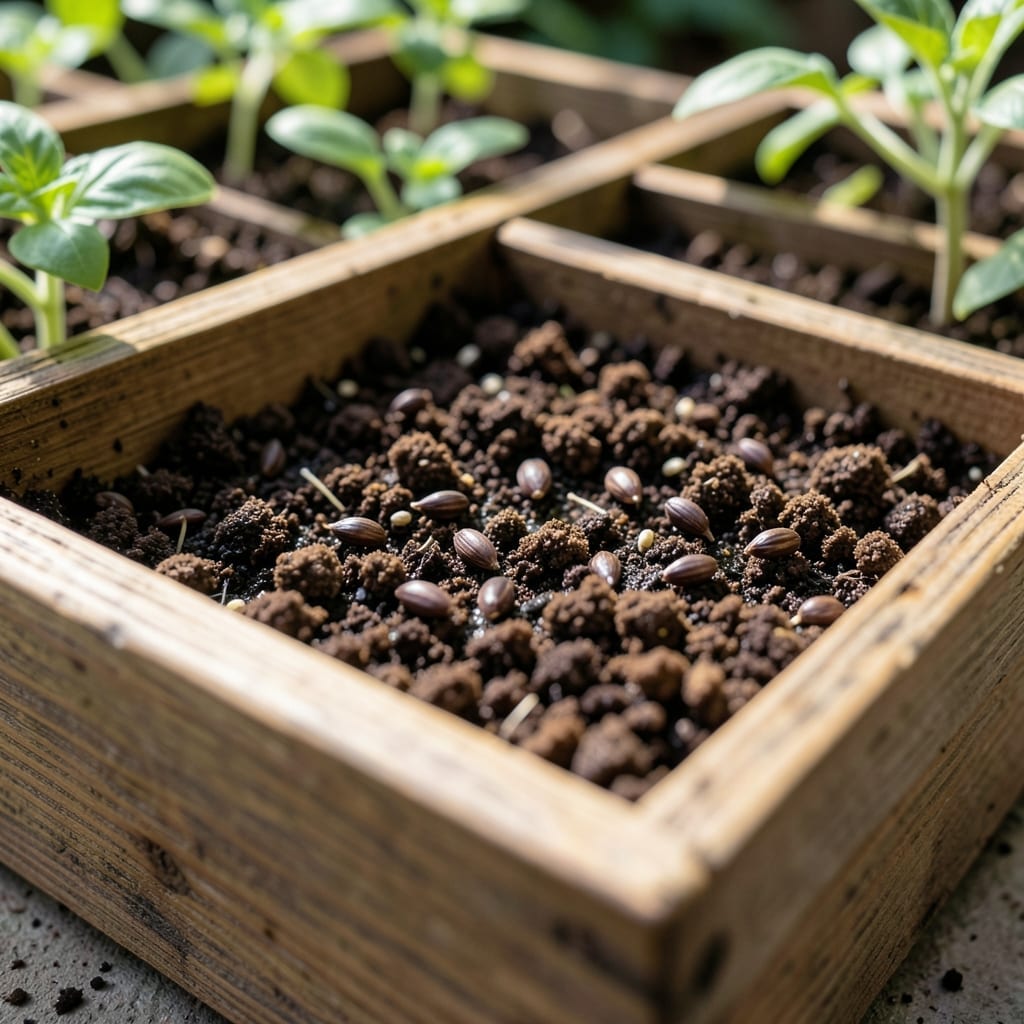
Many gardeners accidentally bury their basil seeds too deep, which can significantly slow germination. These tiny seeds only need a whisper of soil to thrive.
For best results, plant basil seeds just 1/4 inch deep in your seed-starting mix. This shallow depth allows them to access light and warmth quickly, speeding up sprouting. Any deeper and they’ll waste energy pushing through unnecessary soil.
This simple adjustment makes a big difference in germination success, especially for beginners eager to see their herb garden take off. 🌱
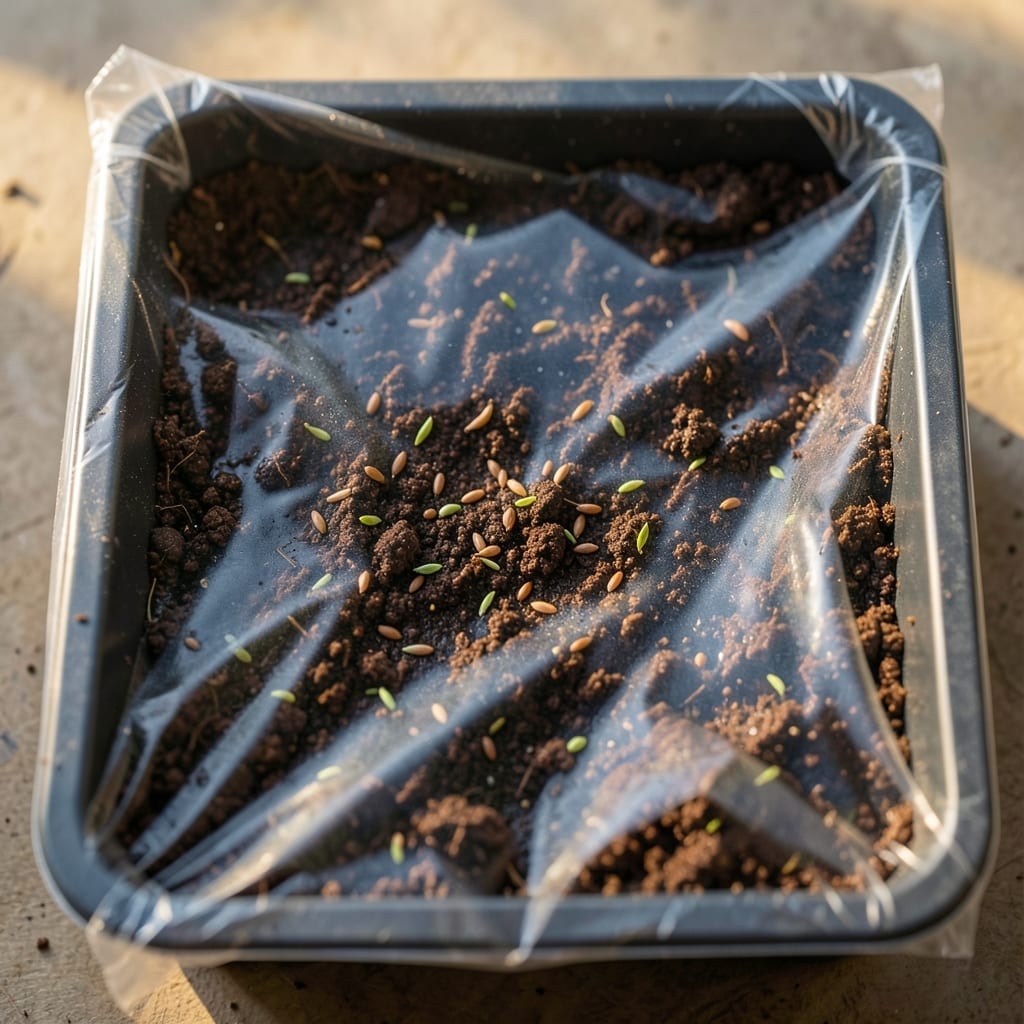
Struggling with slow or uneven basil sprouting? A simple sheet of plastic wrap can transform your seed tray into a humidity-rich greenhouse that speeds up the process dramatically.
Drape clear plastic wrap over your seeded tray to trap moisture and warmth, creating the ideal microclimate for basil seeds. Remove it once sprouts appear (usually within 5-7 days) to prevent mold and give seedlings room to grow.
This trick is perfect for dry indoor environments or gardeners who want to maximize their germination success rate with minimal effort. 🌱
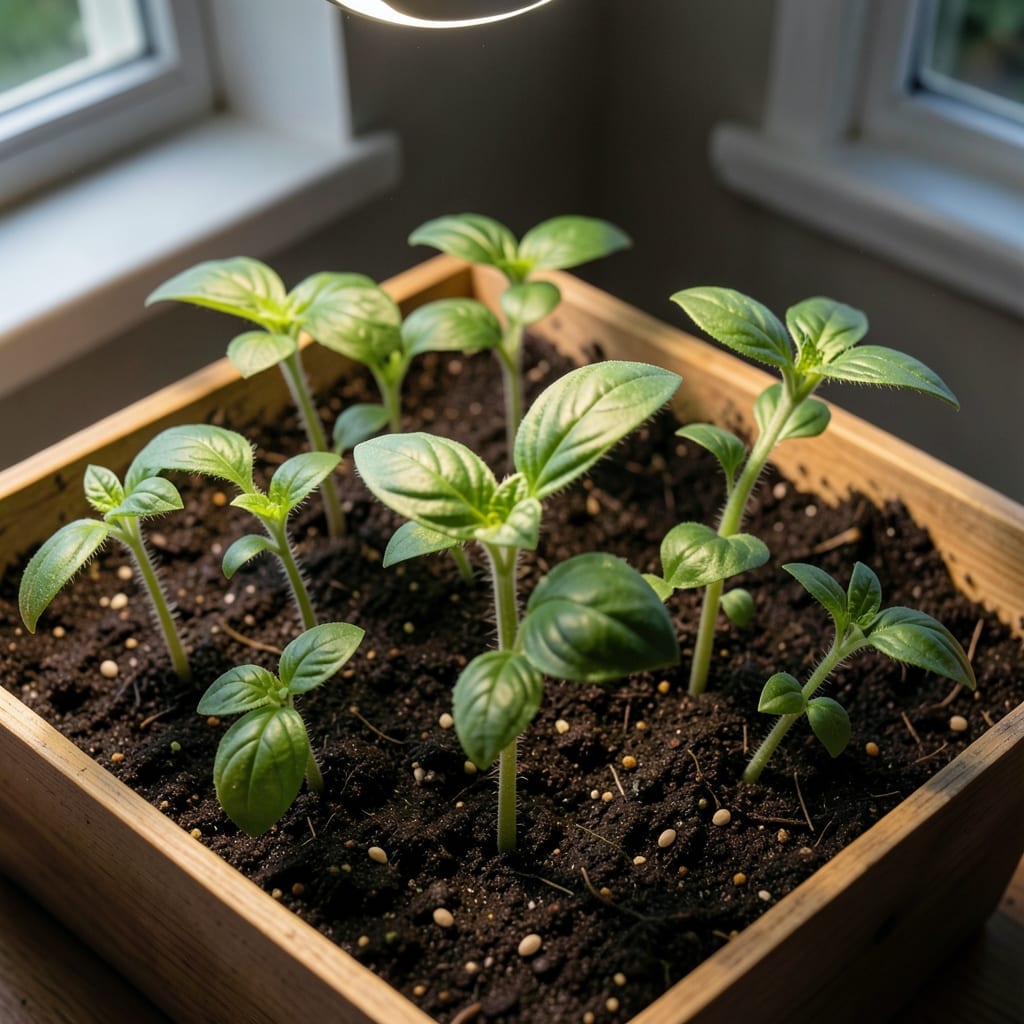
Many gardeners make the mistake of keeping their basil seedlings in dim conditions after sprouting. Unlike the seeds themselves, which germinate in darkness, these tiny plants need bright light immediately to grow strong and sturdy.
Provide 12-16 hours of light daily using a grow light or sunny windowsill. Without sufficient light, seedlings stretch toward the light source, becoming leggy and weak. This early care sets the foundation for healthy, productive plants.
This step is crucial for indoor starters or those with limited natural light. Strong seedlings now mean a thriving herb garden later. 🌱
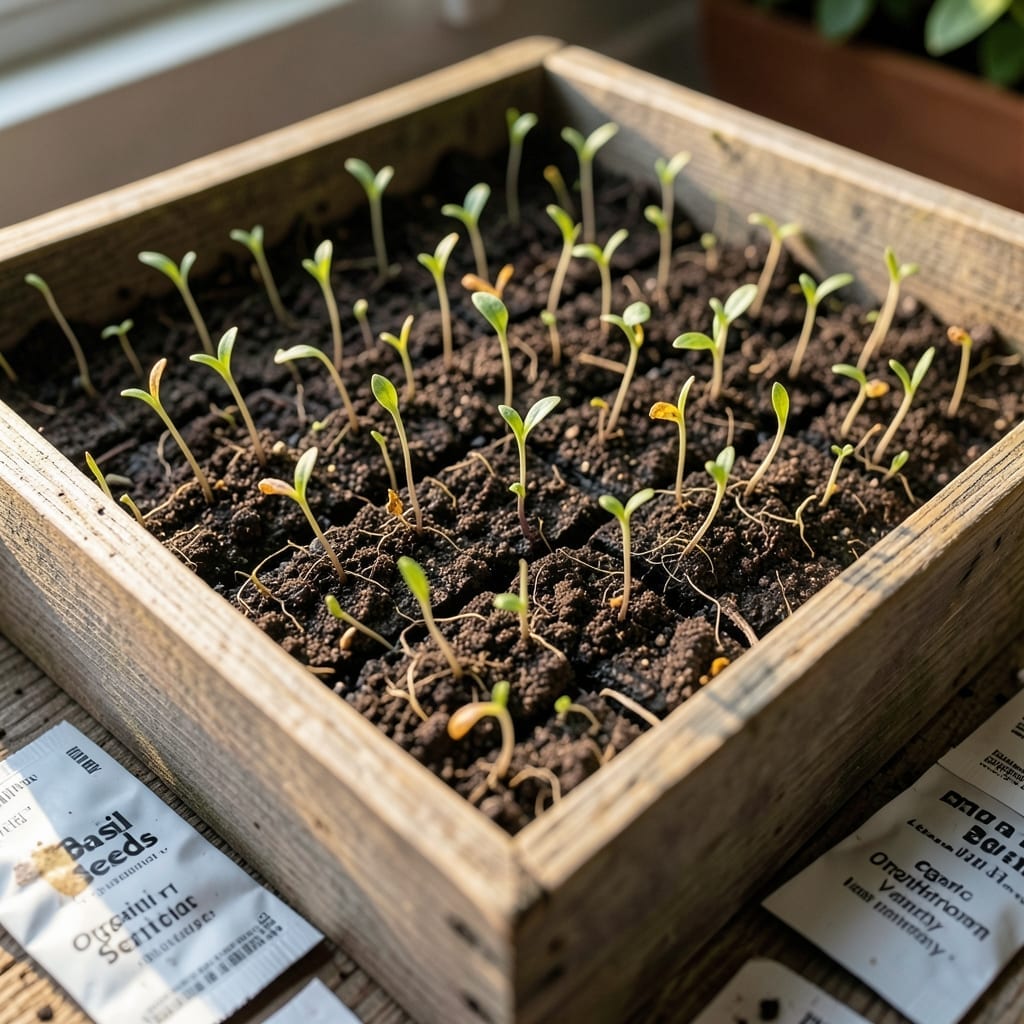
Crowded basil seeds create their own problems—weak seedlings, stunted growth, and a fight for light and nutrients that leaves you with lackluster plants.
Space your seeds 1-2 inches apart when sowing to prevent competition. This gives each seedling room to develop strong roots and sturdy stems without battling its neighbors for resources. You’ll notice healthier, more vigorous plants ready for transplanting.
This simple spacing trick is especially helpful for container gardeners or anyone growing basil in limited space. Stronger starts mean better harvests down the road. 🌱
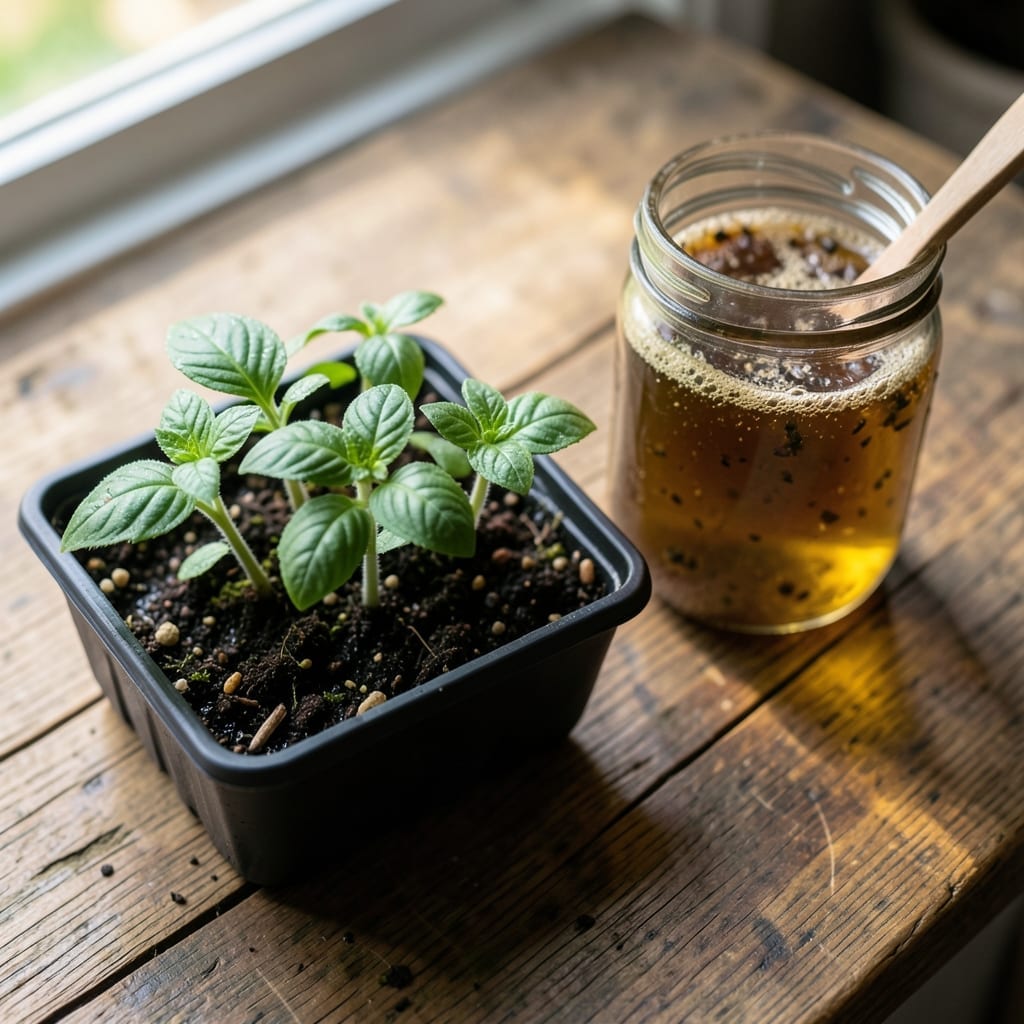
Want to give your basil seedlings a gentle growth boost without risking nutrient burn? Compost tea is the perfect solution for delicate young plants.
This mild, liquid fertilizer delivers essential nutrients in a form that’s easy for seedlings to absorb. Use it once your basil has its first true leaves, applying every 2-3 weeks to encourage robust root development and vigorous early growth.
It’s especially valuable for organic gardeners or those growing basil in containers where soil nutrients may be limited. Watch your seedlings thrive with this natural pick-me-up. 🌱
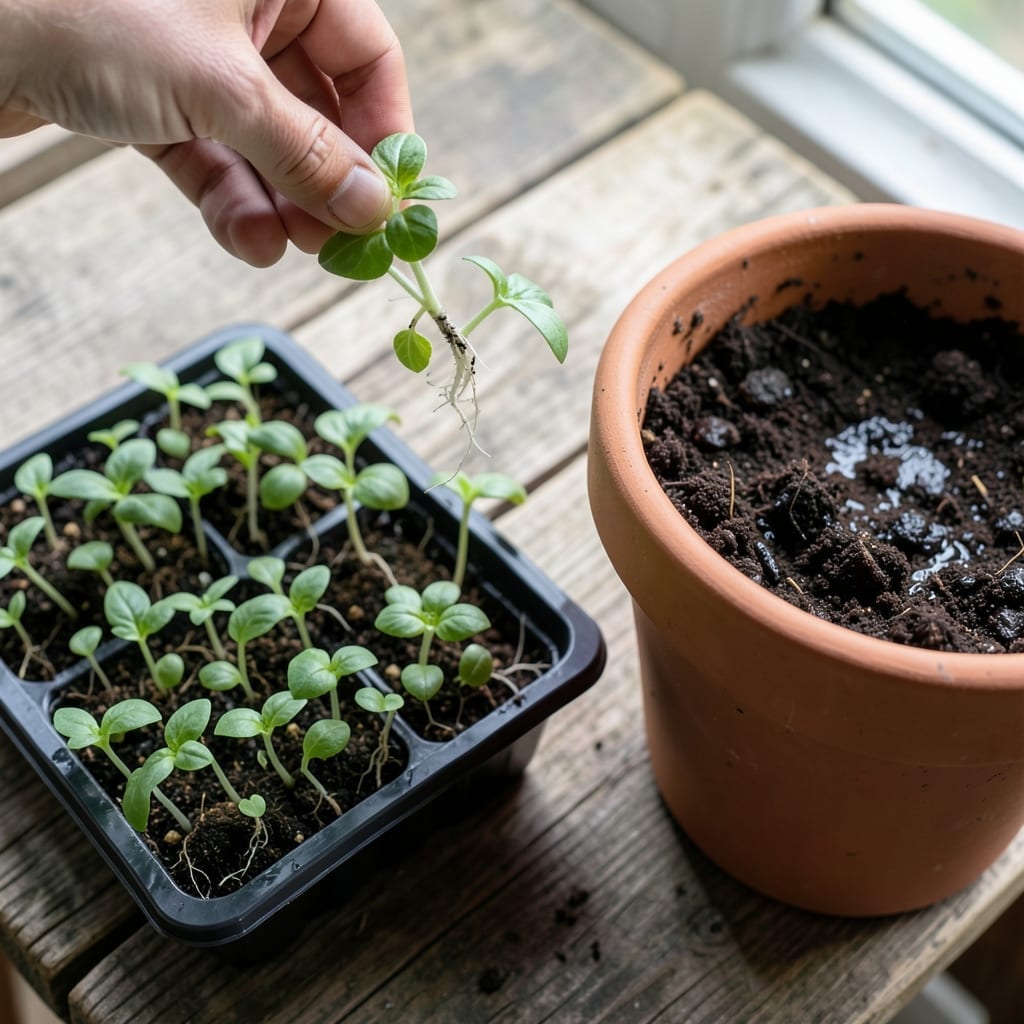
Don’t let your basil seedlings get cramped in their starter trays. The moment those first true leaves appear, it’s time to upgrade their living space to prevent tangled, root-bound plants that struggle to grow.
Gently move each seedling to a larger container with fresh soil, handling them by the leaves to avoid damaging tender stems. This gives roots room to stretch and establishes a strong foundation for rapid growth.
Ideal for gardeners who want to avoid stunted plants and ensure their basil thrives from seedling to harvest. 🌱