
Beautiful Plants For Your Interior
Beautiful Plants For Your Interior
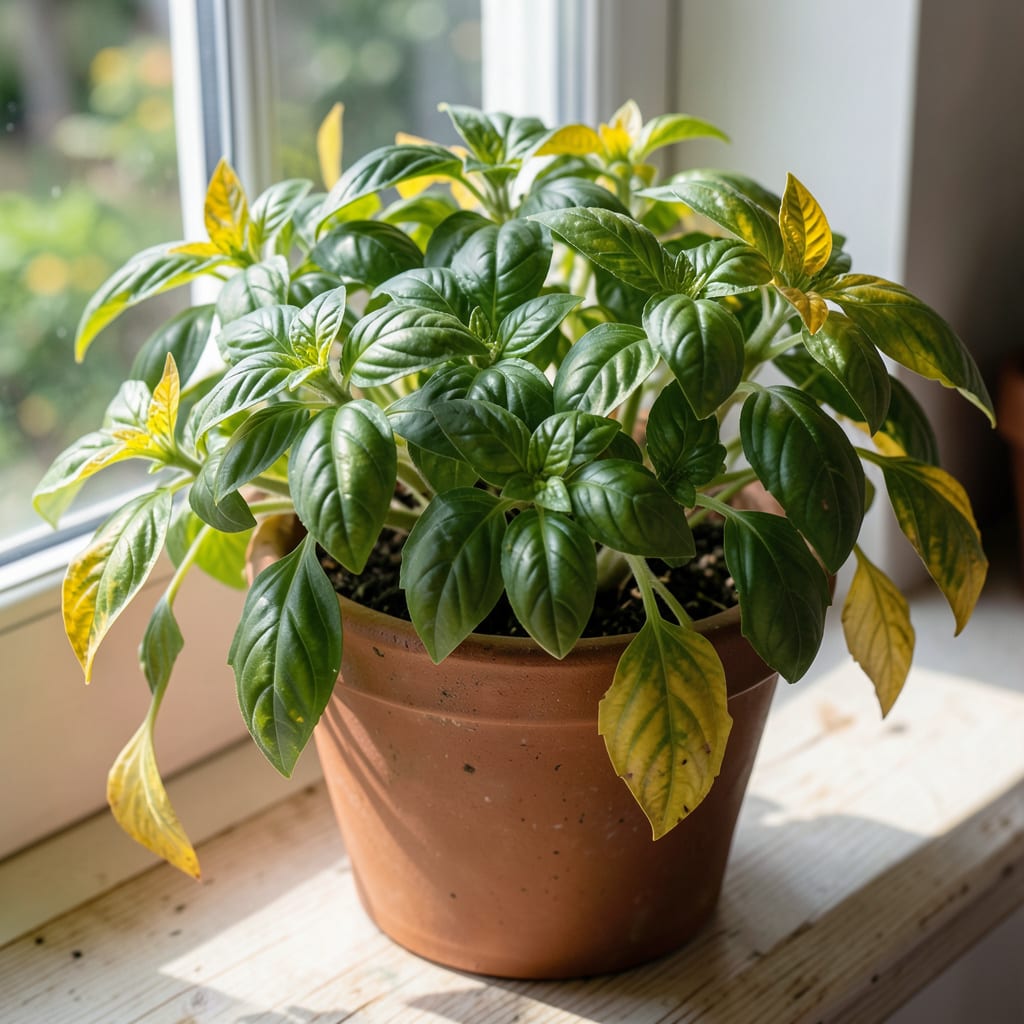
Yellow leaves on basil aren’t always a death sentence. I’ve saved countless plants by catching the warning signs early—slight color changes at the base, soft stems, or crispy edges that signal trouble.
Most cases come down to 4 common issues: too much water, not enough light, hungry roots, or uninvited pests. The fix is usually simpler than you think, and your plant can bounce back within 2-3 weeks of the right care.
The key is quick action. Left unchecked, what starts as a few yellow leaves can spread to the whole plant. But with the right adjustments, you’ll see new green growth pushing through in days, not weeks.
No fancy equipment needed—just observation and a few household items. Here’s how to diagnose and treat the problem before it’s too late.
Yellowing leaves on your basil plant are a distress signal, often tied to environmental stress, nutrient deficiencies, or disease. Here’s a breakdown of the most common causes, explained scientifically for quick diagnosis and action.
Basil thrives in moist but well-drained soil. Overwatering suffocates roots, reducing oxygen uptake and causing root rot (often Phytophthora or Pythium fungi). This disrupts nutrient transport, leading to chlorosis (yellowing) as chlorophyll breaks down. Check soil moisture 1–2 inches deep—if soggy, reduce watering and ensure pots have drainage holes.
Basil needs 6–8 hours of sunlight daily. Too little light slows photosynthesis, depleting chlorophyll (the green pigment). Conversely, intense direct sun (especially in hot climates) can scorch leaves, causing yellow or brown patches. Move plants to bright, indirect light or use shade cloth if needed.
Yellow leaves often signal a lack of nitrogen (uniform yellowing, starting with older leaves) or magnesium (yellowing between veins, called interveinal chlorosis). Basil is a heavy feeder—fertilize every 4–6 weeks with a balanced, water-soluble fertilizer (e.g., 10-10-10) or compost tea. For magnesium, add Epsom salt (1 tbsp/gallon of water).
Pathogens like Fusarium wilt or bacterial leaf spot (Pseudomonas cichorii) block water and nutrient flow, causing yellowing, wilting, or spots. Remove infected leaves immediately, avoid overhead watering, and improve air circulation. Copper-based fungicides can help prevent spread.
Basil is sensitive to cold (below 50°F/10°C) and heat stress (above 90°F/32°C). Cold snaps slow metabolism, while heat accelerates water loss, both leading to leaf discoloration. Keep plants indoors if nights are chilly, or provide afternoon shade in extreme heat.
When your basil starts showing yellow leaves, act fast with these targeted fixes. Each solution matches a common cause, so you can address the root issue and restore your plant’s vibrant green.
Fix: Let the soil dry out between waterings. Stick your finger an inch deep—if it’s damp, hold off. Repot into a container with drainage holes and use a well-draining potting mix. Trim any black, mushy roots to prevent rot.
Prevention tip: 💡 Water only when the topsoil feels dry, and always empty the saucer after watering.
Fix: Move your basil to a sunny windowsill (6+ hours of direct light daily) or supplement with a grow light (12-16 hours/day). Rotate the pot weekly for even exposure.
Prevention tip: 🌡️ South-facing windows are ideal, but east/west work too. Avoid dim corners or shaded balconies.
Fix: Feed with a balanced, water-soluble fertilizer (10-10-10 NPK) every 4-6 weeks during growing season. Yellow lower leaves often signal nitrogen deficiency—use a nitrogen-rich formula (like fish emulsion) for a quick boost.
Prevention tip: ✨ Mix compost into the soil at planting for slow-release nutrients.
Fix: For aphids or spider mites, spray leaves with a mix of 1 tsp neem oil + 1L water + a few drops of dish soap. For fungal issues (like downy mildew), remove infected leaves and improve airflow. Use a baking soda spray (1 tsp baking soda + 1L water + soap) as a preventative.
Prevention tip: 🎯 Inspect leaves weekly, and avoid wetting foliage when watering.
Fix: Basil thrives at 70-85°F (21-29°C). Move indoor plants away from drafty windows or AC vents. If outdoors, bring pots inside if nights drop below 50°F (10°C).
Prevention tip: ⏰ Acclimate plants gradually to temperature changes (e.g., harden off seedlings before transplanting).
Water when the top 1-2 inches of soil feel dry. Typically this means every 3-4 days in warm weather, but always check soil moisture first. Overwatering is a leading cause of yellow leaves.
Unfortunately, no. Once leaves yellow, they won’t regain color. Focus on fixing the underlying issue and new growth will be healthy. Remove severely yellowed leaves to redirect energy.
A south-facing window with 6-8 hours of sunlight is ideal. No good window? Use a grow light for 12-16 hours daily, keeping it 6-12 inches above the plant.
Generally yes if the issue is environmental (like overwatering). Avoid eating leaves with spots or signs of disease. When in doubt, trim affected leaves and wait for new growth.
