
Beautiful Plants For Your Interior
Beautiful Plants For Your Interior
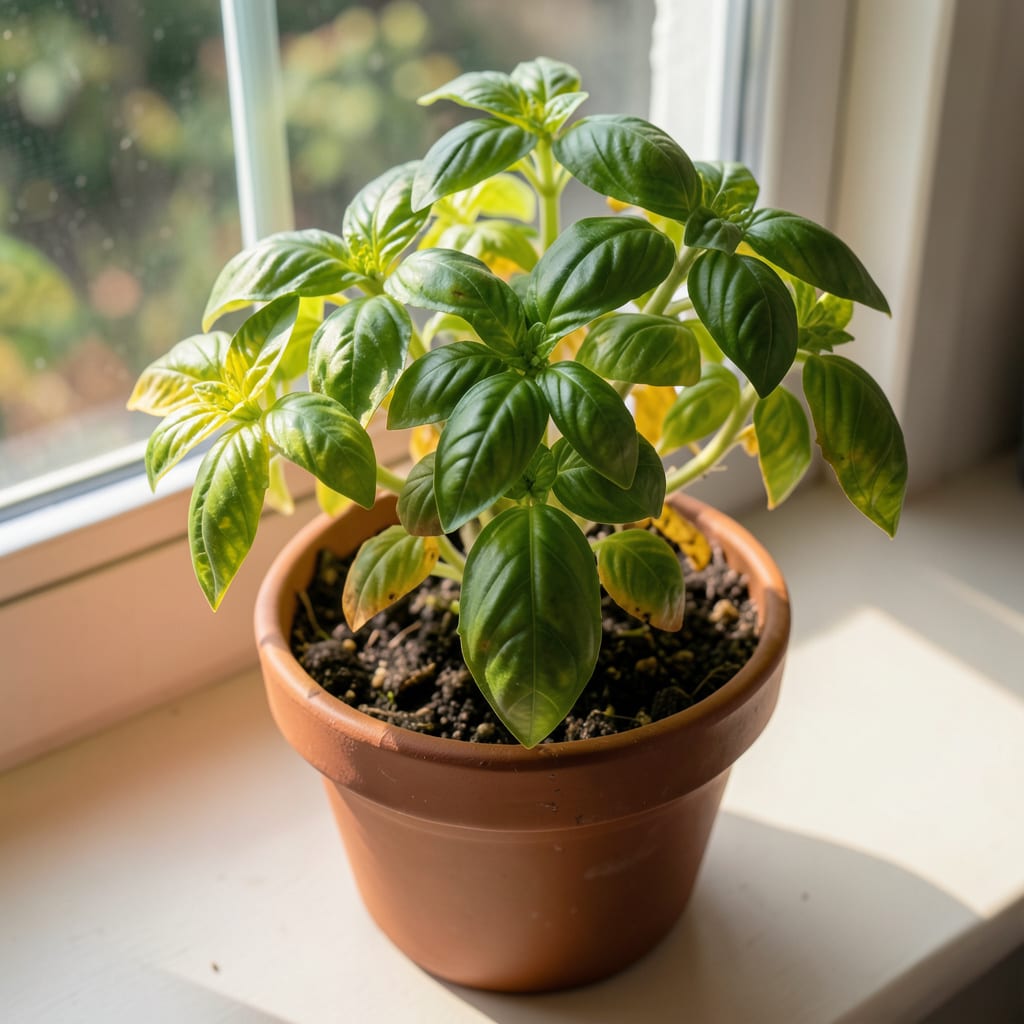
Yellow basil leaves signal a cry for help, not a death sentence. I’ve rescued countless plants by addressing the root cause before it spreads.
Usually, it’s one of three culprits: too much water, not enough light, or soil that’s too acidic. Fix the issue, and your basil often bounces back within 2 weeks.
You’ll know it’s working when new growth appears vibrant green and firm. The key is acting fast—yellow leaves won’t turn green again, but the rest of the plant can recover.
Prevention is simpler than cure. Consistent watering, bright light, and well-draining soil keep basil thriving all season long.
Understanding why your basil leaves turn yellow starts with identifying the root causes. Here are the most common culprits, backed by science:
Basil thrives on nitrogen, magnesium, and iron. A nitrogen deficiency often causes uniform yellowing (chlorosis) in older leaves first, as the plant redirects nutrients to new growth. Magnesium deficiency, on the other hand, appears as interveinal yellowing—leaves turn yellow between the veins while the veins stay green. Iron deficiency also triggers interveinal chlorosis but typically affects younger leaves first. Action: Use a balanced fertilizer or amend soil with compost to restore missing nutrients.
Too much water suffocates basil roots, preventing oxygen uptake and leading to root rot. This stress manifests as yellowing leaves, often accompanied by wilting or a mushy stem base. Basil prefers moist but well-drained soil. Action: Let the top inch of soil dry out between waterings and ensure pots have drainage holes.
Basil needs 6–8 hours of sunlight daily. Too little light weakens the plant, causing leaves to yellow and drop. Conversely, intense, direct sunlight (especially in hot climates) can scorch leaves, turning them yellow or brown at the edges. Action: Move potted basil to a bright, indirectly lit spot or provide shade during peak afternoon hours.
Sap-sucking pests like aphids, spider mites, or whiteflies drain vital nutrients from basil leaves, leading to yellowing and stippling (tiny dots). Check the undersides of leaves for webbing or tiny insects. Action: Spray with neem oil or insecticidal soap to eliminate pests.
Basil is sensitive to cold. Temperatures below 50°F (10°C) can cause leaves to yellow and stunt growth. Heat stress (above 90°F/32°C) may also trigger yellowing due to increased transpiration. Action: Keep basil in a temperature-stable environment or use row covers in cooler months.
Don’t panic if your basil leaves are turning yellow—most causes are fixable with a few simple adjustments. Below are targeted solutions for the most common issues, plus tips to keep your plant thriving long-term.
Fix: Let the soil dry out slightly between waterings. Stick your finger an inch deep—if it’s damp, hold off. Ensure your pot has drainage holes, and use a well-draining potting mix. If root rot is suspected, trim affected roots and repot in fresh soil.
Prevention tip: 💡 Water only when the top inch of soil feels dry, and always empty the saucer after watering.
Fix: Basil needs 6–8 hours of sunlight daily. If leaves are pale or yellowing, move the plant to a sunnier spot (south-facing windowsill or under grow lights). If leaves are scorched or crispy, provide afternoon shade or move it slightly away from intense direct light.
Prevention tip: 🎯 Rotate the pot weekly for even light exposure.
Fix: Yellowing often signals a lack of nitrogen (lower leaves) or magnesium (interveinal yellowing). Use a balanced, water-soluble fertilizer (10-10-10) every 4–6 weeks during growing season. For magnesium, add a pinch of Epsom salt to the soil.
Prevention tip: ✨ Avoid over-fertilizing—more isn’t better! Stick to the recommended dose.
Fix: Inspect leaves for aphids, spider mites, or whiteflies. Spray with neem oil or insecticidal soap, focusing on the undersides of leaves. Repeat every 5–7 days until pests are gone.
Prevention tip: 🌡️ Keep your basil in a breezy area to deter pests naturally.
Fix: Basil thrives in 70–85°F (21–29°C). If leaves yellow due to cold drafts or heatwaves, move the plant indoors near a sunny window or to a shaded outdoor spot. Avoid placing it near AC vents or heaters.
Prevention tip: 🔥 Use a thermometer to monitor conditions if you’re unsure.
Water when the top 1 inch of soil feels dry. Typically, this means watering every 2-3 days in warm weather. Overwatering is a common cause of yellow leaves, so always check soil moisture first.
No, once leaves turn yellow, they won’t recover. However, fixing the underlying issue (like watering or light) will help new growth appear vibrant green. Focus on keeping the rest of the plant healthy.
Use a well-draining potting mix with a pH between 6.0-7.5. Adding compost improves fertility and drainage. Avoid heavy or clay-based soils, as they retain too much moisture and can suffocate roots.
This often signals a nitrogen deficiency. The plant redirects nutrients to newer growth, leaving older leaves to yellow. A balanced fertilizer can restore the missing nutrients and prevent further yellowing.
