
Beautiful Plants For Your Interior
Beautiful Plants For Your Interior
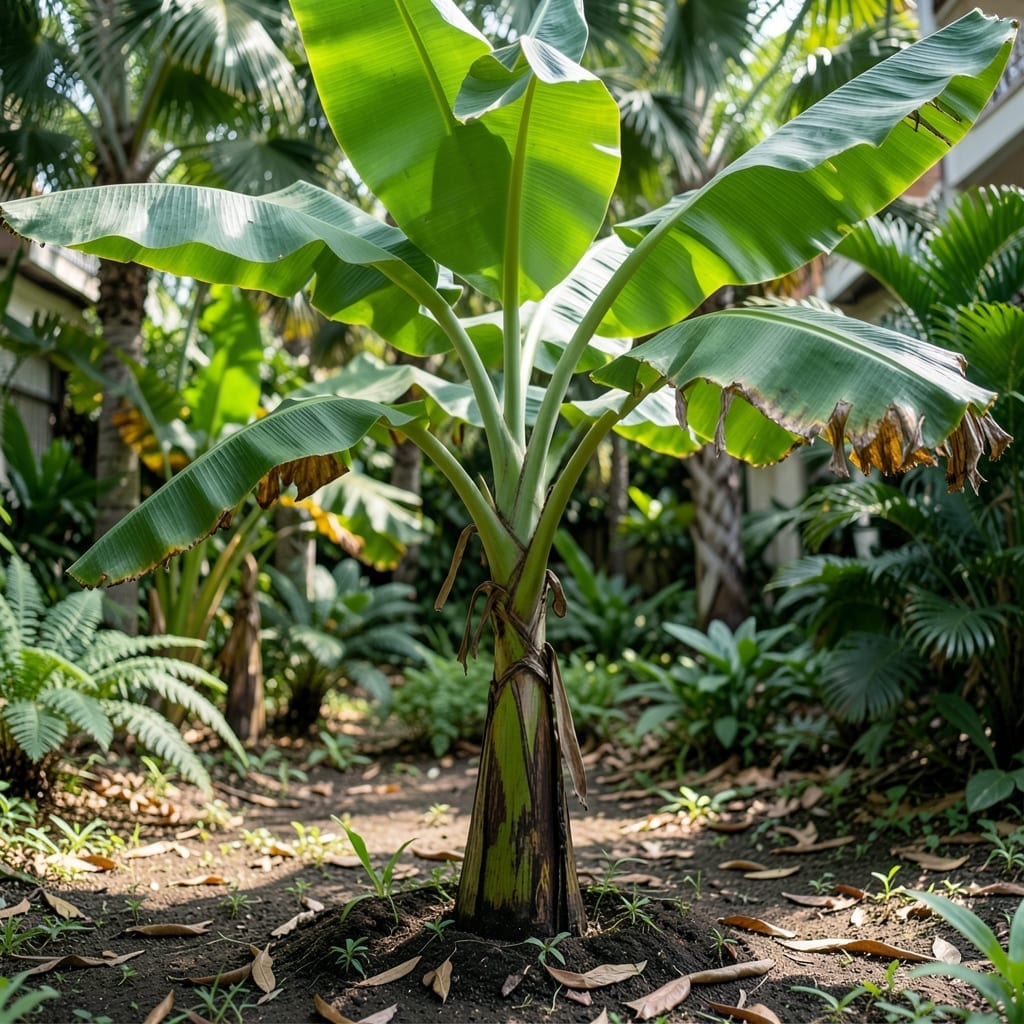
What if I told you the secret to a thriving 🍌 Banana Tree starts underground? Most gardeners focus on the leaves and fruit, but the root system is what truly powers its rapid growth.
These shallow, fibrous roots spread 16-20 feet laterally, forming a dense mat just beneath the surface. Unlike many trees, they don’t have a central taproot, which changes everything about how you should plant and care for them.
I’ll show you exactly how this unique system works and 3 key factors that influence its development. Let’s dig in.
The banana tree root system is unlike most trees you’ve grown. Instead of a deep taproot, it develops a shallow, fibrous network that stays close to the surface. This design allows for rapid nutrient absorption but requires careful attention to soil conditions.
These fibrous roots spread horizontally, often reaching 16-20 feet from the trunk. They form a dense mat in the top 6-12 inches of soil, which is why proper spacing between plants is crucial for healthy development.
| Characteristic | Specification |
|---|---|
| Root Type | Fibrous, shallow |
| Lateral Spread | 16-20 feet |
| Depth | 6-12 inches |
| Taproot | Absent |
| Growth Speed | Rapid |
This root structure explains why banana trees are so sensitive to soil compaction. The shallow roots need loose, well-aerated soil to access oxygen and water effectively. I’ve seen many gardeners struggle when they plant bananas in heavy clay without amending the soil first.
Another fascinating aspect is how quickly these roots grow. In ideal conditions, new roots can extend several inches per day, especially during the warm growing season. This aggressive growth helps the plant establish itself rapidly after planting.
However, this shallow root system also makes banana trees vulnerable to drought. Without consistent moisture in the topsoil, the roots can’t support the plant’s large leaves and developing fruit. That’s why mulching is so important—it helps retain soil moisture.
The lateral spread means you should plant bananas at least 8-10 feet apart to prevent root competition. In my experience, crowding leads to stunted growth and smaller fruit bunches, as each plant can’t access enough nutrients.
Interestingly, the root system also produces new suckers or “pups” from the base. These can develop into new banana plants if left to grow. I recommend removing excess suckers to direct more energy toward your main plant and its fruit production.
Remember that while the roots spread widely, they’re not deep. This makes banana trees susceptible to wind damage unless properly supported. Staking young plants and planting them in sheltered locations can prevent toppling during storms.
Understanding this unique root architecture changes how you approach banana tree care. From planting depth to watering frequency, every aspect of cultivation should accommodate this shallow, wide-spreading system. 🌱
To keep your banana tree root system thriving, you need to focus on 4 key factors. The first is soil type—banana roots prefer loose, well-draining soil rich in organic matter. Heavy clay can suffocate the shallow roots.
Next, consistent moisture is critical. These roots sit near the surface, so they dry out quickly. I recommend deep watering every 2-3 days in warm weather, combined with mulching to retain soil moisture and regulate temperature.
Temperature also plays a major role. Banana roots grow best in warm conditions above 70°F. In cooler climates, consider planting in containers that can be moved indoors during cold snaps to protect the sensitive root system. 🌱
Finally, don’t overlook spacing. Those lateral roots can spread 16-20 feet, so crowding plants leads to competition for water and nutrients. I’ve found that 8-10 feet apart gives each tree enough room to develop a strong root network.
For best results, I suggest adding a 2-3 inch layer of organic mulch around the base. This not only retains moisture but also provides a steady supply of nutrients as it breaks down, which the shallow roots can easily access.
Remember that soil compaction is the enemy of banana roots. Regularly aerate the soil around your trees, especially after heavy rains. This simple step can significantly improve root health and overall plant vigor. 🌿