
Beautiful Plants For Your Interior
Beautiful Plants For Your Interior
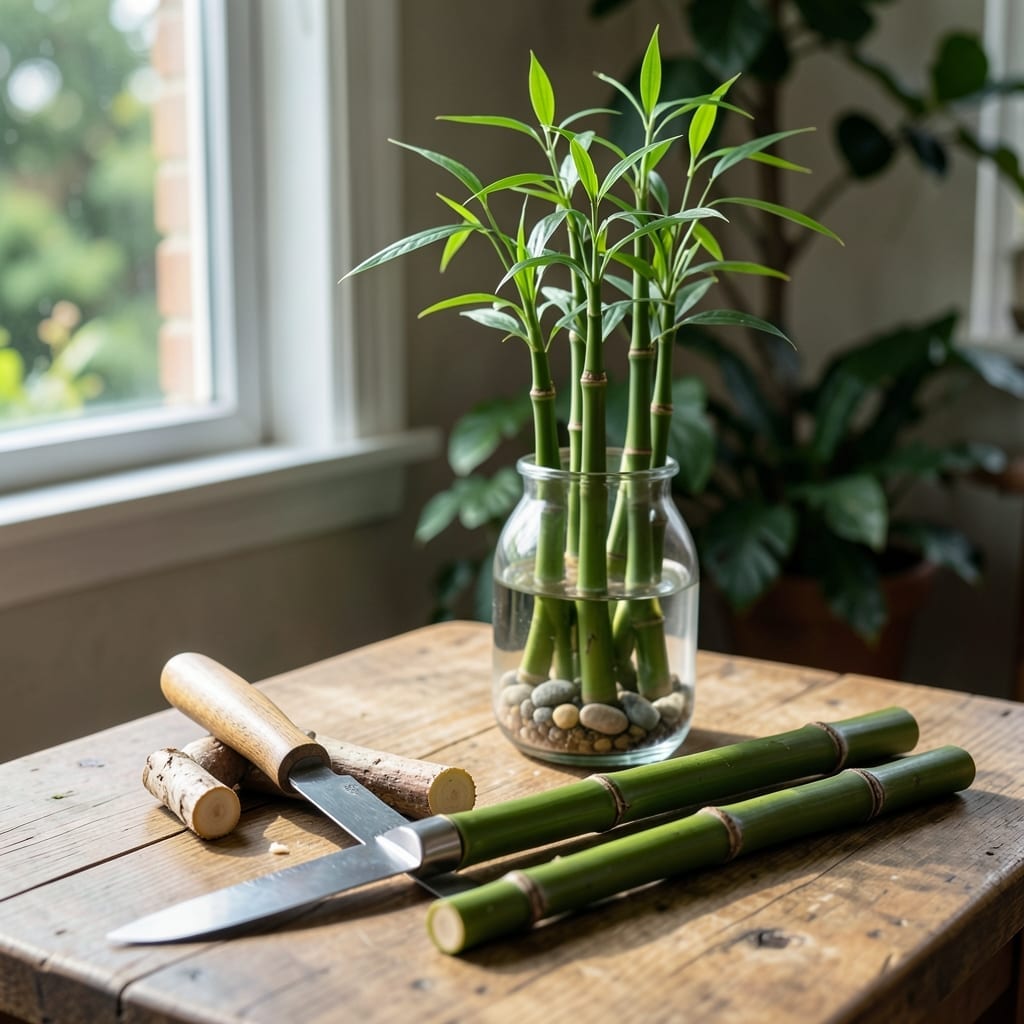
A bamboo cutter tool is a specialized blade designed to cleanly slice through bamboo stalks without splintering, making it essential for gardeners and landscapers working with this fast-growing plant.
I’ve found these tools have a unique sharpened edge that glides through the fibrous material with precision. Standard pruners often crush the fibers, but the right cutter maintains the stalk’s integrity. For container gardens, this means cleaner cuts that promote healthier regrowth and reduce the risk of disease. ✨
What sets them apart is their ability to handle the dense, woody structure without splintering. I always recommend looking for models with ergonomic handles and rust-resistant blades for durability and comfort. 💫
💡 In This Article
The secret lies in the blade geometry. Unlike standard pruners with flat edges that crush fibers, bamboo cutters use a convex or beveled design that severs cleanly. This 20-30° angle allows the blade to slice between the dense vascular bundles without tearing the surrounding tissue.
The result is a smooth cut that preserves the stalk’s structural integrity while minimizing stress to the plant.
Material matters too. High-carbon steel blades maintain their edge at 58-62 HRC hardness, resisting the abrasive silica content in bamboo that dulls ordinary tools quickly. Some premium models use ceramic or titanium coatings for extra durability. Standard pruners fail because their softer steel bends under pressure, creating jagged edges that invite disease and pests. ✨
Handle design plays a crucial role in control. Most quality cutters feature 12-18 inch handles that provide the leverage needed to cut through thick culms (up to 2 inches in diameter) without excessive force. The ergonomic grips reduce hand fatigue during extended use, while spring-loaded mechanisms ensure consistent pressure application throughout the cut.
What most people don’t realize is that the cutting motion itself differs from standard pruning. With bamboo, you want a single, decisive motion rather than a sawing action. This prevents the fibers from splitting along their length. Some specialized models even incorporate a slight rocking motion to help separate the fibers more cleanly. 🔥
The best cutters also include a sap groove—a small channel near the blade that prevents sticky bamboo sap from accumulating. This feature not only maintains cutting efficiency but also reduces the risk of the blade sticking mid-cut, which can lead to jagged edges.
For container gardens, this means less mess and cleaner maintenance of your bamboo plants.
They feature a convex blade with a 20-30° angle that slices cleanly through bamboo’s dense fibers. Regular pruners crush the stalk, causing splintering and potential plant damage.
Inspect it after every 10-12 uses, or when cuts feel less smooth. High-carbon steel blades hold an edge well but dull faster with bamboo’s abrasive silica. A quick hone keeps it razor-sharp.
Yes, but it’s optimized for bamboo’s fibrous structure. It works well on similar woody stems like thick shrubs or vines, but may be overkill for softer plants. Always clean the blade after use.
For culms up to 2 inches in diameter, choose a cutter with 14-18 inch handles. This provides the leverage needed for clean cuts without straining your wrists.
The groove prevents sticky bamboo sap from building up on the blade, ensuring smoother cuts and less mess. This feature is especially useful for container gardens where sap can drip.