
Beautiful Plants For Your Interior
Beautiful Plants For Your Interior
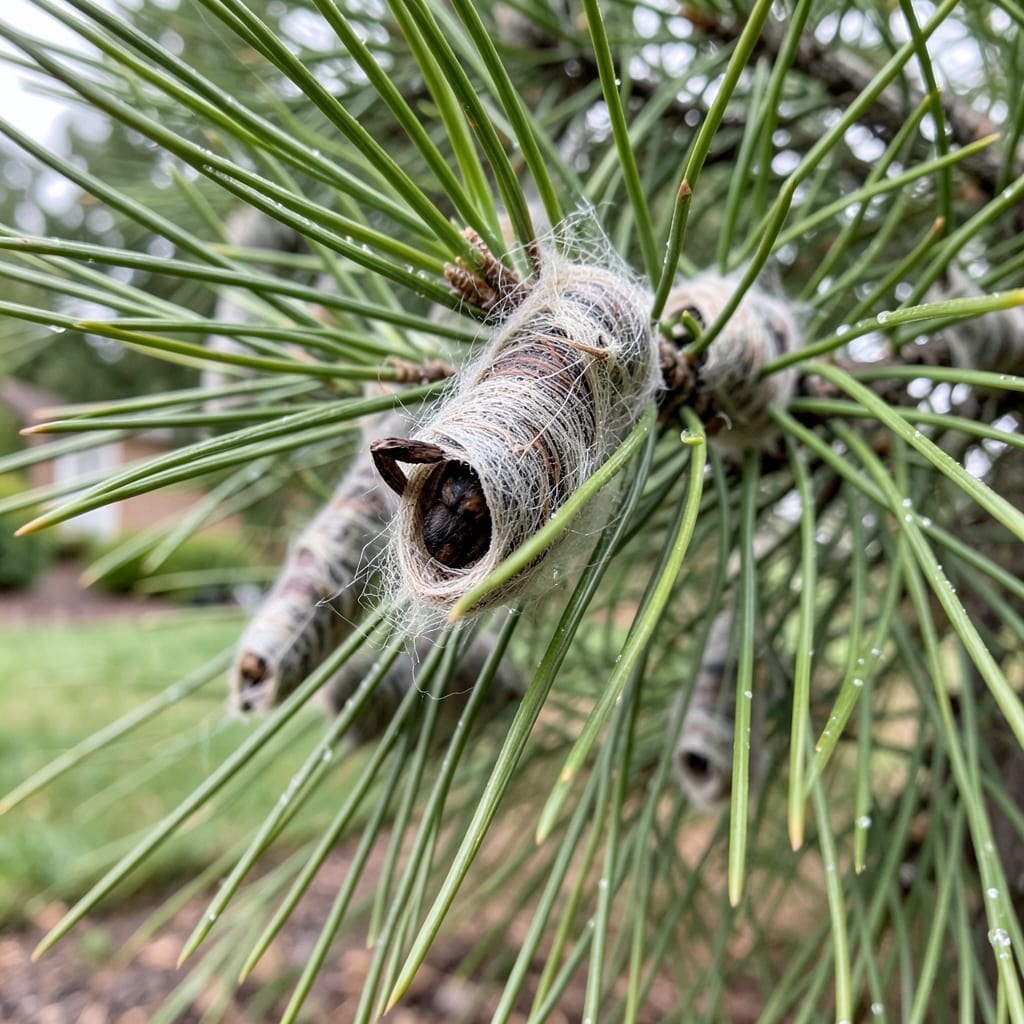
Spotting tiny brown bags hanging from pine branches means trouble. 🌲 I first noticed them on my backyard pines last summer—thought they were odd seed pods until the damage spread.
These pests start small but can defoliate a tree in one season if left unchecked. The bags are actually protective cases made from silk and tree foliage, each holding dozens of hungry larvae.
Early removal stops the cycle before it escalates. Hand-picking works for light infestations, while heavier ones may need organic sprays or professional help.
Your pines can recover with prompt action and proper care. Catching them early saves months of recovery time and keeps trees thriving.
Bagworms thrive on pine trees due to a mix of environmental, biological, and tree-specific factors. Understanding these causes helps prevent infestations and protect your pines. Below are the primary reasons these pests appear.
Pine trees are a favorite target for bagworms (Thyridopteryx ephemeraeformis) because their dense, needle-like foliage provides shelter and food. The waxy coating on pine needles also retains moisture, creating a humid microclimate that supports bagworm survival. Additionally, pines produce abundant foliage, allowing larvae to feed undisturbed while constructing their protective bags.
Bagworms overwinter as eggs in the bags of deceased females from the previous year. In late spring to early summer, these eggs hatch, and larvae (caterpillars) emerge just as pine trees flush new growth. This synchronization ensures a readily available food source, allowing the larvae to begin feeding immediately. The timing aligns perfectly with the tree’s most vulnerable growth phase.
Warm, dry climates accelerate bagworm development, leading to larger populations. Conversely, stressed pine trees—whether from drought, poor soil, or disease—are more susceptible. Weak trees produce fewer defensive chemicals (like terpenes), making them easier targets. Additionally, urban landscapes with limited biodiversity often lack natural predators (e.g., parasitic wasps), allowing bagworms to multiply unchecked.
Introducing infested nursery stock or pruning tools can spread bagworm eggs to healthy pines. Improper yard maintenance, such as leaving fallen bags on the ground, also enables overwintering. Even excessive mulching can create a cozy environment for eggs to survive until spring.
Bagworms can quickly defoliate and weaken your pine trees if left unchecked. Here’s how to tackle the problem based on the severity of the infestation:
For light cases, manually remove the bags before the larvae hatch (typically late spring to early summer). Use gloves to pluck the bags off the branches and drop them into a bucket of soapy water to drown the pests. This method is eco-friendly and effective for isolated cases.
If the bags are clustered on specific branches, prune the affected areas and dispose of them immediately. Seal the pruned material in a plastic bag to prevent the larvae from spreading. Sterilize your pruning tools afterward with rubbing alcohol to avoid cross-contamination.
For widespread problems, apply Bacillus thuringiensis (Bt), a natural bacterial insecticide, to young larvae in early summer. Bt disrupts their digestive systems without harming beneficial insects. For stubborn cases, use a pyrethroid-based insecticide, but follow label instructions carefully to avoid damaging the tree or local wildlife.
Act quickly—the sooner you address the issue, the easier it is to save your pine trees! ✨
Inspect pine trees in late spring to early summer, when larvae emerge from overwintering bags. This is the best time to catch them before they cause serious damage.
Always sterilize tools with rubbing alcohol after pruning infested branches. This prevents spreading eggs to healthy trees and stops the cycle.
Yes! Encourage natural predators like birds and parasitic wasps. Bacillus thuringiensis (Bt) is also effective against young larvae without harming other wildlife.
Rarely. Multiple treatments are often needed, especially for severe cases. Combine removal, pruning, and preventative measures for the best results.