
Beautiful Plants For Your Interior
Beautiful Plants For Your Interior
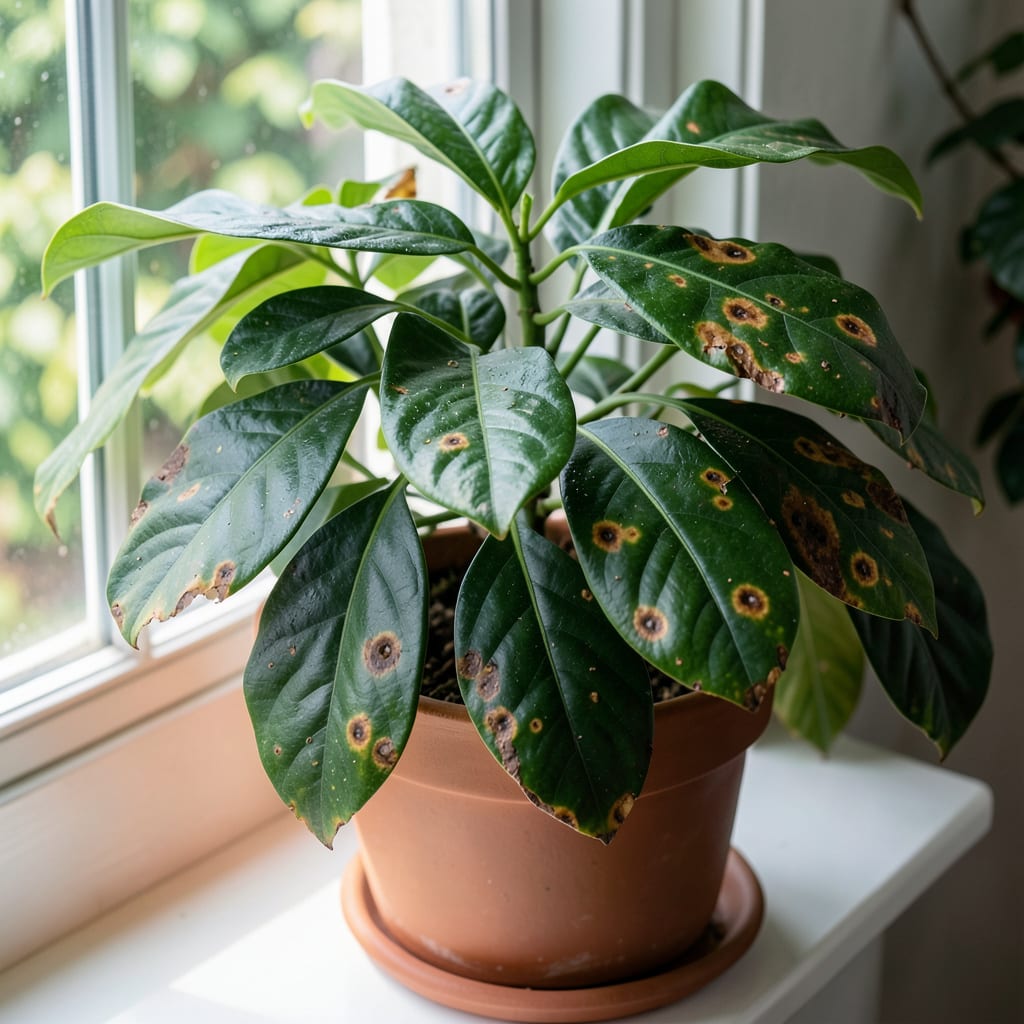
Brown spots on avocado leaves always mean your plant is trying to tell you something. I’ve seen this happen with overwatering, fungal issues, and even just the wrong kind of water.
The good news? Most causes are fixable once you identify them. The spots might be dry and crispy or soft and yellow-edged—each type points to a different problem. A little detective work goes a long way.
With the right adjustments, you’ll see new growth coming in clean and green within 2-3 weeks. The key is acting fast before the issue spreads to the rest of the plant.
Works for potted plants indoors or avocado trees in the garden. Here’s how to diagnose and treat it.
Brown spots on avocado leaves often signal stress or disease. Below are the most common causes, each with actionable insights to help you diagnose and address the issue.
Avocado plants are sensitive to extreme temperatures. Heat stress (above 90°F/32°C) or cold drafts (below 50°F/10°C) can cause leaf scorch, appearing as dry, brown patches. Low humidity (below 40%) may also lead to crispy edges. Move your plant to a stable environment with indirect light and consistent moisture.
Both overwatering and underwatering trigger brown spots. Overwatering suffocates roots, leading to Phytophthora root rot, which manifests as dark, spreading lesions. Underwatering causes leaf tip burn due to dehydration. Check soil moisture 2 inches deep—water only when dry, and ensure pots have drainage holes.
Fungi like Colletotrichum (anthracnose) or Cercospora thrive in damp conditions, creating circular brown spots with yellow halos. These spread rapidly in poor airflow. Prune affected leaves, improve ventilation, and apply copper-based fungicides preventatively.
Sap-sucking pests such as spider mites or scale insects leave behind stippled brown spots from their feeding. Inspect leaf undersides for webbing or tiny bumps. Treat infestations with neem oil or insecticidal soap, and isolate the plant to prevent spread.
A lack of magnesium or potassium can cause interveinal browning (spots between veins). Test soil pH (avocados prefer 6.0–6.5); amend with Epsom salt (for magnesium) or potassium sulfate if deficiencies are confirmed.
Tackle those unsightly brown spots on your avocado plant with these targeted solutions, each addressing a specific cause. Follow these steps to restore your plant’s health and vibrancy.
Fix: Let the soil dry out between waterings. Check the top 1-2 inches of soil—if it’s dry, it’s time to water. Repot the plant in well-draining soil and ensure the pot has drainage holes to prevent waterlogging.
Prevention: Use a moisture meter to monitor soil dampness, and always empty the saucer under the pot after watering.
Fix: Move your avocado plant to a spot with bright, indirect light, especially during peak afternoon hours. If grown outdoors, provide shade cloth or relocate it to a shadier area.
Prevention: Gradually acclimate the plant to sunlight (hardening off) to avoid sudden stress. Keep indoor plants near east-facing windows for gentle morning light.
Fix: Remove affected leaves immediately to prevent spread. Treat with a copper-based fungicide or neem oil spray, applying every 7-10 days until the issue resolves.
Prevention: Improve air circulation around the plant, avoid overhead watering, and sterilize pruning tools between uses to reduce contamination risk.
Fix: Wipe leaves with a damp cloth to remove pests like spider mites or scale. Apply insecticidal soap or horticultural oil, repeating every 5-7 days until pests are gone.
Prevention: Inspect new plants before bringing them home, and regularly check the undersides of leaves for early signs of pests.
Fix: Feed your avocado plant with a balanced, slow-release fertilizer (e.g., 10-10-10) or an avocado-specific formula. Yellowing leaves with brown spots often indicate a magnesium deficiency—apply Epsom salt (1 tbsp per gallon of water) as a foliar spray.
Prevention: Fertilize every 2-3 months during the growing season, and flush the soil with water occasionally to prevent salt buildup.
💡 Pro Tip: Keep a plant care journal to track watering, fertilizing, and any changes in leaf appearance. This helps pinpoint patterns and adjust care routines effectively!
Overwatering spots are often soft, dark brown, and appear with yellow edges. Check the soil—if it’s soggy or smells sour, that’s a red flag.
Yes, removing infected or damaged leaves prevents further spread, especially for fungal issues. Always sterilize pruning tools with rubbing alcohol before and after use.
Yes, high salt or chlorine content in tap water can lead to leaf tip burn. Use filtered or distilled water, or let tap water sit out for 24 hours before using.
With proper care, healthy new leaves typically emerge within 2-3 weeks. Be patient and maintain consistent conditions to support recovery.
