
Beautiful Plants For Your Interior
Beautiful Plants For Your Interior
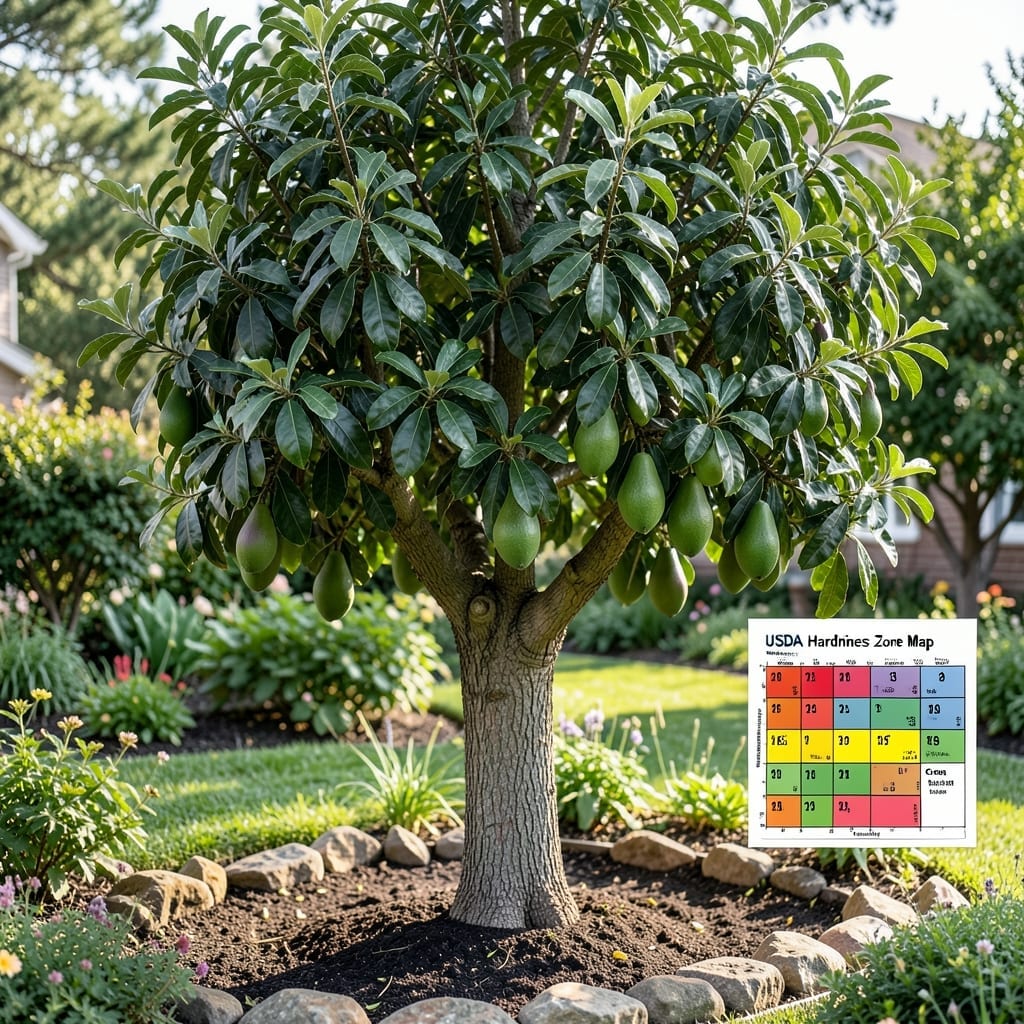
Avocado trees thrive in USDA zones 9 through 11, where winter temperatures rarely drop below 20°F. Some cold-hardy varieties can tolerate zone 8 with proper protection.
I’ve found that these warm regions provide the perfect balance of heat and humidity for avocado trees to flourish. Zone 8 growers often succeed with Mexican varieties like Mexicola, which can handle brief dips to 15°F with mulch and covers. The key is understanding your local microclimate and choosing the right cultivar. ✨
💡 In This Article
Avocado trees originate from tropical highlands, meaning they evolved in stable, frost-free environments. Their vascular systems can’t handle ice formation, which ruptures cell walls at 32°F or below. Even brief exposure to 25°F can damage leaves and small branches, while 20°F often kills mature trees.
This sensitivity explains why they flourish where winter lows stay above freezing. 🔥
The USDA zones 9-11 provide the ideal thermal buffer, with average minimum temperatures ranging from 20-40°F. Zone 9a (20-25°F) represents the absolute cold limit for most commercial varieties like Hass. In these zones, the growing season spans 200-365 days, giving avocados ample time to fruit without cold interruptions.
Microclimates play a crucial role too. South-facing slopes, urban heat islands, or proximity to large water bodies can create pockets 5-10°F warmer than surrounding areas. A tree planted near a sun-warmed brick wall might survive in zone 8b where open-field counterparts would perish. Windbreaks and mulch also help moderate soil temperature swings. ✨
Variety matters just as much as location. Mexican-type avocados (like Mexicola) have the highest cold tolerance, enduring 15-18°F for short periods. Guatemalan types (such as Hass) can handle 26-30°F, while West Indian varieties (like Lula) succumb at 30°F. This genetic diversity allows growers to push the hardiness envelope slightly beyond zone 9. 💫
Soil temperature is another critical factor. Avocado roots stop growing below 50°F and begin suffering damage at 40°F. In marginal zones, planting in raised beds or containers with well-draining soil helps prevent root rot from cold, soggy conditions. Even in zone 10, unexpected frost can occur, making weather monitoring essential. ⚡
Yes, but only with cold-hardy varieties like Mexicola or Stewart. These can tolerate brief drops to 15°F with proper protection, such as mulch and frost covers. Zone 8a is riskier than 8b due to colder winters.
Most varieties die at 20°F or below, but Mexican types may survive 15°F for short periods. Guatemalan varieties like Hass typically can’t handle below 26°F. Always check your specific cultivar’s tolerance.
Use frost cloth, old blankets, or even Christmas lights for warmth. Apply 4-6 inches of mulch around the base and water deeply in the morning. A south-facing location with wind protection helps too.
Container planting lets you move trees indoors during winter. Choose a cold-hardy variety and ensure the pot has good drainage. This method works well for zones 7 and below.