
Beautiful Plants For Your Interior
Beautiful Plants For Your Interior
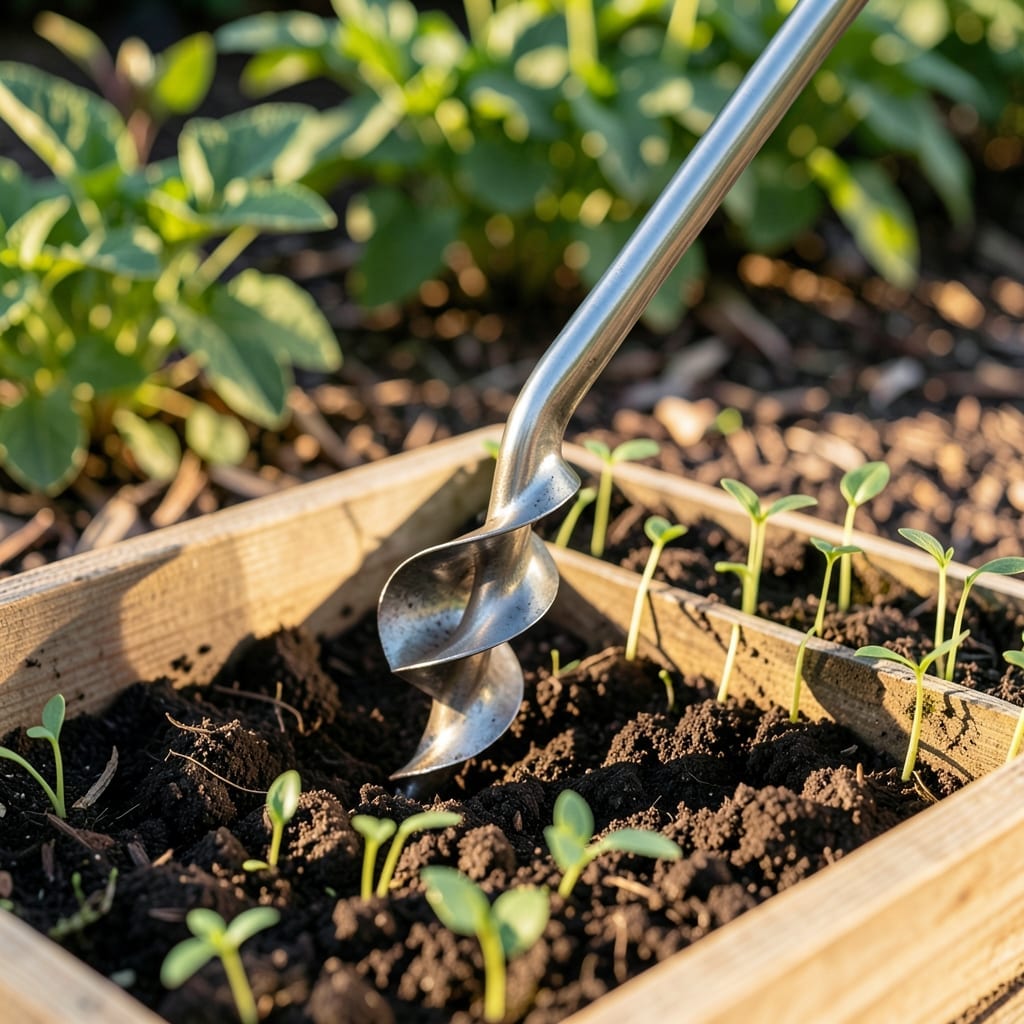
A garden auger is a spiral drill bit that creates deep, clean holes for planting bulbs, seeds, or small plants, saving time and effort compared to hand-digging.
I love using one for planting tulip bulbs or setting up a new vegetable patch. The spiral design cuts through soil with minimal resistance, and you can plant dozens of holes in the time it would take to dig just a few by hand. 🔥
It’s especially useful in clay-heavy or compacted soil where manual digging is a struggle.
💡 In This Article
The spiral design is the secret to its efficiency. As you twist the auger into the soil, the helical blades lift and remove dirt upward, creating a clean, consistent hole in a single motion. This action reduces soil compaction around the planting area, which is critical for root development.
The typical pitch of 2-3 inches between flights ensures smooth operation without clogging in most soil types. 🔥
In sandy or loamy soils, augers work exceptionally well because these soils drain freely and don’t stick to the blades. For clay-heavy soils, you’ll want an auger with a more aggressive pitch and possibly a non-stick coating.
The depth consistency is remarkable—you can set bulbs at the exact recommended 6-8 inches deep every time, which is nearly impossible to achieve manually across multiple plantings.
What most gardeners notice immediately is the time savings. Where hand-digging might take 5-10 minutes per hole in tough soil, an auger can create the same hole in 10-20 seconds. This efficiency means you can plant an entire garden bed in an afternoon rather than over multiple days.
The uniform holes also lead to more consistent germination and growth rates across your plantings.
The aeration effect is an added bonus. As the auger removes soil, it naturally loosens the surrounding area, improving water drainage and oxygen access to roots. This is particularly beneficial for plants that struggle in compacted soils, like carrots or potatoes.
The clean hole walls also reduce the risk of air pockets that can inhibit root growth in manually dug holes.
For best results, use the auger when soil moisture is moderate—not too dry (which makes digging difficult) or too wet (which causes soil to stick). A 3/4 to 1-inch diameter auger works for most bulbs and seedlings, while larger 2-3 inch models are better for transplanting small shrubs or setting fence posts. ✨
Heat-treated steel or carbon steel offer the best durability, especially in rocky or compacted soil. Non-stick coatings help prevent soil buildup, making your work more efficient.
Yes, but ensure your drill has at least 18V of power and a 1/2-inch chuck to handle most models. This setup provides enough torque for smooth operation.
A 2-3 inch diameter with a 7-10 inch length works perfectly for most bulb planting. This size creates ideal holes for consistent depth and spacing.
Clean it after each use and apply a light coat of oil to prevent rust. Store in a dry place to extend its lifespan significantly.
Clay soil sticks because of its density. Use an auger with a more aggressive pitch or non-stick coating, and ensure soil moisture is moderate before starting.