
Beautiful Plants For Your Interior
Beautiful Plants For Your Interior
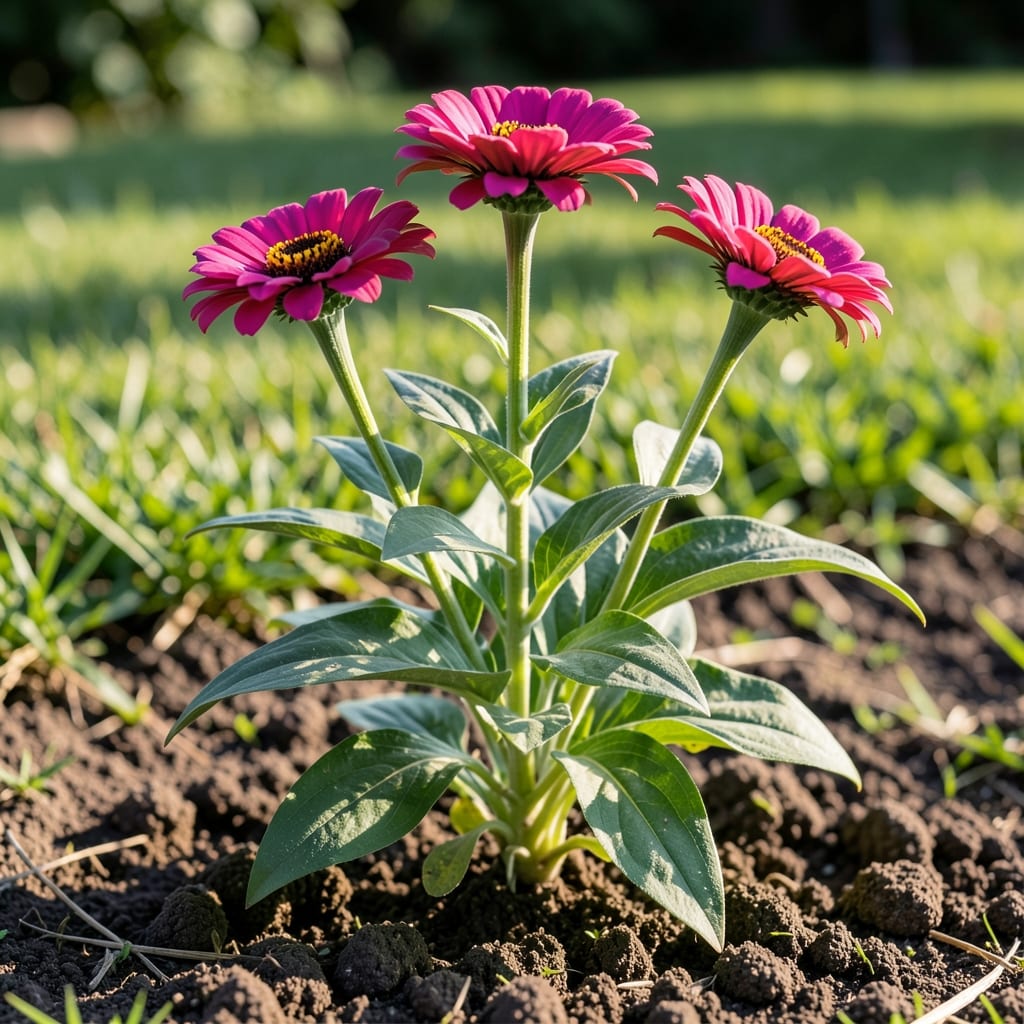
Zinnias are annuals, not perennials, completing their full lifecycle in one growing season. They grow from seed, bloom, produce seeds, and die with the first frost.
I’ve found their single-season nature actually works in a gardener’s favor. Since they complete their entire growth cycle in one year, you can plant new varieties annually for fresh colors and layouts. This also means they’re perfect for filling gaps in your garden or experimenting with different looks each spring. 🌟
Unlike perennials that return yearly, zinnias put all their energy into rapid growth and vibrant blooms during their short lifespan.
💡 In This Article
Zinnias follow a monocarpic lifecycle, meaning they flower once and then die. This is hardwired into their genetics as annual plants, which evolved to complete their entire reproductive cycle—germination, growth, flowering, and seed production—in one growing season. Their biology prioritizes rapid development to ensure seed dispersal before winter kills them. 🌟
Unlike perennials that store energy in roots or bulbs to regrow, zinnias channel all resources into above-ground growth. Their root systems are shallow and fibrous, designed for quick nutrient uptake rather than long-term storage. This explains why they can sprout from seed to bloom in as little as 60-70 days under ideal conditions.
Temperature triggers their lifecycle stages. Zinnias germinate when soil reaches 70-85°F and stop growing below 50°F. The first frost causes cell damage that annuals can’t recover from, unlike perennials with frost-resistant structures. This temperature sensitivity is a key reason they don’t survive winters in most climates. ⚡
Their seed production is another clue. A single zinnia plant can produce hundreds of seeds in one season, ensuring the next generation grows from those seeds rather than the parent plant returning. This reproductive strategy is classic for annuals, which rely on prolific seeding rather than longevity to perpetuate the species.
Even in frost-free zones where they might behave like short-lived perennials, zinnias typically decline after 2-3 years. Their genetic programming doesn’t support the indefinite growth and regrowth patterns of true perennials, which can live and bloom for decades. 💫
No, zinnias won’t return like perennials. However, if you let some flowers go to seed, they may self-sow and sprout new plants the following spring. This gives the illusion of returning plants.
Deadhead spent blooms regularly to encourage continuous flowering. With proper care, zinnias can bloom for 2-3 months or until the first frost. Water consistently and fertilize lightly every 4-6 weeks.
Yes! Choose dwarf varieties and ensure pots have good drainage. Use a quality potting mix and place containers in full sun for at least 6-8 hours daily. They’ll thrive with regular watering.
Common causes include over-fertilizing (which promotes foliage over flowers) or not deadheading. Heat stress or insufficient water can also shorten their bloom period. Check soil moisture and adjust care accordingly.