
Beautiful Plants For Your Interior
Beautiful Plants For Your Interior
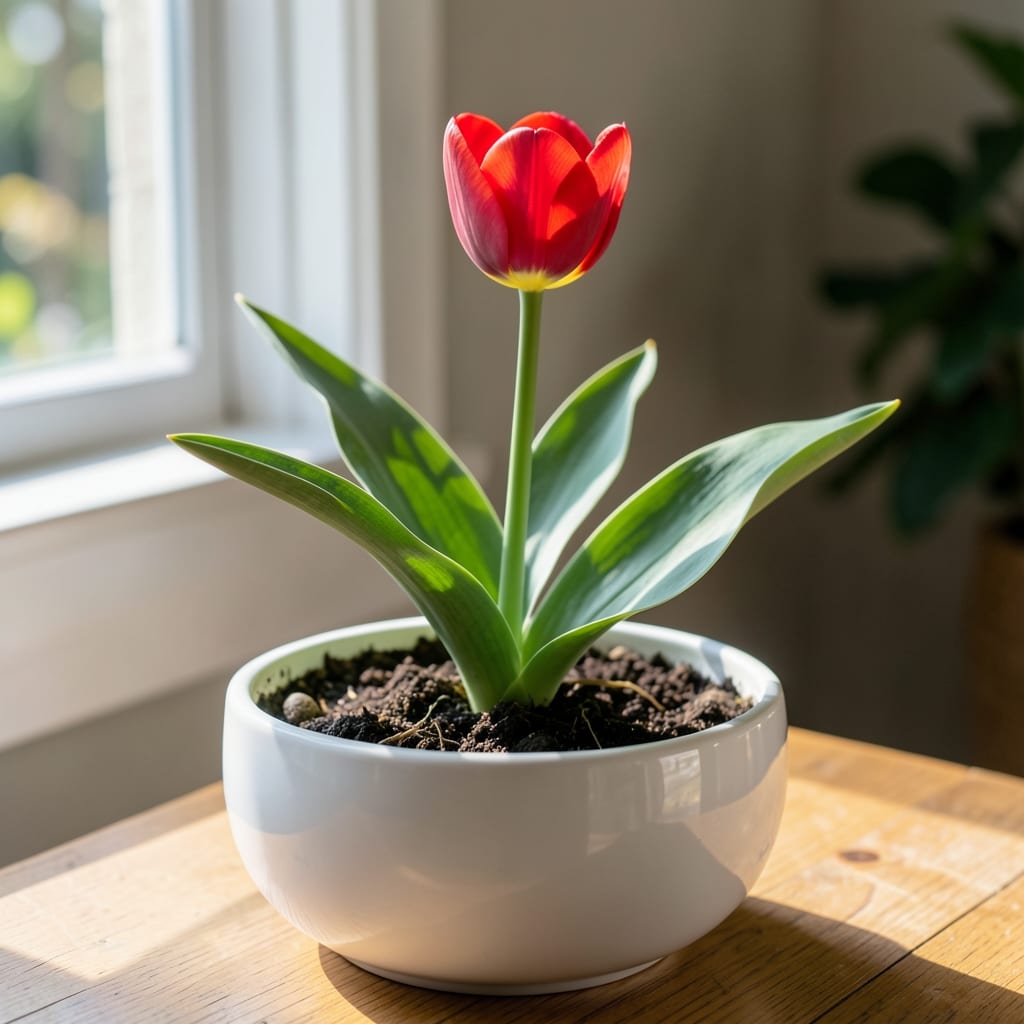
Tulips are primarily outdoor plants but can be grown indoors temporarily with proper care. They require a cold dormancy period and bright light to bloom successfully inside.
I’ve had success bringing tulips inside for winter blooms by mimicking their natural cycle. The key is pre-chilling bulbs for 12-16 weeks at 40-45°F to trigger growth hormones. Once potted, they need intense light—south-facing windows work best—and consistent moisture without waterlogging. 🔥
What surprises most gardeners is how quickly they’ll fade indoors without that critical cold period. Without it, you’ll get leafy growth but no flowers. ✨
💡 In This Article
Tulips evolved in the cold climates of Central Asia, where they developed a survival mechanism requiring 12-16 weeks of temperatures between 35-45°F to break dormancy. This chilling period triggers the production of gibberellins, growth hormones essential for stem elongation and flower formation. Without it, the bulb remains biologically inactive. 🔥
Outdoors, tulips naturally experience this cold through winter soil temperatures. Indoor environments typically lack this consistent chill, making long-term cultivation challenging. Even refrigerators often fluctuate above the ideal range, which can disrupt the vernalization process needed for blooming. The bulb essentially remains in a state of suspended animation.
Light intensity presents another hurdle indoors. Tulips require 6-8 hours of direct sunlight daily for photosynthesis and flower development. Most windowsills provide only 2-4 hours of quality light, leading to weak, leggy growth. South-facing windows or supplemental grow lights can bridge this gap, but many indoor spaces simply can’t replicate outdoor conditions. ✨
The soil temperature also plays a crucial role. Tulip roots need consistent 50-60°F soil temperatures to thrive. Indoor heating systems often create root zones that are too warm, which can stress the plant and prevent proper nutrient uptake. This is why even well-lit indoor tulips may struggle to produce vibrant blooms comparable to outdoor specimens.
Additionally, tulips are perennial in their native habitats, with bulbs storing energy for years. Indoor forcing essentially uses up this stored energy in a single season. The bulbs often won’t rebloom the following year without being replanted outdoors to recharge, making indoor cultivation a temporary solution rather than a sustainable growing method. 💫
Not reliably. Tulips need a 12-16 week cold dormancy period at 40-45°F to rebloom, which most homes can’t provide. They’ll likely fade after one indoor season.
A south-facing window with 6-8 hours of direct sunlight works best. Avoid hot spots like radiators. Supplemental grow lights help if natural light is insufficient.
Water when the top 1 inch of soil feels dry. Keep soil moist but not soggy—overwatering causes bulb rot. Reduce watering after blooms fade.
Indoor-forced tulips rarely rebloom inside. Plant them outdoors after frost passes—they may recover and flower the following spring.