
Beautiful Plants For Your Interior
Beautiful Plants For Your Interior
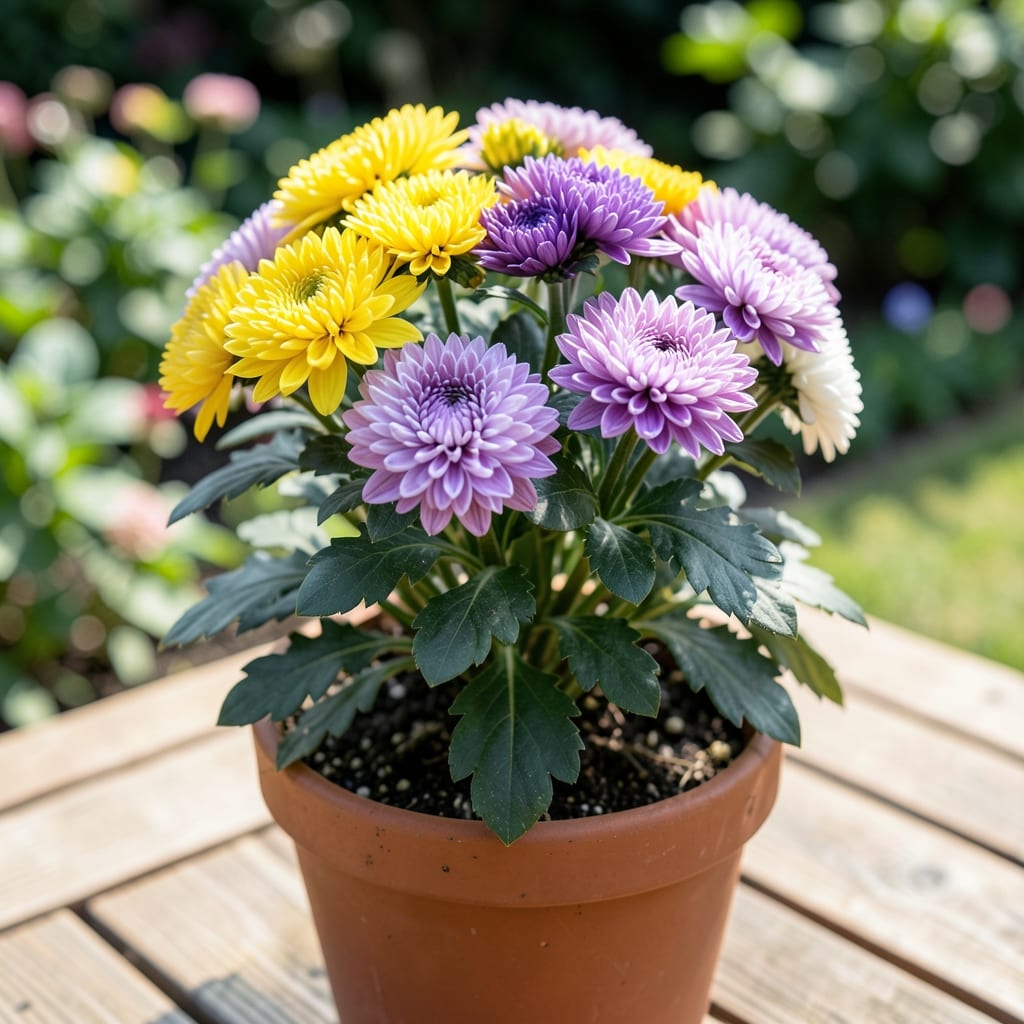
Chrysanthemums are primarily outdoor plants thriving in full sun and well-drained soil, though some varieties can temporarily brighten indoor spaces with proper light and care.
I’ve found their natural preference for 6-8 hours of direct sunlight makes them ideal for garden beds or containers outside. Indoors, they struggle without south-facing windows or grow lights to mimic their natural habitat. They also need excellent drainage to prevent root rot, which is why I always recommend using pots with drainage holes when bringing them inside temporarily. ✨
💡 In This Article
Chrysanthemums originate from East Asia, where they evolved in temperate climates with distinct seasonal changes. This heritage explains their need for 6-8 hours of direct sunlight daily to trigger photosynthesis efficiently. Their roots thrive in loose, well-aerated soil with a pH of 6.5-7.0, conditions rarely found in standard indoor potting mixes. 🔥
Their blooming cycle is tightly linked to daylight duration—a process called photoperiodism. As days shorten in autumn, mums begin flower production, which is why they’re classic fall plants. Outdoor environments naturally provide this light variation, while indoor settings require careful manipulation of light exposure to mimic seasonal changes.
Hardiness zones 5-9 represent their ideal outdoor range, where they can withstand temperatures down to 20°F once established. This cold tolerance develops through a process called cold acclimation, where plants gradually adjust their cellular structure to survive frost. Indoor temperatures rarely drop this low, which can prevent proper dormancy cycles. ⚡
Their water needs are equally specific. Mums require consistent moisture but despise soggy roots. Outdoor garden beds with natural drainage prevent waterlogging, while indoor pots need careful monitoring. The rule of thumb is watering when the top 1-2 inches of soil feels dry—a frequency that changes with humidity and pot size. ✨
What most people overlook is their need for air circulation. Outdoors, natural breezes prevent fungal diseases like powdery mildew. Indoors, you’ll need to create airflow with fans or by placing them near open windows. This explains why even well-lit indoor mums often struggle without additional environmental controls.
In zones 5-9, established mums can survive winter outdoors with proper care. Cut them back to 6 inches after blooming and add a 2-3 inch layer of mulch for protection.
With proper light and care, indoor mums typically bloom for 2-3 weeks. To extend their life, keep them in a cool room and water when the top 1 inch of soil is dry.
Insufficient light causes leggy growth and premature flower drop. Place them near a south-facing window for at least 4-6 hours of direct sunlight daily to prevent this.
Yes, but acclimate them gradually. Bring them in before frost, check for pests, and place in a bright spot. They may need a 6-week rest period in a cool, dark location to rebloom.