
Beautiful Plants For Your Interior
Beautiful Plants For Your Interior
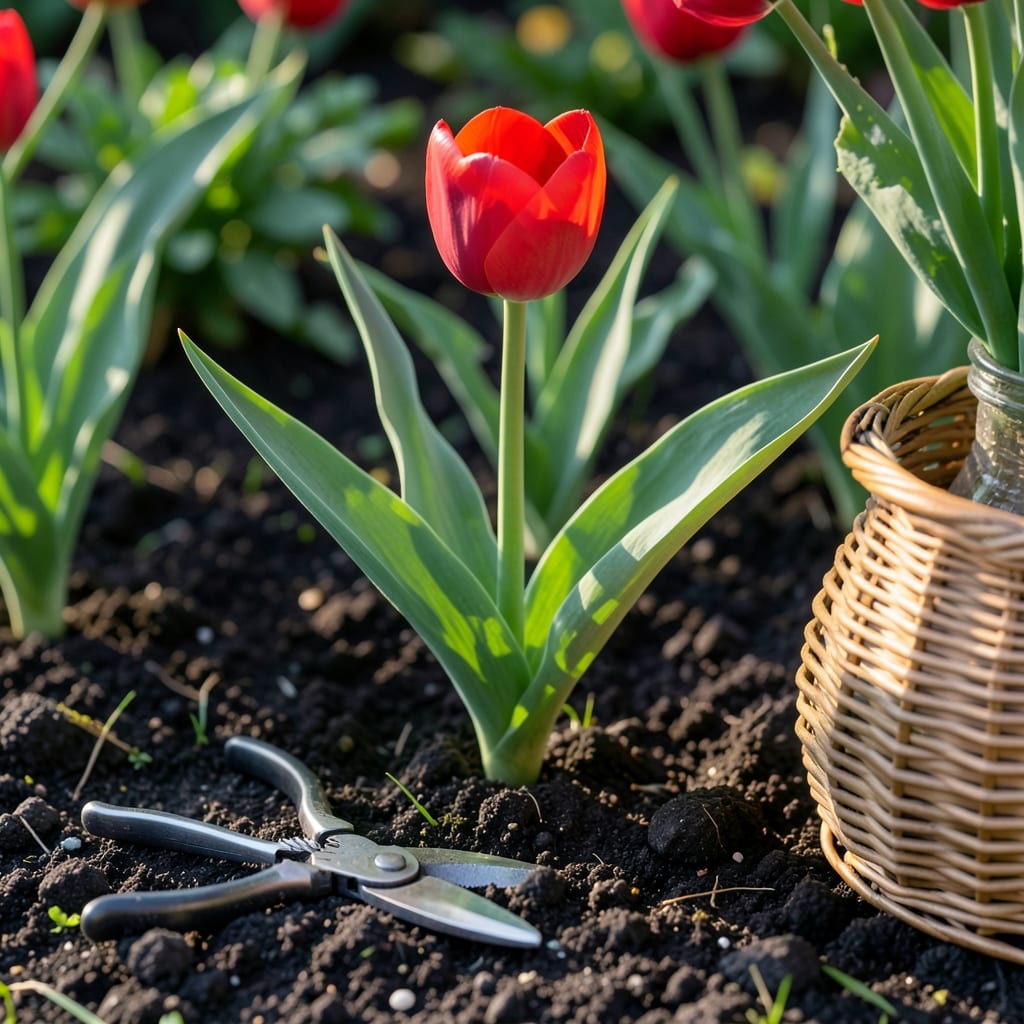
Tulips typically do not regrow after cutting because the bulb requires foliage to replenish energy for next year. Cutting removes this energy source, preventing future blooms.
I learned this the hard way after cutting my first tulip bouquet only to find empty stems the next spring. The bulb relies on its leaves for photosynthesis to store nutrients, and once you remove the foliage, that energy pipeline shuts down. Even leaving 2-3 inches of stem won’t compensate for the missing leaves. 🌟
💡 In This Article
Tulip bulbs act like natural batteries, storing energy as starches during dormancy. When spring arrives, these reserves fuel the initial growth spurt that produces stems and flowers. Here’s the catch: the bulb depletes 70-80% of its stored energy during this process and relies on the leaves to recharge via photosynthesis.
The leaves aren’t just decorative—they’re solar panels. For 6-8 weeks after blooming, they work overtime converting sunlight into sugars to replenish the bulb. Cutting the stem removes this energy source entirely. Even leaving 12-18 inches of stem won’t help if the leaves are gone, as they contain the chlorophyll needed for photosynthesis. 🔥
What’s more, the bulb enters a critical recovery phase post-bloom. Without foliage, it can’t complete this cycle and may produce a weak stem or no flower the following year. In severe cases, the bulb may rot or fail to sprout at all.
This is why commercial growers often treat cut tulips as annuals, replacing bulbs yearly rather than expecting regrowth.
Temperature plays a role too. Tulips need 6-8 weeks of cool weather (35-45°F) to reset their internal clocks. Without leaves to sustain them through this period, bulbs struggle to store enough energy for the next growing season. The result? Smaller blooms or none at all. ✨
There’s a visible clue to this process: the yellowing leaves. As they die back naturally, they’re transferring their remaining energy to the bulb. Cutting them short-circuits this transfer. Even if you cut just the flower stem while leaving leaves, you’re still reducing the bulb’s ability to photosynthesize effectively.
The bulb will likely survive, but it may not bloom the following year. Without leaves to photosynthesize, the bulb can’t store enough energy for future growth.
If you cut only the flower stems and leave all foliage intact, the bulb has a chance to regrow. The leaves must remain to produce food for next year’s bloom.
Leave the leaves for at least 6-8 weeks after blooming. This allows them to photosynthesize and replenish the bulb’s energy reserves for next season.
Yes! Cut only the flower stems and avoid removing any leaves. This way, the foliage can continue feeding the bulb for future growth.