
Beautiful Plants For Your Interior
Beautiful Plants For Your Interior
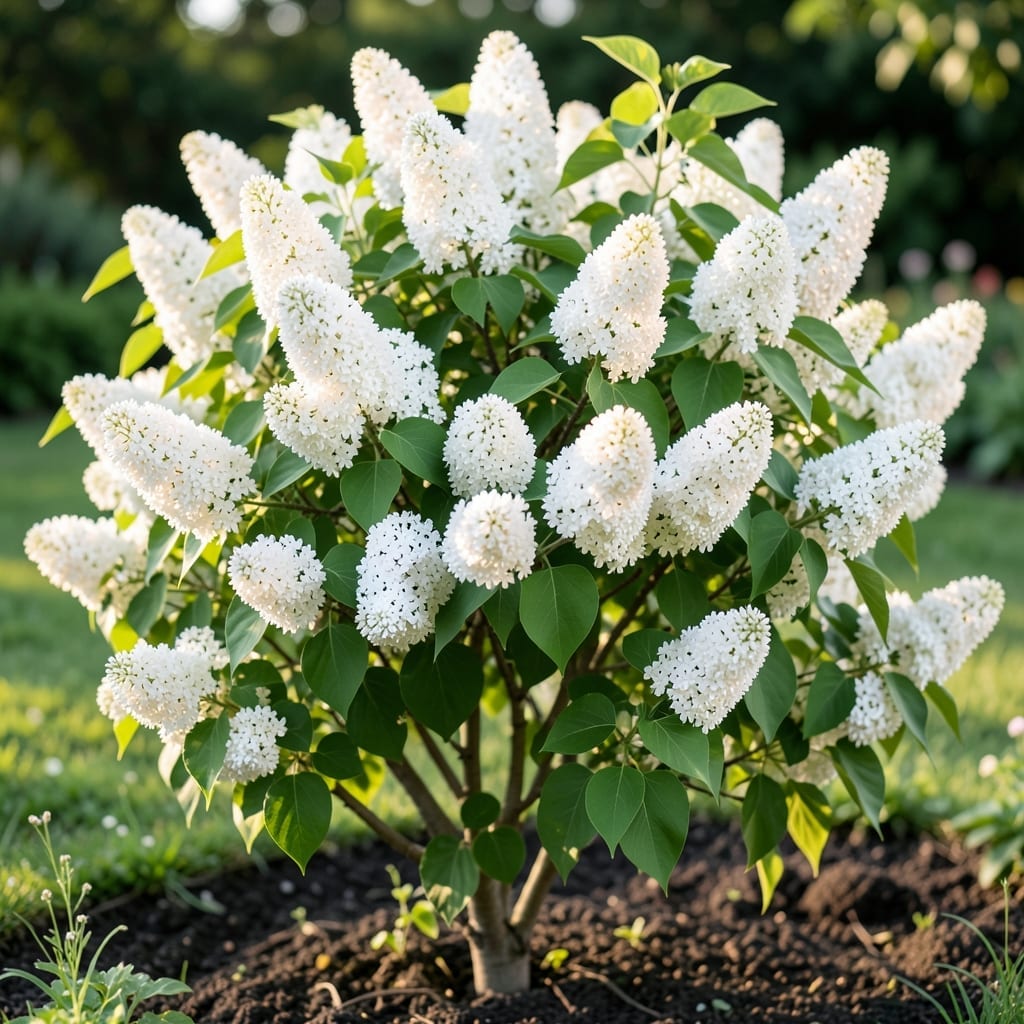
Yes, white lilacs exist and include popular varieties like ‘Alba’ and ‘Madame Lemoine’. These cultivars produce pure white, fragrant blooms and thrive in similar conditions to other lilacs.
I’ve grown several white lilac varieties in my garden, and their crisp, clean appearance always stands out against darker foliage. ‘Alba’ tends to have slightly larger flower clusters, while ‘Madame Lemoine’ is prized for its intense fragrance that fills the air in spring. They’re just as hardy as their colored counterparts, needing full sun and well-drained soil to flourish. ✨
💡 In This Article
The ‘Alba’ cultivar stands out with its large, dense panicles that can reach up to 10 inches long. Each cluster contains hundreds of tiny, pure white florets that release a sweet, honey-like fragrance detectable from 20 feet away on calm days. This variety dates back to the 1770s in European gardens. 🌟
‘Madame Lemoine’ offers a more compact growth habit, typically maxing out at 8-10 feet tall. Its blooms appear slightly earlier than other varieties, often in late April, and the petals have a unique creamy texture that holds up well in floral arrangements for 5-7 days. ✨
For smaller spaces, ‘Ivory Silk’ is a Japanese tree lilac that grows as a single trunk specimen. It produces 12-inch panicles of off-white flowers in early June, about 2-3 weeks later than common lilacs, extending your blooming season. The blossoms have a subtle lemony undertone. 💫
What makes these varieties special is their ability to thrive in USDA zones 3-7. They all prefer slightly alkaline soil with a pH of 6.5-7.5, and their white coloration comes from the absence of anthocyanin pigments that create purple and pink hues in other lilacs. 🔥
The historical ‘Beauté de Nancy’ features double white flowers with a greenish center that gradually fades to pure white as they mature. This French heirloom from 1885 has a more intense fragrance than most modern hybrids, with notes of jasmine and vanilla. 🌟
White lilacs lack anthocyanin pigments that create purple hues. They offer a crisp, clean look and often have a more intense fragrance. Their white color comes from genetic variations within the species.
Test your soil pH—white lilacs prefer 6.5-7.5. Use a home test kit or send a sample to your local extension office. Amend with lime to raise pH or sulfur to lower it if needed.
Early spring or fall works best, allowing roots to establish before extreme temperatures. Avoid planting in summer heat. Ensure the hole is twice as wide as the root ball for optimal growth.
Dwarf varieties like ‘Ivory Silk’ adapt well to large containers. Use a pot at least 24 inches deep with drainage holes. Water more frequently as container soil dries out faster.