
Beautiful Plants For Your Interior
Beautiful Plants For Your Interior
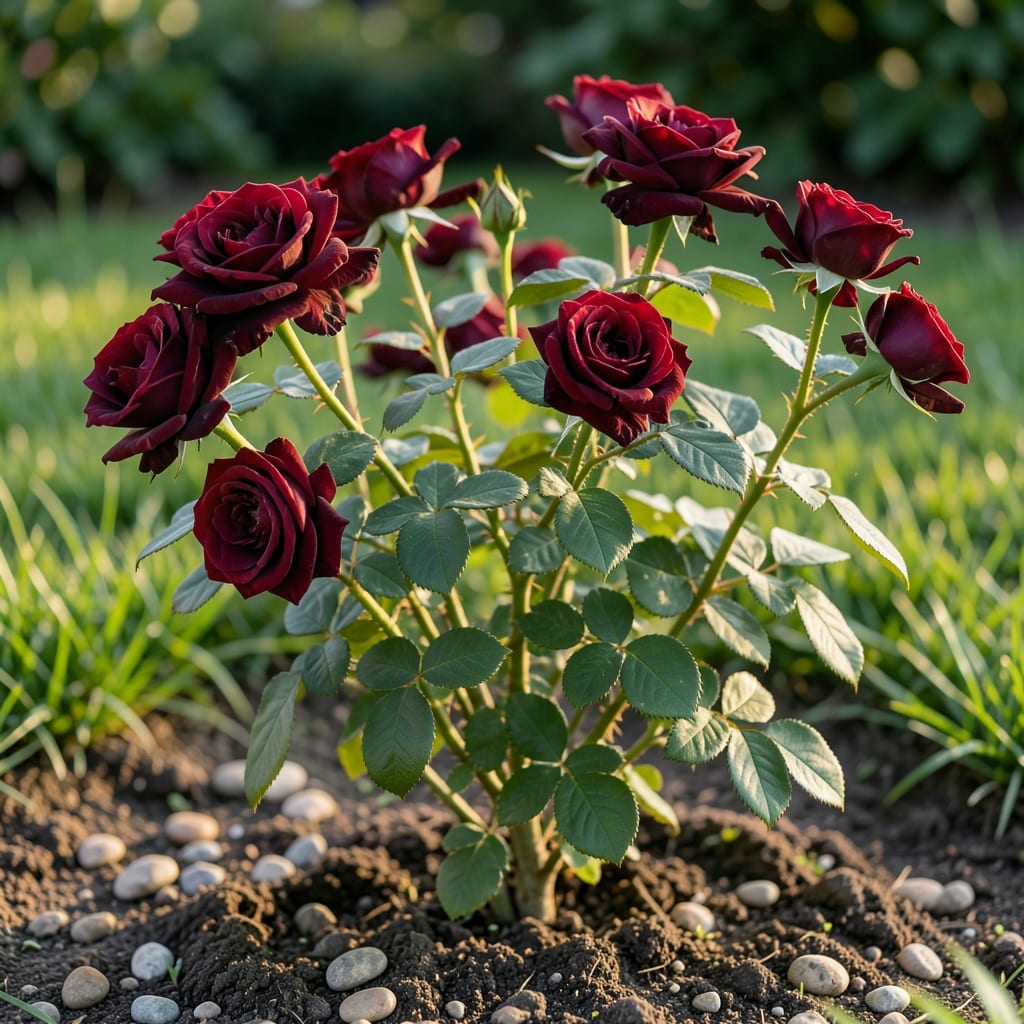
True black roses don’t exist naturally. The darkest varieties are deep purple, maroon, or burgundy, appearing nearly black due to high anthocyanin pigments.
What’s fascinating is how these flowers achieve their dramatic look. The high concentration of anthocyanins absorbs most light wavelengths, creating that deep, velvety illusion. 🌹 I’ve noticed that varieties like ‘Black Baccara’ or ‘Onyx’ get closest to true black, but even they reveal rich purples in direct sunlight. This natural trickery makes them prized for arrangements and symbolic meanings.
💡 In This Article
The deep color comes from anthocyanins, water-soluble pigments that create red, purple, and blue hues in plants. In near-black roses, these pigments pack so densely in petal cells that they absorb nearly all visible light, reflecting almost none back to our eyes. This extreme light absorption makes the blooms appear void of color.
Varieties like ‘Black Baccara’ or ‘Onyx’ achieve their darkest appearance through genetic factors that maximize anthocyanin production. These roses typically contain 3-5 times more pigments than lighter varieties. The pH of petal cells (around 4.5-5.5) also enhances the dark hue by shifting anthocyanins toward their deepest color expression. 🌟
Lighting dramatically affects how black these roses appear. In bright sunlight, the petals may show deep maroon or purple undertones. But in shaded areas or under certain angles, the same blooms can look truly black due to how light interacts with the dense pigment layers.
This optical effect explains why photographers often capture these roses at dawn or dusk for maximum drama.
What’s fascinating is that no rose produces pure black pigment. The darkest varieties still have trace amounts of other pigments, but the overwhelming concentration of anthocyanins dominates our visual perception. Even under microscopic examination, you’d see the petals are actually a complex mosaic of deep purples and reds. ⚡
Growers can intensify the dark appearance by maintaining slightly acidic soil (pH 6.0-6.5) and ensuring consistent watering. Stress conditions like drought can actually reduce anthocyanin production, making the blooms appear lighter. The darkest roses often come from plants grown in cooler climates where pigment development is most stable.
High concentrations of anthocyanins, natural pigments that absorb most light wavelengths. These compounds create the illusion of black by reflecting almost no light, though the true color is deep purple or maroon.
Varieties like ‘Black Baccara’ thrive in well-draining, slightly acidic soil with 6-8 hours of daily sunlight. Just provide consistent watering and protect from extreme heat.
Direct light reveals their true deep purple or maroon hues. The “black” appearance is strongest in shade or indirect light, where the dense pigments absorb more light.
Yes! Darker varieties often have a stronger, richer fragrance. Maintaining slightly acidic soil (pH 6.0-6.5) helps preserve both their color and scent.