
Beautiful Plants For Your Interior
Beautiful Plants For Your Interior
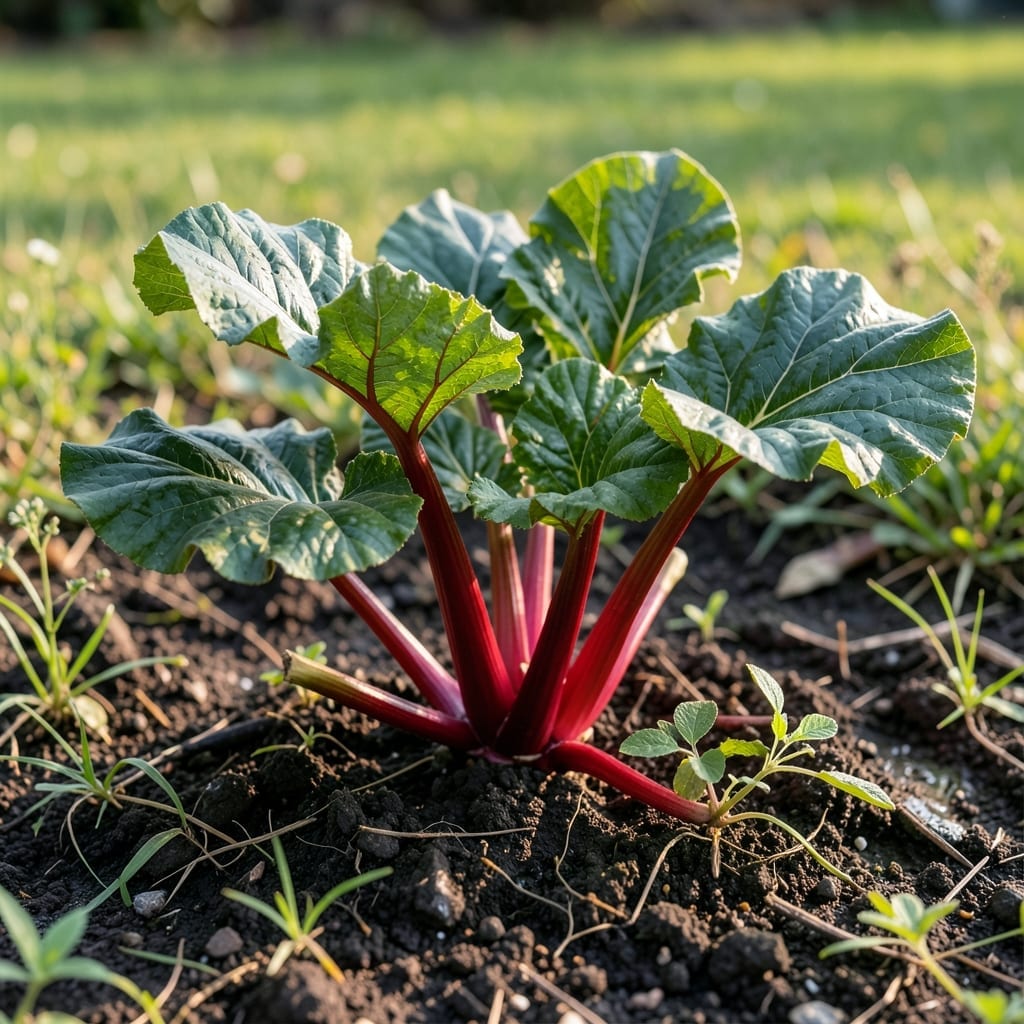
Yes, rhubarb leaves contain high levels of oxalic acid and anthraquinone glycosides, which are toxic to humans and animals if consumed in significant amounts.
I always remove these leaves immediately after harvesting because the toxins can cause severe kidney damage or even be fatal in large quantities. 🔥 The stems are the only edible part, and even those should be cooked to reduce any residual oxalates. Most cases of poisoning occur when people mistakenly use the leaves in cooking or as a wrap for other foods.
💡 In This Article
Rhubarb leaves pack two dangerous compounds: oxalic acid and anthraquinone glycosides. The oxalic acid concentration can reach 0.5-1.5% of the leaf’s dry weight, which is enough to cause kidney damage by forming insoluble calcium oxalate crystals in the urinary tract. These sharp crystals can tear tissue and lead to painful kidney stones.
Anthraquinone glycosides act as powerful laxatives, causing severe diarrhea and dehydration. In large amounts, they can disrupt electrolyte balance and lead to heart rhythm problems. The leaves contain about 0.1-0.3% of these compounds, which is significantly higher than in the edible stems.
The stems contain only trace amounts of these toxins—about 1/10th the concentration found in leaves. This is why we can safely eat cooked rhubarb stems. The cooking process further reduces oxalate levels, making them even safer to consume.
What makes these toxins particularly dangerous is their cumulative effect. A single small bite might cause mild stomach upset, but consuming 10-25 grams of fresh leaves could be lethal for an average adult. Children are at even higher risk due to their lower body weight.
The plant concentrates these defenses in its leaves as a natural protection against herbivores. This evolutionary strategy works well for the plant but creates serious risks for humans and pets who might ingest them. 🔥
Consuming them can cause severe nausea, vomiting, and diarrhea. In large amounts, the toxins may lead to kidney failure or even be fatal. Seek medical help immediately if ingested.
No, cooking does not eliminate the toxins. Boiling or baking leaves won’t reduce oxalic acid or anthraquinones to safe levels. Always discard leaves entirely.
Never feed them to dogs, cats, or other animals. Pets are just as vulnerable to poisoning, with symptoms like drooling, tremors, or weakness. Keep leaves out of reach.
As little as 10-25 grams of fresh leaves could be lethal for adults. Children and pets are at higher risk due to lower body weight. Even small amounts can cause symptoms.