
Beautiful Plants For Your Interior
Beautiful Plants For Your Interior
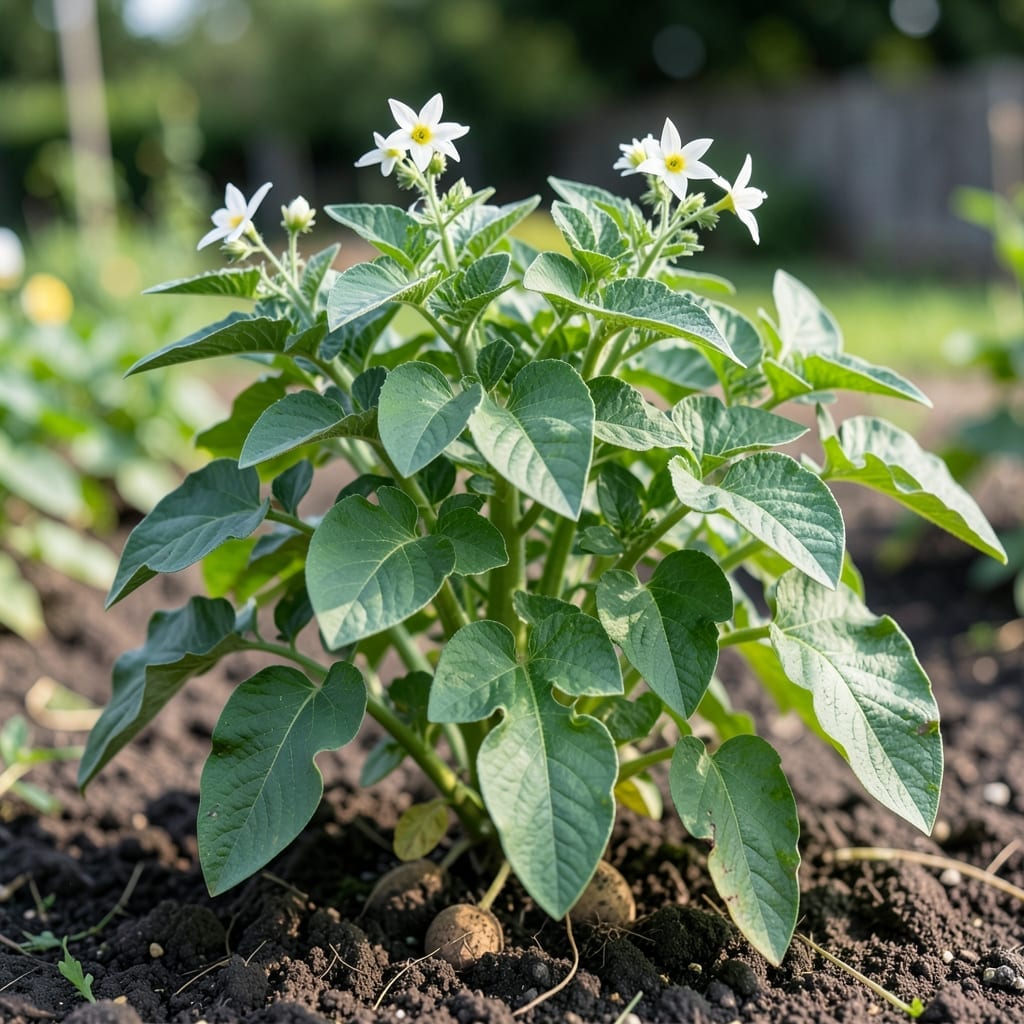
Potatoes are not true roots but modified underground stems called tubers, which store nutrients for the plant’s growth and reproduction.
This classification comes from their unique structure, which includes nodes (or “eyes”) capable of sprouting new stems. 🔥 Unlike true roots such as carrots or beets, tubers develop from stem tissue and serve as energy reserves for the potato plant. I find this distinction fascinating because it explains why potatoes can regrow entire plants from just a piece of tuber.
💡 In This Article
Here’s what’s actually happening beneath the soil: potatoes develop from stem tissue, not root tissue. The key factor is those little indentations called “eyes” – these are actually nodes, the same structures you’d find along an above-ground stem. Each eye contains a bud that can sprout new growth, proving their stem origins.
True roots like carrots lack this capability entirely. 🔥
What most people don’t realize is that tubers form at the ends of underground stems called stolons. These horizontal connectors grow outward from the main plant, and when conditions are right, their tips swell to create potatoes.
This process typically begins about 6-8 weeks after planting, when the plant has established enough foliage to support tuber development.
The science behind this involves hormone signals. As the plant matures, decreasing daylight hours trigger the production of more starch in the stolon tips. This starch accumulation causes the characteristic swelling we recognize as potatoes. Unlike storage roots which grow downward, tubers form laterally from the stem system. ✨
This classification explains why potatoes can reproduce asexually – cut a tuber with at least one eye and plant it, and you’ll get a genetically identical plant. In contrast, true roots like sweet potatoes (despite the name) form from root tissue and have different growth patterns.
The tuber’s stem nature also means it has a thin, easily damaged skin compared to the thicker bark of true roots.
For gardeners, this means handling seed potatoes differently than root crops. You’ll notice potato tubers develop in clusters along the stolons, while root crops like beets form a single, central storage organ. This structural difference affects everything from planting depth (4-6 inches for potatoes) to harvesting techniques. 💫
The “eyes” are actually nodes, just like those found on above-ground stems. Each one contains a bud capable of sprouting new growth, proving their stem origin rather than root structure. True roots like carrots lack these growth points entirely.
Since they’re stem-based, potatoes need careful handling of seed pieces with eyes. They also form in clusters along underground stems called stolons, unlike single-root crops. This means planting at 4-6 inches depth and hilling soil as plants grow.
Yes! Because potatoes are tubers (modified stems), any piece with at least one eye can regrow into a full plant. This is called asexual reproduction and produces genetically identical offspring. Just let cut pieces cure for 24-48 hours before planting.
Despite the name, sweet potatoes are true roots, while regular potatoes are stem tubers. This means they have different growth patterns, storage methods, and even nutritional profiles. Sweet potatoes form from root tissue and grow downward.