
Beautiful Plants For Your Interior
Beautiful Plants For Your Interior
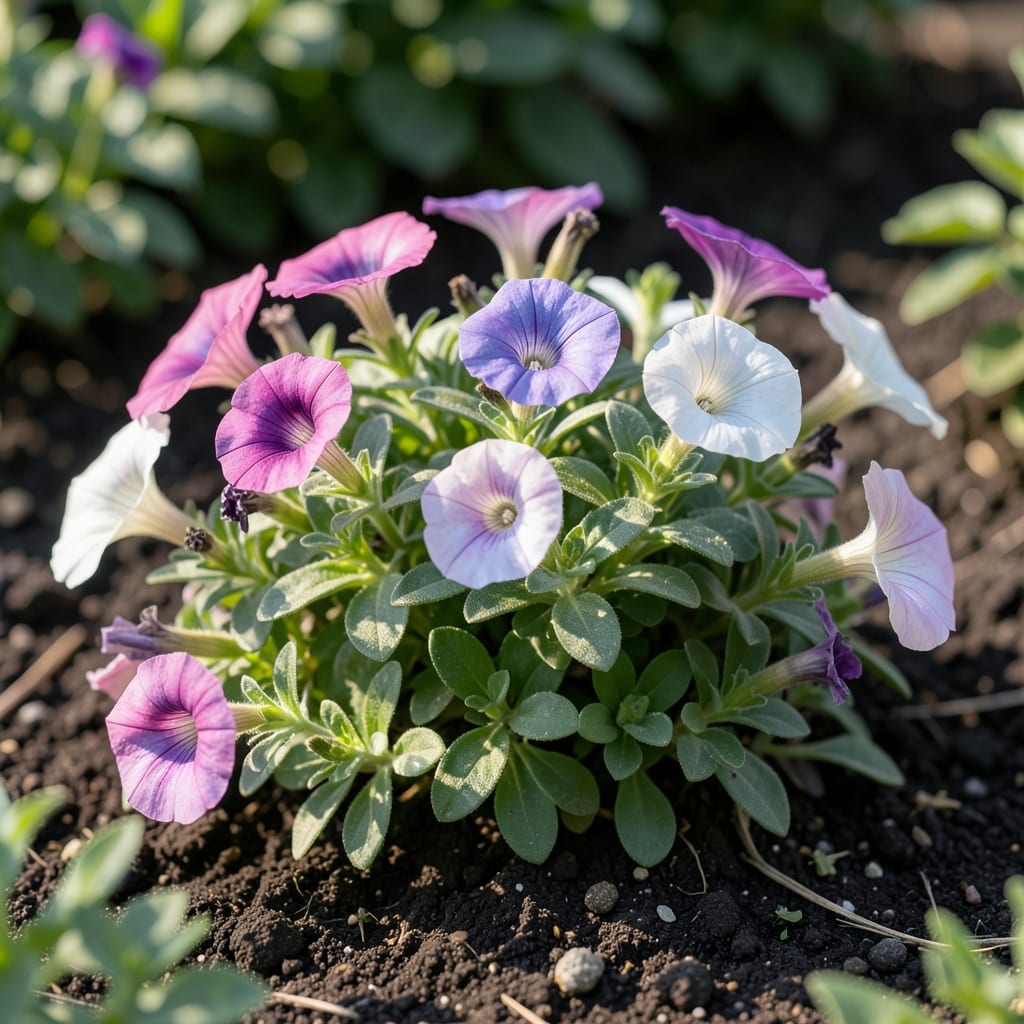
Petunias are tender annuals, not cold-hardy. They thrive in warm weather and typically die back with the first frost, requiring replanting each spring in most climates.
These vibrant flowers originate from warmer regions, which explains their sensitivity to chilly conditions. I’ve noticed they perform best when temperatures stay above 40°F, and even a light frost can damage their delicate tissues. Gardeners in colder zones often treat them as seasonal plants, enjoying their blooms from spring through fall. ✨
💡 In This Article
Petunias evolved in tropical South American climates, which wires them for warmth. Their cell structures lack the antifreeze proteins that cold-hardy plants use to prevent ice crystal formation. When temperatures drop below 32°F, water in their cells freezes, rupturing membranes. Even 40°F nights can trigger stunted growth and leaf discoloration. 🔥
Ideal growing conditions for petunias sit between 60-85°F during the day. They’ll survive brief dips to 45°F, but prolonged exposure causes wilting, blackened foliage, and eventual death. The first hard frost (28°F or below) usually delivers the final blow, turning stems to mush within hours.
This is why they’re classified as USDA zones 9-11 perennials but annuals everywhere else.
Soil temperature matters just as much as air. Petunia roots stop absorbing water below 50°F, which is why spring planting should wait until soil warms. In containers, roots are more exposed to temperature swings, making potted petunias even more frost-sensitive than those planted in-ground. ✨
Their high water content (about 90% in stems and leaves) makes them particularly vulnerable. Unlike succulents that store water in thick, protective tissues, petunias have thin cell walls that can’t withstand freezing expansion. This is also why they wilt so dramatically in heat above 90°F—their water transport system shuts down.
For comparison, cold-hardy plants like pansies can survive 10°F temperatures because they produce antifreeze compounds. Petunias lack this adaptation entirely. Even their seeds won’t germinate in soil below 60°F, further proving their warmth dependency. 💫
No, even a light frost will damage petunias. Their thin cell walls can’t handle freezing, causing blackened leaves and mushy stems. Always cover or move them indoors when frost is predicted.
They can briefly handle 45°F but prolonged exposure below 40°F causes wilting. Anything at or below 32°F will likely kill them without protection.
Only in USDA zones 9-11. Elsewhere, they’re treated as annuals since frost kills them. Even in warm zones, they may decline after 2-3 years.
Yes! Cut back to 6 inches, repot, and keep in a 50-60°F bright spot. Water sparingly until spring. This works best in zones 7-8.
Above 90°F, their water transport system shuts down. Their high water content makes them vulnerable to both heat stress and cold damage.