
Beautiful Plants For Your Interior
Beautiful Plants For Your Interior
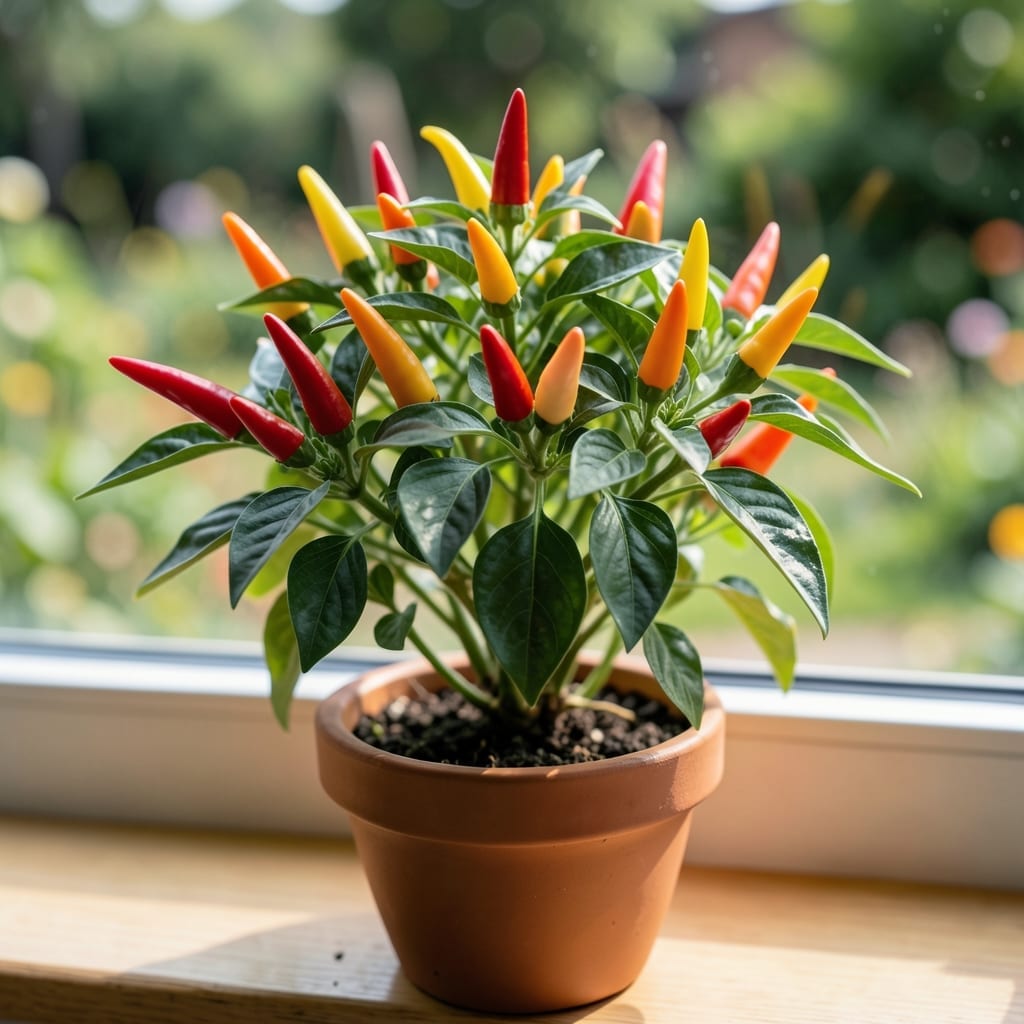
Yes, ornamental chillies are edible, though they are often extremely hot. Grown primarily for decoration, these peppers belong to the Capsicum family and can be used in cooking if handled with caution.
I’ve found these vibrant peppers pack a serious punch due to their high capsaicin content, often measuring well above 100,000 Scoville units. Their intense heat comes from selective breeding for ornamental purposes, not flavor. While they can add bold spice to dishes, I always recommend wearing gloves and testing tiny amounts first. 🔥
💡 In This Article
The intense heat in ornamental chillies comes from capsaicin, a compound concentrated in their white pith and seeds. This molecule binds to TRPV1 receptors in our mouths, triggering the same response as physical heat—even though no actual temperature change occurs. The result is that signature burning sensation we associate with spicy foods. 🔥
On the Scoville scale, ornamental varieties often rank between 50,000-150,000 SHU, comparable to habaneros. This extreme pungency stems from selective breeding that prioritizes vibrant colors and unique shapes over mild flavor. Unlike culinary peppers bred for balanced taste, ornamental types are cultivated for visual appeal, which inadvertently amplifies their capsaicin content. ✨
What sets them apart is their capsaicinoid profile. These peppers often contain higher levels of nordihydrocapsaicin alongside capsaicin, creating a more complex, lingering heat. The thin flesh common in ornamental varieties also means less dilution of these compounds, making every bite pack a stronger punch than meatier culinary peppers. 🌟
Environmental factors can further intensify their spiciness. Heat and drought stress during growth often boost capsaicin production as a natural defense mechanism. This explains why homegrown ornamental chillies might taste hotter than store-bought ones, as commercial growers typically control conditions more carefully. 💫
The breeding focus on aesthetics also means these peppers often have less sugar and other flavor compounds that might balance the heat in culinary varieties. This lack of natural sweetness or fruitiness makes their spiciness feel more dominant and one-dimensional compared to carefully bred cooking peppers. ⚡
Ornamental varieties are typically 10-50x hotter than jalapeños, often measuring 50,000-150,000 SHU versus a jalapeño’s 2,500-8,000 SHU. They lack the balanced flavor profile of culinary peppers.
Consuming raw ornamental peppers can cause intense burning, sweating, and even nausea due to extreme capsaicin levels. Always start with a tiny cooked amount to test your tolerance.
Yes, drying is an excellent way to preserve them. String whole peppers in a warm, dry place for 2-3 weeks, or use a food dehydrator at 135°F for 8-12 hours.
No, only the pepper fruit itself is edible. The leaves and stems contain solanine, a compound that can be toxic in large quantities. Always discard non-fruit parts.