
Beautiful Plants For Your Interior
Beautiful Plants For Your Interior
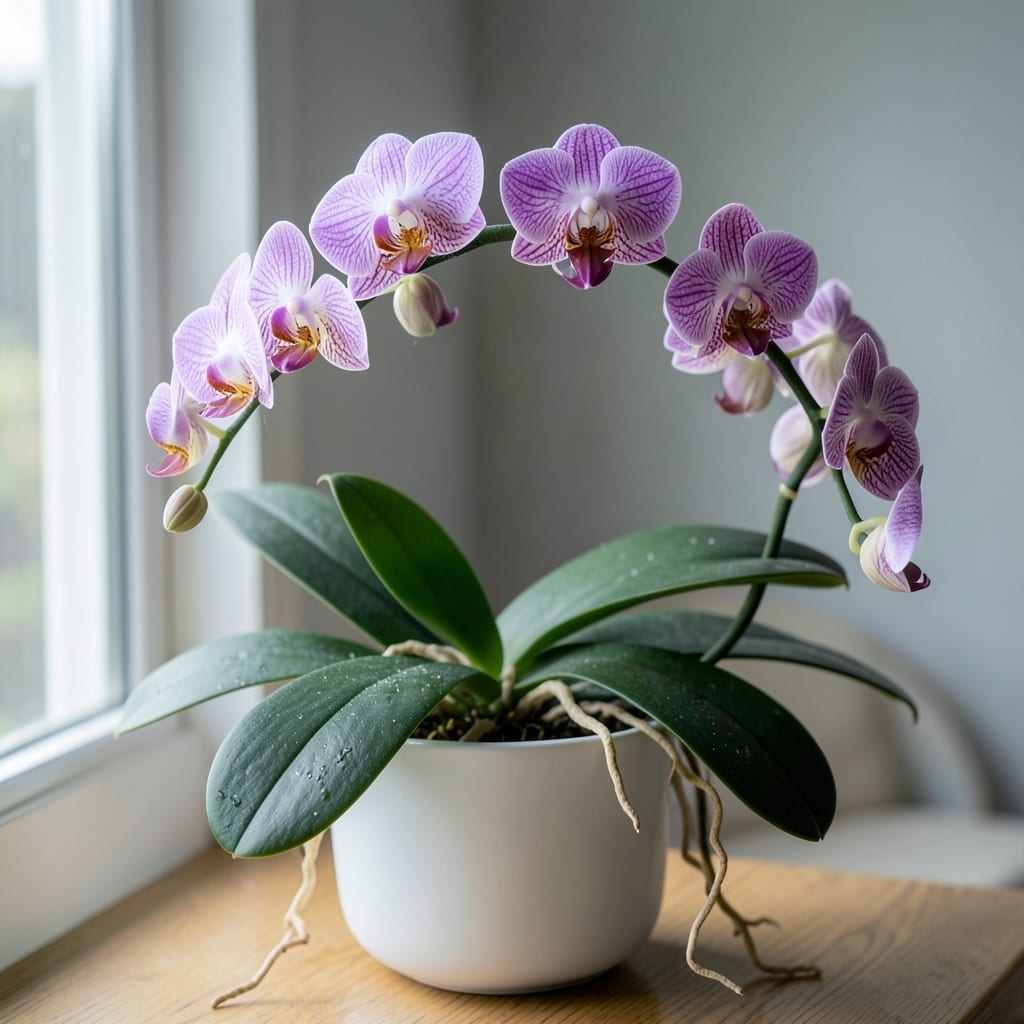
Orchids require specific light, water, and humidity conditions but are manageable with consistent care. Many varieties like Phalaenopsis are beginner-friendly with proper knowledge.
I’ve found their reputation for being finicky comes from needing bright, indirect light and careful watering—overdo it and roots rot, underdo it and they dehydrate. 💫 Yet with weekly checks and basic adjustments, they thrive surprisingly well, often rewarding you with stunning blooms for months. The key is learning their subtle signals, like yellowing leaves or wilting flowers.
💡 In This Article
Orchids evolved in tropical environments, developing unique adaptations that differ from typical houseplants. Their aerial roots, designed to absorb moisture and nutrients from the air, rot quickly in standard potting soil. This root structure requires specialized bark-based mixes that mimic their natural epiphytic growing conditions, allowing for proper air circulation. 🌿
Light requirements add another layer of complexity. While most houseplants tolerate low light, orchids need bright, indirect light—typically 12-14 hours daily. Too much direct sun scorches their leaves, while insufficient light prevents blooming. This precise balance is why many beginners struggle, as standard windowsills often don’t provide the consistency they need.
Their water needs are equally specific. Unlike typical plants that thrive on regular watering schedules, orchids prefer a “soak and dry” method: completely submerge the pot for 10-15 minutes every 7-10 days, then let it drain thoroughly. This mimics tropical rain patterns their ancestors adapted to, preventing both rot and dehydration. 💧
Humidity plays a critical role that many overlook. Orchids need 40-70% humidity to thrive, which is significantly higher than average home levels. Without this, their leaves develop brown tips and buds drop prematurely.
This sensitivity to environmental factors contributes heavily to their “difficult” reputation, even though solutions like humidity trays or room humidifiers are simple to implement.
Common misconceptions amplify the challenge. Many assume orchids need frequent watering like other houseplants, or that their wilted appearance means they’re dying—when in fact, this is often their natural state between waterings. Understanding these nuances reveals that their care isn’t necessarily hard, just different from what most plant owners are accustomed to. ✨
Water every 7-10 days using the soak method: submerge for 10-15 minutes, then drain. Check moisture by inserting your finger 1 inch into the mix—dry means it’s time.
Provide bright, indirect light for 12-14 hours daily. East or west windows are ideal. Direct sun burns leaves, while low light prevents blooming.
Low humidity or sudden temperature changes often cause this. Maintain 40-70% humidity and avoid drafts. Also check for overwatering or insufficient light.
Try a cool rest period of 4-6 weeks at 55-65°F. Increase light exposure and use a balanced fertilizer diluted to half strength.