
Beautiful Plants For Your Interior
Beautiful Plants For Your Interior
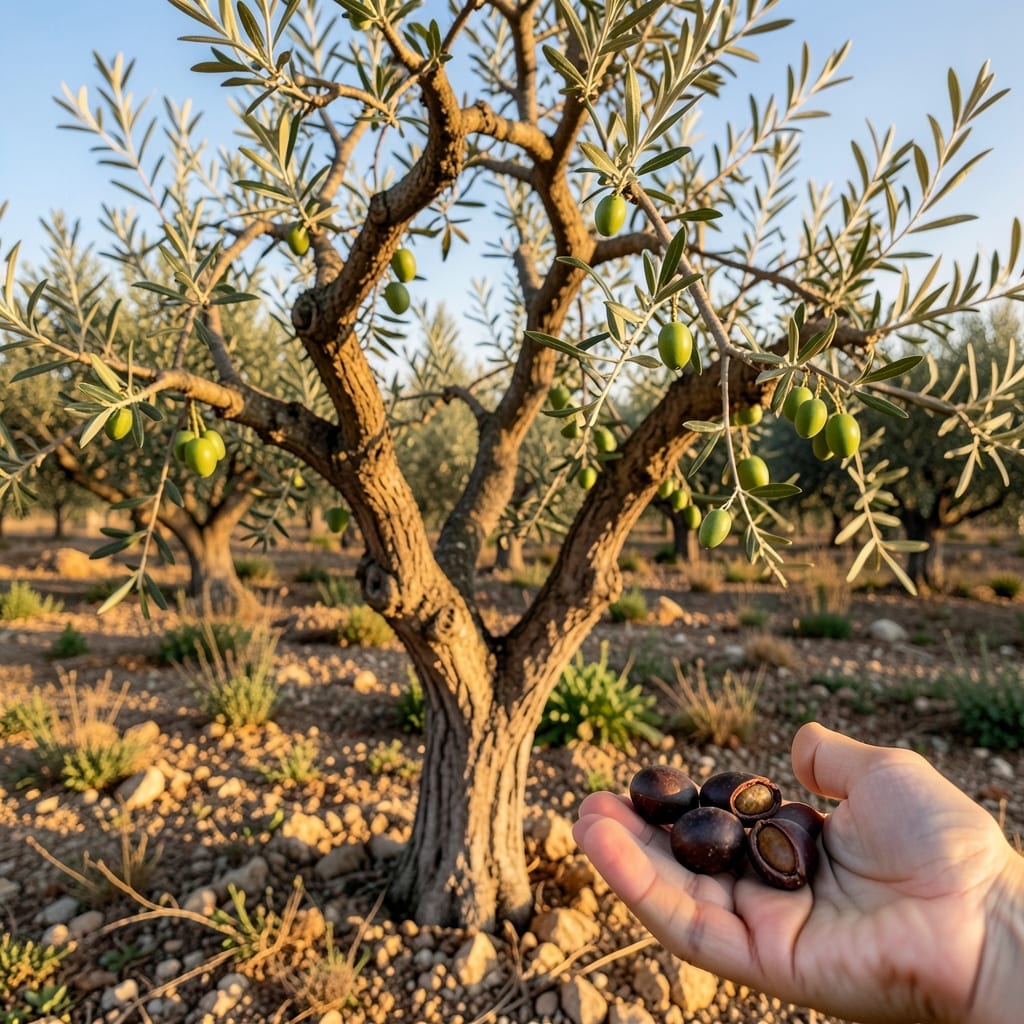
Olives are botanically classified as drupes, meaning they contain a single hard pit (the actual seed) surrounded by a fleshy fruit. The pit is the true seed of the olive tree.
This classification puts them in the same family as peaches and cherries, where the outer flesh serves as a protective layer for the seed inside. I find it fascinating that the fleshy part we eat is technically the fruit, while the pit holds the genetic material for new olive trees. This design helps the seed survive until conditions are right for germination. ✨
💡 In This Article
The drupe classification means olives share structural traits with other stone fruits. The outer layer, called the exocarp, is the skin that protects against pests and environmental damage. Beneath it lies the mesocarp—the fleshy, edible part we associate with olives, which can range from 70-85% moisture depending on the variety. 🌟
At the core sits the endocarp, a hard, woody pit that encases the actual seed. This pit serves as a protective shell, shielding the embryonic plant from physical harm and dehydration. The seed inside contains the genetic blueprint for a new olive tree, along with stored nutrients to support initial growth.
The pit’s hardness (measuring around 3-4 on the Mohs scale) ensures it can withstand digestion by animals, aiding natural seed dispersal.
What makes this design clever is how the fleshy mesocarp attracts animals to consume the fruit. As they eat, they inadvertently transport the pit away from the parent tree, often depositing it in nutrient-rich soil through their waste. This evolutionary strategy increases the chances of successful germination.
The mesocarp’s bitterness in wild olives also deters premature consumption, ensuring the pit isn’t damaged before it’s ready to grow. ✨
The size of olive pits varies by cultivar, typically ranging from 0.5 to 1.5 inches in length. Some varieties, like the Manzanillo, have pits that are easier to crack open, while others, such as the Kalamata, feature thicker, more resistant shells. This variation affects how easily the seed can access moisture and oxygen during germination.
The pit’s surface often has microscopic pores that allow water to penetrate, triggering the seed’s metabolic processes.
From a biological standpoint, the pit’s design is optimized for survival. Its smooth, oval shape helps it move through digestive systems unharmed, while its density (about 1.2-1.4 g/cm³) allows it to sink into soil where it can root. The seed inside remains dormant until conditions—like consistent moisture and temperatures between 60-75°F—signal it’s time to sprout.
🔥
The hard pit at the center is the true seed. It’s encased in a woody shell that protects the embryonic plant inside.
The hard pit protects the seed from physical damage and dehydration. It also helps the seed survive digestion if eaten by animals, aiding natural dispersal.
Yes, but it requires patience. Fresh pits need 24-48 hours of soaking before planting in well-draining soil at 60-75°F. Germination may take 2-4 months.
Not always. Processed or dried pits often won’t germinate. Fresh, unprocessed pits from ripe fruit have the best chance, though germination rates are typically under 50%.