
Beautiful Plants For Your Interior
Beautiful Plants For Your Interior
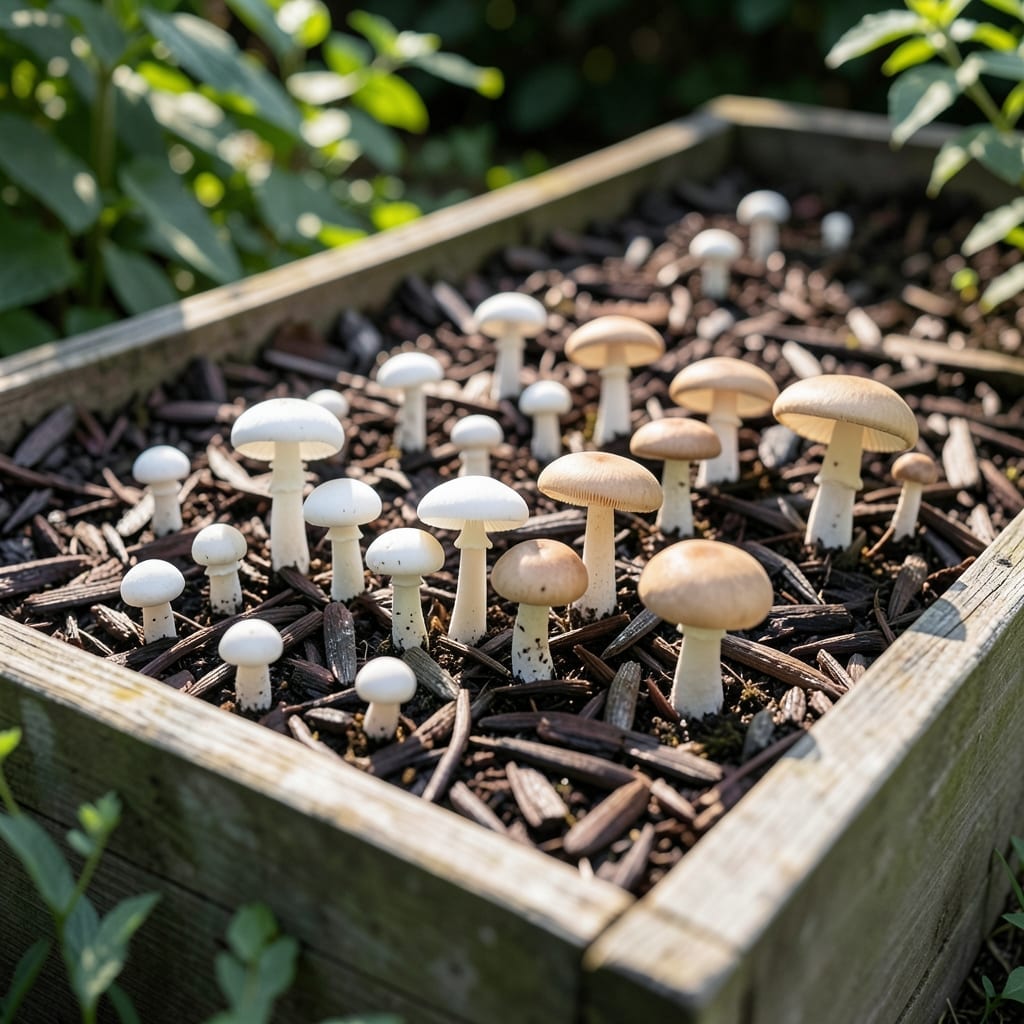
Some mulch mushrooms are toxic, especially to pets and children. Many are harmless, but poisonous varieties like the deadly Galerina or Jack-O-Lantern can appear in wood chips. Never eat wild mushrooms from mulch.
I’ve seen these fungi thrive in warm, damp mulch, creating ideal growing conditions for both safe and dangerous types. Deadly Galerina contains amatoxins that attack the liver, while Jack-O-Lanterns can cause severe gastrointestinal distress. 🔥
Pets are particularly vulnerable because they’re drawn to the earthy smell and may ingest them while exploring the yard.
💡 In This Article
The toxicity comes from chemical compounds like amatoxins and orellanine, which disrupt cellular processes. Deadly Galerina mushrooms contain amatoxins that inhibit RNA polymerase II, leading to liver failure within 6-24 hours of ingestion. These toxins are heat-stable, meaning cooking doesn’t neutralize them.
Jack-O-Lantern mushrooms produce illudin S, which causes severe vomiting and diarrhea by irritating the gastrointestinal lining. A single cap contains enough toxin to induce symptoms within 30-60 minutes. Unlike amatoxins, these compounds primarily affect the digestive system rather than organs.
Pets show symptoms faster due to their smaller size. A 10-pound dog ingesting just 0.5 ounces of toxic mulch mushrooms may experience drooling, lethargy, and seizures within 2 hours. Cats are equally vulnerable, with neurological symptoms appearing even sooner due to their faster metabolism.
Visual identification helps but isn’t foolproof. Toxic varieties often share features with edible ones: Galerina has a small brown cap and thin stem, while Jack-O-Lanterns glow faintly in the dark. The only safe approach is assuming all wild mulch mushrooms are dangerous.
Soil composition affects toxicity levels. Wood chip mulch, especially from hardwoods, creates ideal conditions for these fungi. The decomposition process releases nutrients that toxic species thrive on, with temperatures between 70-80°F and high humidity accelerating their growth. 🔥
Children are at particular risk because they explore with their mouths. The Death Cap, another dangerous species sometimes found in mulch, contains enough amatoxins to cause liver damage with just half a mushroom. Its white gills and cup-like base at the stem distinguish it from harmless lookalikes.
Never eat wild mushrooms from mulch—many toxic types look harmless. Galerina has small brown caps, while Jack-O-Lanterns glow faintly in the dark. When in doubt, treat all as poisonous.
Contact your vet or animal poison control immediately. Symptoms like drooling, vomiting, or lethargy can appear within 30 minutes to 2 hours. Bring a sample of the mushroom (in a bag) for identification.
Wear gloves and remove the entire mushroom, including the base. Dispose of it in a sealed bag in the trash—never compost. Clean tools with a 1:10 bleach solution afterward.
Wood chip mulch creates ideal conditions for fungi. Reduce moisture by raking mulch regularly and avoiding over-watering. Apply a 1-inch fresh layer annually to disrupt fungal networks.