
Beautiful Plants For Your Interior
Beautiful Plants For Your Interior
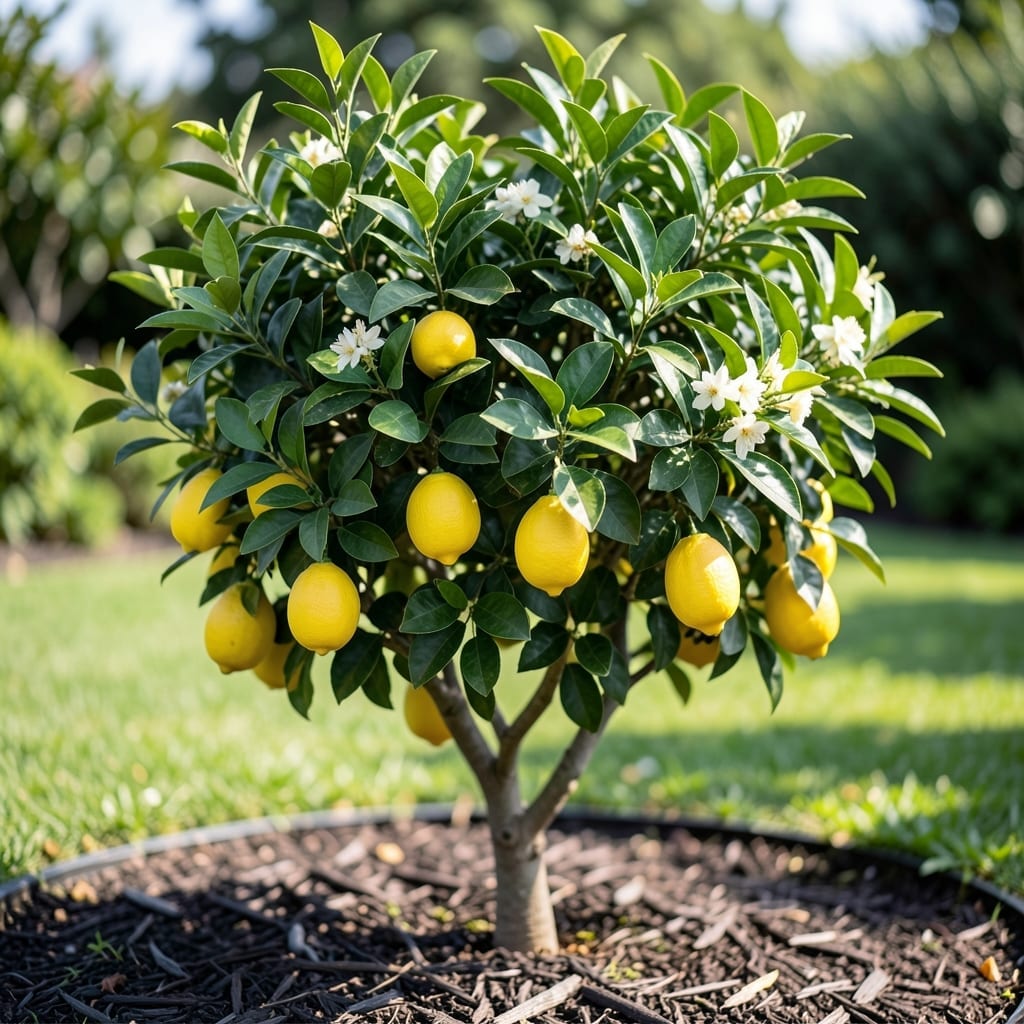
Lemon trees are evergreen, not deciduous, meaning they retain their leaves year-round. They may shed some foliage naturally but do not undergo a full seasonal leaf drop like deciduous trees.
I love how lemon trees maintain their lush foliage regardless of season, thanks to their subtropical origins. 🔥 Their leaves are designed to withstand mild winters, only dropping sporadically to make way for new growth. This constant renewal process is what keeps them looking vibrant even during colder months when other trees go dormant.
💡 In This Article
Lemon trees evolved in subtropical climates where consistent warmth eliminated the need for winter dormancy. Their leaves contain thick cuticles and waxy coatings that reduce water loss and protect against mild temperature drops to 28-30°F.
This adaptation allows them to photosynthesize continuously, unlike deciduous trees that shed leaves to conserve water and energy during cold months. 🔥
Evergreen species like lemons maintain active growth points called meristems year-round. These cells divide constantly, producing new leaves before old ones fall—a process called “continuous foliation.” In contrast, deciduous trees enter a 2-4 month dormancy period where growth halts completely. This key difference explains why lemon trees never appear bare, even during seasonal transitions.
The leaf retention mechanism involves specialized cells at the base of each leaf stem. These abscission layer cells only form when triggered by extreme stress, disease, or old age—not by seasonal cues.
A healthy lemon tree typically replaces 10-15% of its foliage annually through this gradual process, rather than the 100% leaf drop seen in maples or oaks each autumn. ✨
Their tropical heritage also means lemon trees are sensitive to cold snaps. While they can tolerate brief dips to 20°F, prolonged exposure below 25°F may cause leaf damage or drop. This is why commercial lemon groves thrive in regions like California and Florida, where winter temperatures rarely fall below 32°F.
The trees’ evergreen nature is directly tied to these stable, warm conditions. 💫
This continuous growth pattern requires more energy than deciduous trees’ seasonal cycle. To support it, lemon trees develop extensive root systems that absorb water and nutrients year-round. Their shallow, wide-spreading roots can extend 2-3 times the width of the tree’s canopy, allowing them to access resources efficiently during all seasons. 🌟
Lemon trees keep most leaves year-round but may drop some naturally. They don’t undergo full seasonal shedding like maple or oak trees.
Their subtropical origins mean they don’t need winter dormancy. Thick leaf coatings and active growth points allow continuous photosynthesis.
A healthy lemon tree replaces 10-15% of its foliage annually. Sudden excessive drop indicates stress, pests, or improper care.
Brief cold to 20°F may cause leaf damage, but they won’t become deciduous. Prolonged exposure below 25°F risks serious harm.