
Beautiful Plants For Your Interior
Beautiful Plants For Your Interior
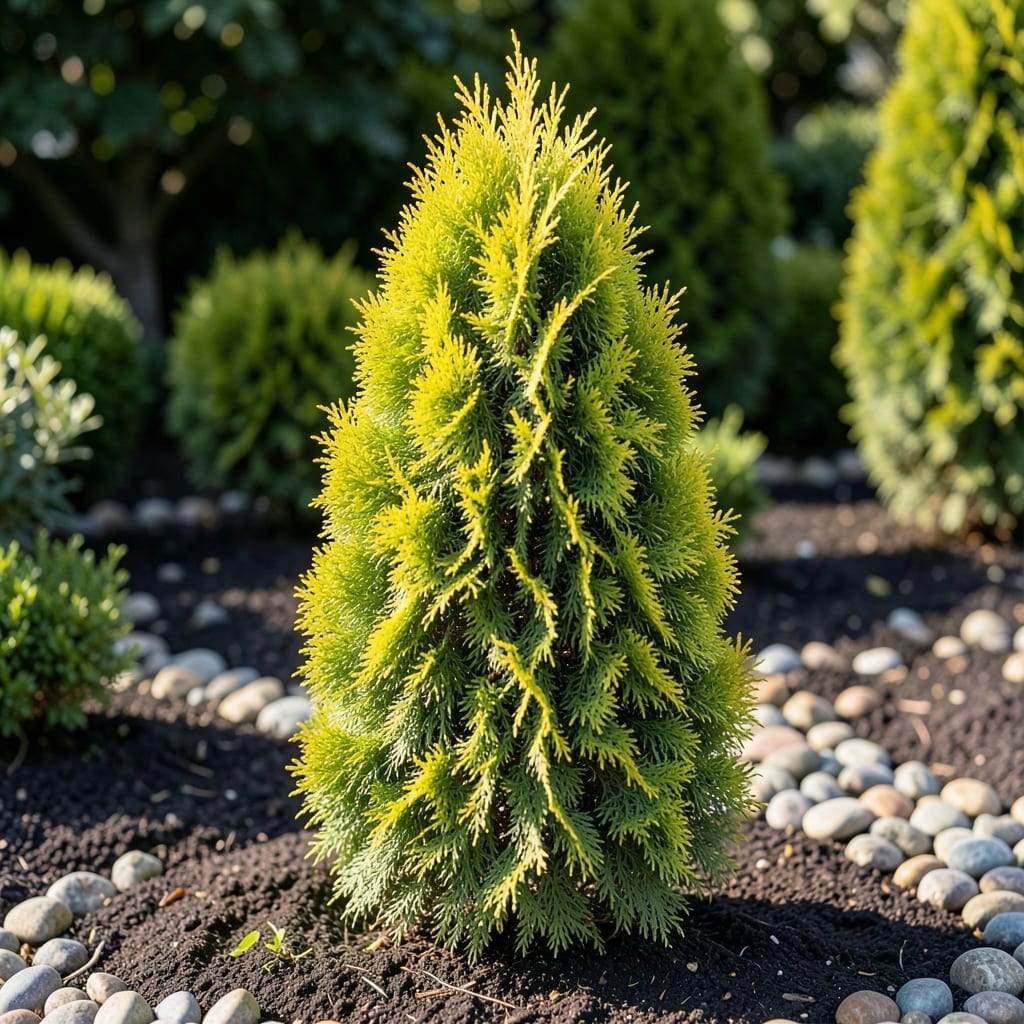
Lemon cypress roots are not typically invasive. They form a dense but shallow root system that stays contained, making them safe for planting near structures and other plants.
I’ve planted these in tight garden spaces with zero issues—their roots spread horizontally rather than aggressively downward. This makes them ideal for urban yards or near patios where space is limited. 🔥 They also coexist well with other plants, as their contained growth doesn’t compete heavily for water or nutrients.
💡 In This Article
Lemon cypress (Cupressus macrocarpa ‘Goldcrest”) roots grow in a fibrous, spreading pattern rather than a deep taproot system. This means they extend outward in a dense mat, typically staying within the top 12-18 inches of soil. The horizontal spread rarely exceeds the tree’s canopy width, which is why they don’t disrupt foundations or underground utilities.
🌟
Unlike invasive species such as bamboo or mint, lemon cypress roots lack aggressive runners or stolons. Their growth is slow and contained, with most root activity concentrated in the topsoil layer. This shallow system allows them to thrive in containers and small garden beds, where deeper-rooted plants might struggle.
The roots also have a fine texture, which improves soil structure without compacting it. ✨
What makes them particularly landscape-friendly is their low water and nutrient competition. Since the roots don’t penetrate deeply, they coexist well with nearby plants, sharing resources rather than monopolizing them. This is especially beneficial in mixed borders or urban gardens where space is limited. The root ball typically remains compact, making transplanting easier if needed.
🔥
In ideal conditions, mature lemon cypress trees may reach a root spread of 4-6 feet, but this is still manageable compared to species like willow or poplar. Their non-invasive nature is partly due to their slow growth rate—adding only 6-12 inches per year—which gives gardeners ample time to monitor and adjust their planting strategy. 💫
Another key factor is their preference for well-draining soil. In heavy clay or waterlogged conditions, the roots may struggle, but they won’t become aggressive to compensate. Instead, they’ll focus energy on above-ground growth, maintaining their neat, columnar shape. This adaptability makes them a favorite for low-maintenance landscapes. ⚡
Mature trees typically have a root spread of 4-6 feet, rarely exceeding the canopy width. Their fibrous system stays shallow, usually within the top 12-18 inches of soil.
Yes, their non-aggressive roots make them safe near structures. Just maintain 3-5 feet of spacing to prevent crowding as they grow.
No, their shallow roots share resources well. They coexist peacefully with neighbors like lavender or rosemary in mixed borders.
Unlike invasive species, lemon cypress lacks deep taproots or aggressive runners. Their contained growth won’t threaten buried utilities.
Use a pot at least 18 inches deep with drainage. Their compact root ball adapts well to container life.