
Beautiful Plants For Your Interior
Beautiful Plants For Your Interior
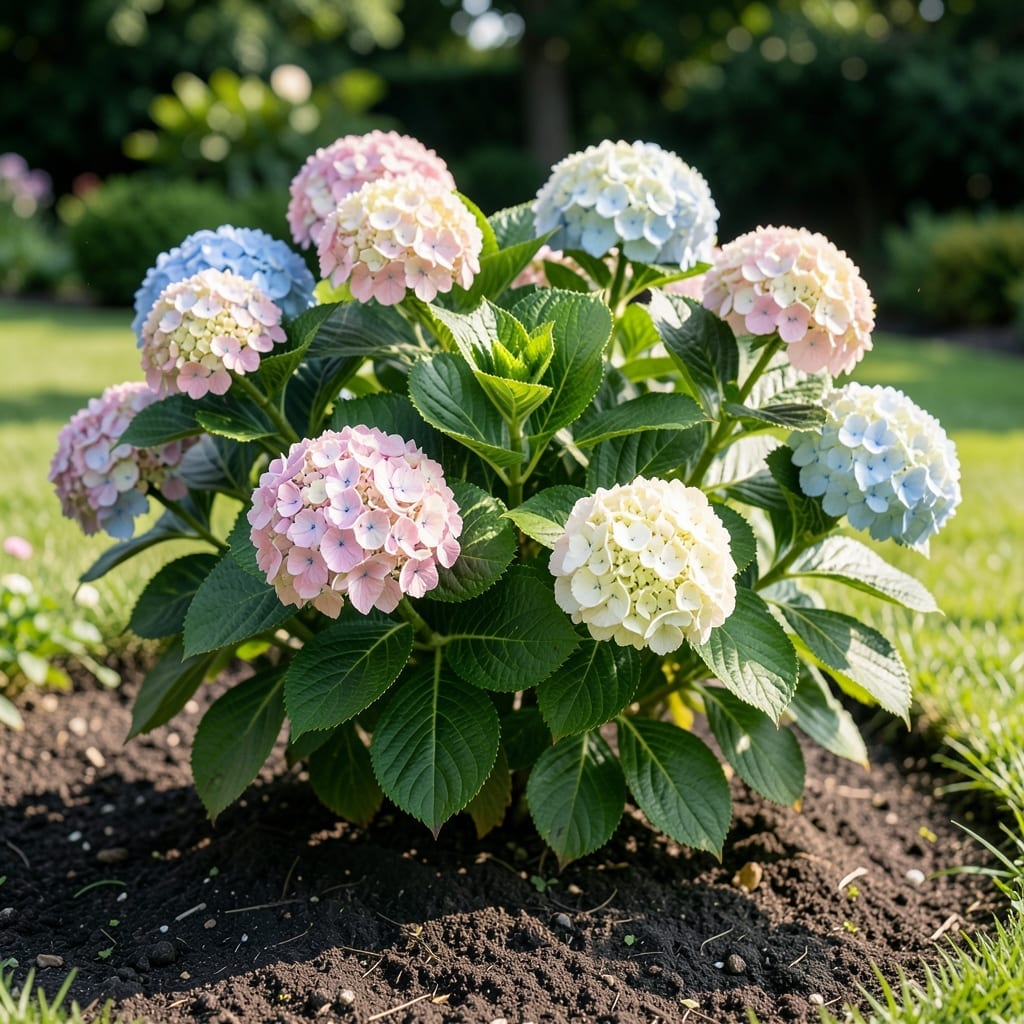
Hydrangeas are generally easy to care for with basic needs like consistent moisture, partial shade, and occasional pruning. Their main challenge is maintaining proper soil pH for desired bloom colors.
I’ve found these plants to be remarkably forgiving for beginners, thriving in most garden settings with just a little attention. Weekly watering and morning sunlight often yield vibrant blooms without extra effort. The real fun comes in adjusting soil acidity to shift flower colors—this small tweak can transform your garden’s look. ✨
💡 In This Article
Hydrangeas owe their hardiness to their native woodland origins. These shrubs evolved in moist, partially shaded environments, making them naturally tolerant of the inconsistent care many gardeners provide. Their fibrous root systems spread wide but stay shallow, allowing them to absorb moisture efficiently from surface watering.
This adaptation means they bounce back quickly after dry spells once rehydrated.
Climate adaptability sets hydrangeas apart from finicky plants. Bigleaf varieties thrive in USDA zones 6-9, while panicle types handle colder zones 3-8. They tolerate temperature swings from 20°F to 90°F without stress. The key is their ability to enter dormancy during extreme conditions, conserving energy until favorable weather returns. 🌿
Light requirements are forgiving too. While they bloom best with 4-6 hours of morning sun, they’ll survive in full shade—though with fewer flowers. This flexibility makes them ideal for east-facing gardens or under tree canopies. Unlike sun-worshipping roses, hydrangeas won’t scorch if you miss the perfect planting spot.
Their water needs are straightforward: 1-1.5 inches weekly, including rainfall. Unlike drought-sensitive plants that wilt dramatically, hydrangeas show stress gradually through drooping leaves. This gives you a 24-48 hour window to correct watering without permanent damage. Their leaves even have a waxy coating that reduces moisture loss.
What truly makes them low-maintenance is their pest resistance. Hydrangeas contain cyanogenic glycosides that deter most insects. Common garden pests like deer and rabbits usually avoid them, though Japanese beetles may nibble leaves. This natural protection means you’ll rarely need chemical interventions. ✨
Even their pruning needs are minimal. Most varieties bloom on old wood, so you can skip annual pruning entirely. When you do trim, the timing is forgiving—late winter or early spring works for nearly all types. The plants recover quickly, often producing new growth within weeks.
They need 1-1.5 inches of water weekly, including rainfall. A deep soak 2-3 times per week is better than daily light watering. Morning is ideal to prevent evaporation.
Most varieties prefer partial shade, especially in hot climates. They can handle full sun in cooler areas but may wilt in intense afternoon heat. 4-6 hours of morning sun is perfect.
Common causes include improper pruning, too much shade, or over-fertilizing. Bigleaf types bloom on old wood—prune after flowering, not before. A balanced 10-10-10 fertilizer helps.
Test your soil pH. Add lime for pink blooms or sulfur for blue. Changes take 6-12 months to appear. White varieties won’t change color.