
Beautiful Plants For Your Interior
Beautiful Plants For Your Interior
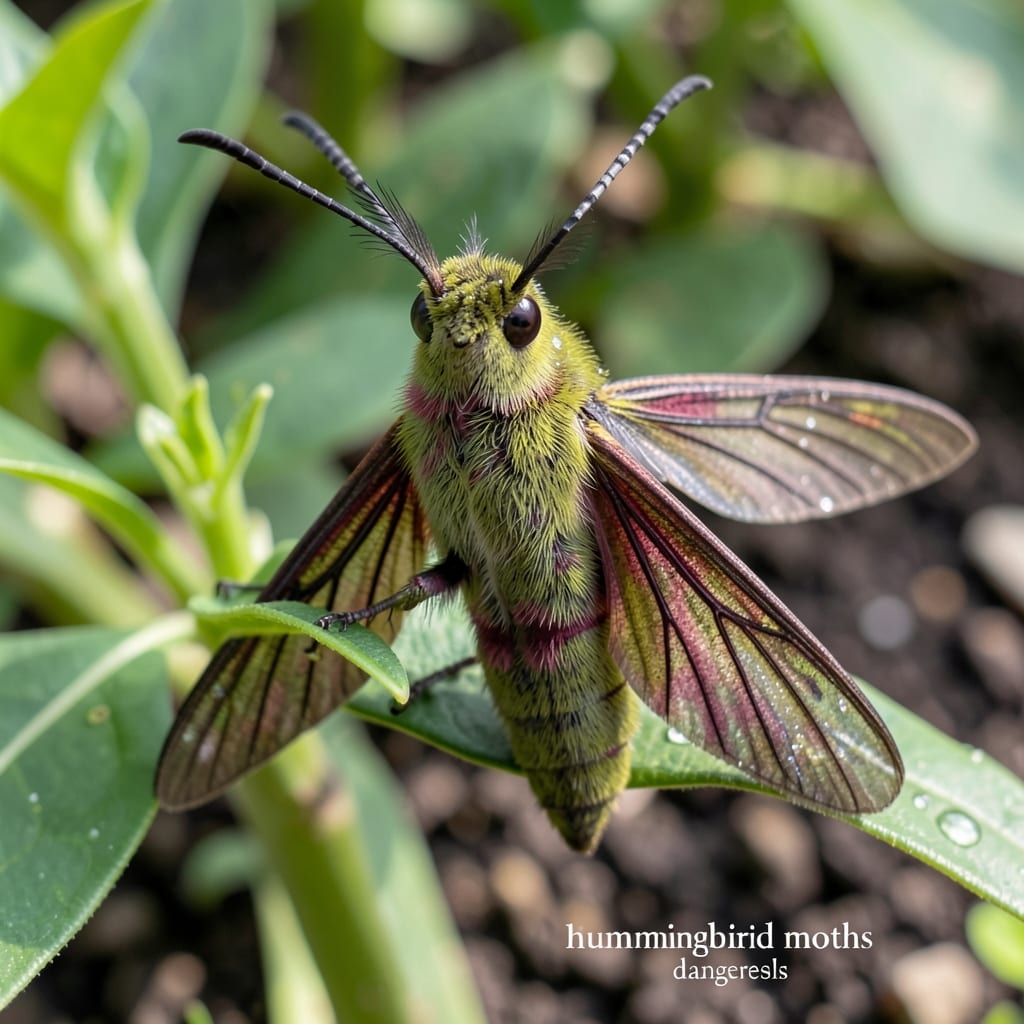
Hummingbird moths are completely harmless to humans and pets. They lack stingers, venom, or aggressive behavior, focusing only on pollinating flowers while feeding.
I’ve observed these fascinating creatures up close in my garden, and their behavior is purely focused on feeding—no defensive mechanisms to worry about. 💫 Their long proboscis is designed for sipping nectar, not biting or stinging, and they’re actually beneficial pollinators that help many plants thrive. Unlike bees or wasps, they have no need to protect a hive, making them completely safe to admire.
💡 In This Article
These insects evolved purely for pollination, not defense. Their mouthparts form a long, coiled proboscis designed solely to access nectar deep within flowers, lacking any biting or stinging capability. Unlike bees with stingers or wasps with mandibles, hummingbird moths have no anatomical features to deliver venom or cause harm. 🔥
Scientifically, they belong to the Sphingidae family, which includes over 1,450 species worldwide. None produce venom, and their primary defense mechanism is camouflage or rapid flight. Their wings beat at an astonishing 70-80 times per second, allowing quick escapes from predators rather than confrontation.
What’s fascinating is their role in ecosystems. They’re crucial pollinators for plants like evening primrose and honeysuckle, often visiting flowers that open at dusk. This nocturnal behavior means they avoid direct competition with daytime pollinators like bees, creating a complementary relationship in nature. ✨
Their harmlessness extends to pets too. Even if a curious dog or cat tries to investigate, the moth’s delicate body can’t withstand such encounters. The worst outcome is typically a damaged insect, not a harmed pet. Gardeners often report these moths being completely unfazed by human presence, continuing to feed within arm’s reach.
For comparison, while a honeybee’s stinger is a modified ovipositor connected to venom sacs, a hummingbird moth’s abdomen contains only digestive organs. This fundamental biological difference explains why one can sting while the other cannot. 💫
No, they completely lack the anatomy to bite or sting. Their long proboscis is only for sipping nectar, and they have no venom or defensive structures.
They’re harmless to cats and dogs. Their delicate bodies can’t cause injury, and even if investigated, the worst outcome is a damaged moth, not a harmed pet.
There’s no evidence they transmit diseases to humans or animals. As pollinators, they’re more beneficial than hazardous, helping plants thrive.
Their rapid wing beats (70-80 times per second) allow them to hover while feeding, mimicking hummingbirds. This adaptation helps them access nectar efficiently.