
Beautiful Plants For Your Interior
Beautiful Plants For Your Interior
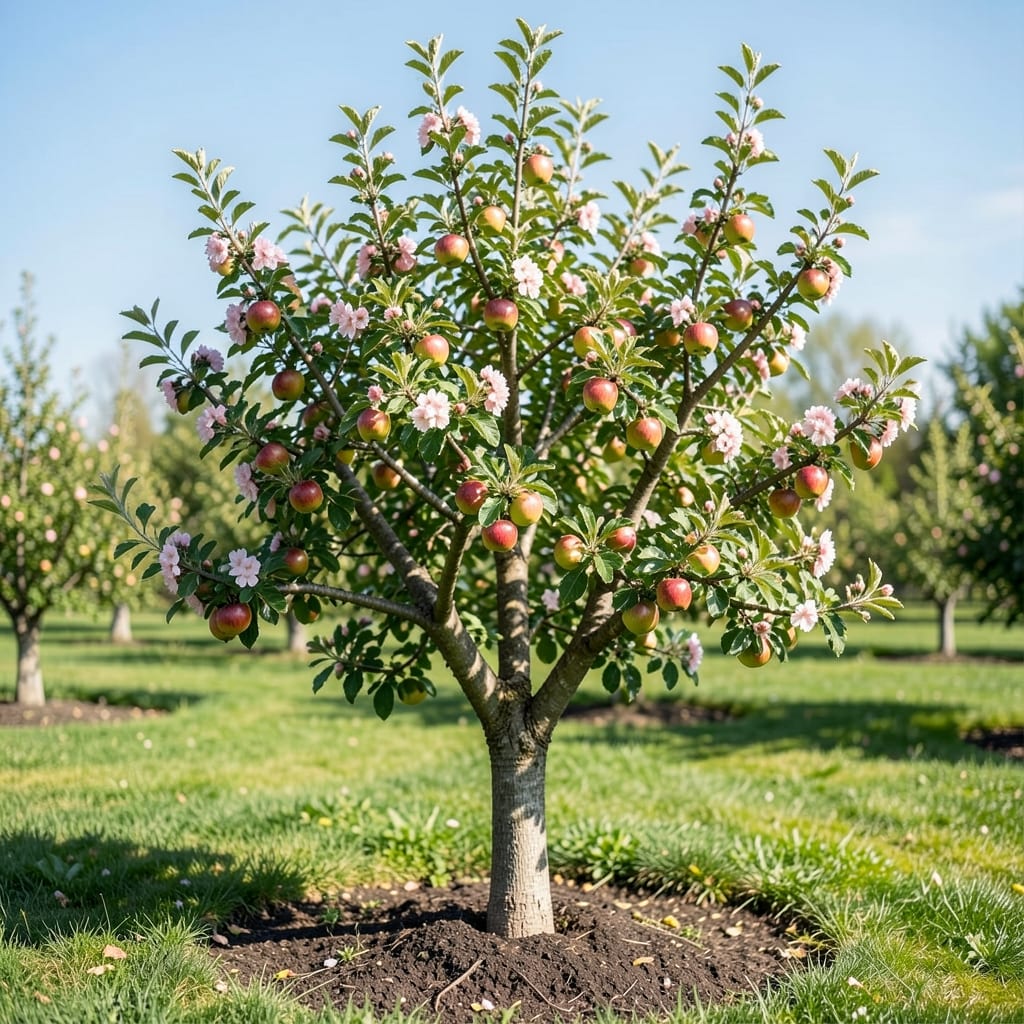
The biology behind this lies in Honeycrisp’s self-incompatibility. Their flowers produce pollen that can’t fertilize their own ovules. This genetic trait prevents self-pollination, ensuring genetic diversity. Bees carry compatible pollen from other varieties to Honeycrisp blossoms, enabling fertilization. Without this, fruit simply won’t form. 🔥
Pollen must come from a different apple variety with overlapping bloom times. Honeycrisp typically blooms in mid-season, so early or late bloomers won’t work. The pollen grains land on the stigma, grow a tube down the style, and fertilize the ovule—this process takes 24-48 hours under ideal conditions.
Weather plays a role too: temperatures below 55°F or above 90°F can inhibit pollen tube growth. ⚡
This cross-pollination requirement directly impacts fruit quality. Studies show cross-pollinated Honeycrisp apples develop 10-20% more cells in their flesh, resulting in that signature crisp texture. Self-pollinated attempts often produce small, misshapen fruit that drops prematurely. The genetic mixing also enhances disease resistance in the resulting apples. 💫
Commercial orchards often plant Honeycrisp in rows alternating with compatible varieties like Golden Delicious or Granny Smith. Home gardeners should plant pollinator trees within 50 feet for best results. Remember, even with perfect pollination, it takes 4-5 years for a Honeycrisp tree to bear its first substantial crop. ✨
The process begins with bee activity during the pink bud stage, about 3-5 days before full bloom. Each flower has 5-6 ovules, meaning every successfully pollinated blossom can potentially develop 5-6 apples. This is why proper pollination is so critical for a bountiful harvest. 🌟
You’ll get beautiful blossoms but no apples. Without cross-pollination from a compatible variety, the flowers won’t develop fruit. Even with perfect care, a lone Honeycrisp tree remains barren.
Keep pollinator varieties within 50-100 feet of your Honeycrisp. Bees can travel up to 2 miles, but closer proximity ensures better pollen transfer. In small yards, plant them just 10-15 feet apart.
Yes, many crabapple varieties make excellent pollinators for Honeycrisp. They bloom at the same time and produce abundant pollen. Just ensure the crabapple is a different genetic variety than your Honeycrisp.
One well-placed pollinator tree is usually sufficient for 2-3 Honeycrisp trees. For larger orchards, plant pollinators in a 1:3 ratio (one pollinator for every three Honeycrisp). This ensures adequate pollen distribution.