
Beautiful Plants For Your Interior
Beautiful Plants For Your Interior
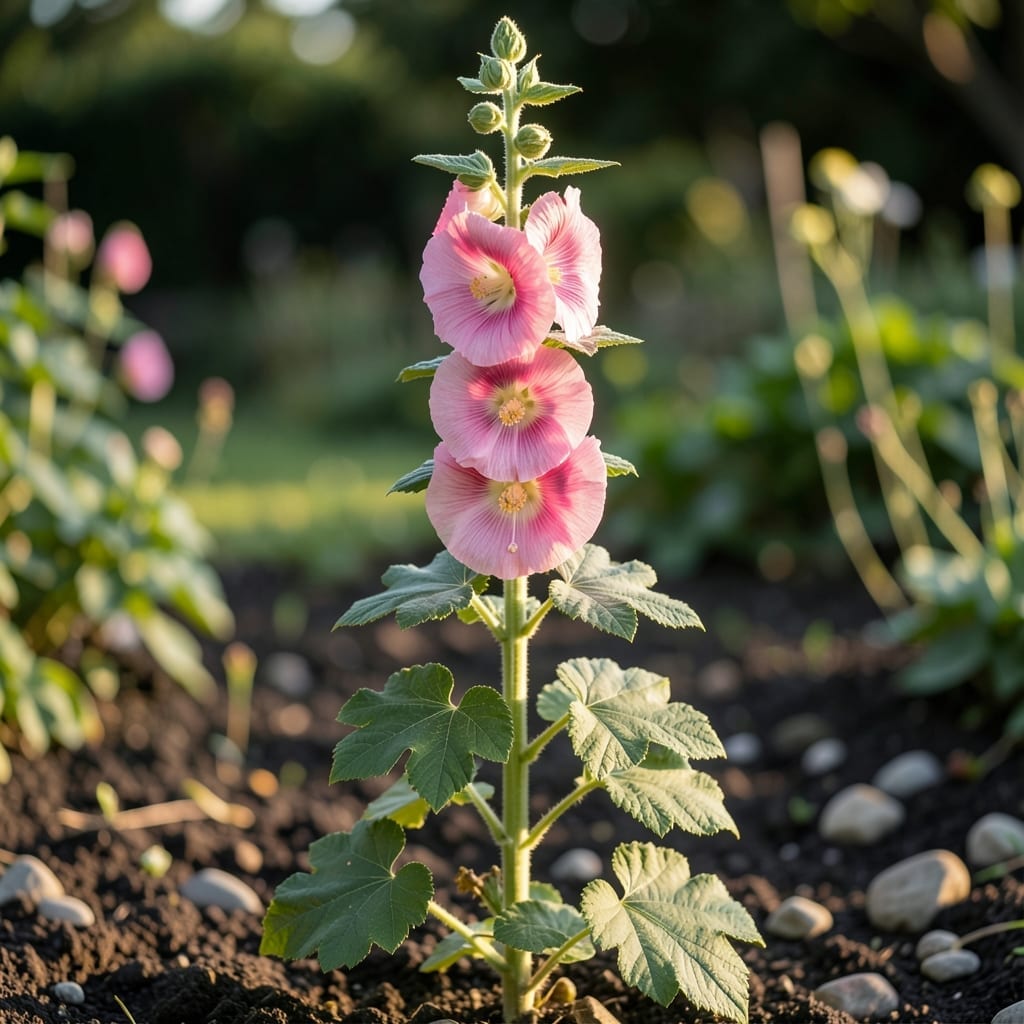
Hollyhocks are typically biennial or short-lived perennial plants, meaning they complete their life cycle in two years, flowering in the second year before often dying back.
I love how these towering beauties follow a patient rhythm in the garden. 🌟 In their first year, they focus entirely on building strong foliage, then reward your patience with stunning blooms the following summer. Many gardeners like me plant new seeds annually to maintain continuous flowers, as older plants often fade after their second season.
💡 In This Article
The first year is all about foundation. Hollyhock seedlings develop a sturdy rosette of large, rough leaves at ground level, focusing energy on root and foliage establishment. This stage requires 12-18 inches of space between plants to accommodate their broad base.
The leaves may reach up to 8 inches wide as they prepare for next year’s growth spurt. ✨
During the second spring, the magic happens. A tall flower spike emerges from the center, shooting up at a rate of 1-2 inches per day under ideal conditions. The stem can reach heights of 5-8 feet, producing flowers along its length in a stunning vertical display.
Each bloom lasts about 3-5 days, with new ones opening daily. 🌟
After flowering, the plant directs energy toward seed production. The spent blooms develop into seed pods containing dozens of seeds each. As autumn approaches, the entire plant begins to yellow and die back, completing its natural cycle. This process is genetically programmed, not a sign of poor health. 💫
In warmer climates, some varieties may behave as short-lived perennials, surviving for 3-4 years. However, their vigor typically declines after the second year. The seeds dropped in autumn will germinate the following spring, perpetuating the cycle. Gardeners can collect these seeds or allow natural self-seeding for continuous blooms. ⚡
What makes this cycle fascinating is its reliability. Unlike some perennials that may skip flowering in unfavorable years, biennial hollyhocks follow this pattern with remarkable consistency. The first year’s growth is entirely vegetative, while the second year is dedicated to reproduction before the plant’s energy is spent. 🔥
No, hollyhocks grown from seed typically won’t bloom in their first year. They focus on growing foliage and roots during this time.
Blooms appear in the second year after the plant establishes itself.
In warmer climates, some varieties may act as short-lived perennials for 3-4 years. To extend their life, ensure ideal growing conditions like full sun and well-draining soil.
Yes, hollyhocks readily self-seed if you allow the seed pods to mature and drop. This can create new plants the following year, maintaining a continuous display.
This is part of their natural biennial cycle. After flowering and seed production, the plant’s energy is spent, and it typically dies back. It’s not a sign of poor care.